What Makes a Crypto Exchange “Trustworthy”? A Beginner’s Checklist
- Regulation & Legal Status
- Proof of Reserves & Transparency
- Security & Custody of Funds
- User Account Protection
- Withdrawals & Operational Reliability
- Liquidity & Market Quality
- Reputation & Track Record
- Business Model & Risk Signals
- Practical Checklist for Beginners
- Conclusion
Choosing a crypto exchange is one of the most critical decisions for any beginner. Unlike traditional banks, crypto platforms don’t always offer the same level of protection, and history has shown that even large exchanges can fail, freeze withdrawals, or disappear entirely.
That’s why understanding how to evaluate an exchange before depositing funds is essential. This guide breaks down the key factors that define a trustworthy crypto exchange and provides a practical checklist you can use immediately.
Regulation & Legal Status
A trustworthy exchange operates within a defined legal framework and clearly discloses its jurisdiction. Reputable platforms are usually licensed or registered in regions such as the US, UK, EU, or Japan.
Regulation creates accountability. Licensed exchanges must follow AML/KYC rules, maintain reporting standards, and comply with financial oversight. This reduces the risk of sudden shutdowns or hidden misconduct.
What to check:
- Is the legal entity name clearly stated?
- Is there a verifiable license or registration number?
- Can you confirm the license on an official regulator’s website?
- Is the jurisdiction transparent and credible?
Red flags:
- No clear legal entity.
- Offshore registration with minimal oversight.
- Vague claims about “global operations”.
If the exchange avoids disclosing its jurisdiction or license details, consider it high risk.
Proof of Reserves & Transparency
Proof of Reserves (PoR) is a method exchanges use to demonstrate that user assets are backed. It often relies on cryptographic verification mechanisms.
PoR increases transparency and reduces the risk of exchanges operating without sufficient reserves. However, it shows assets but not liabilities. It is not the same as a full financial audit.
What to check:
- Does the exchange publish regular PoR reports?
- Are reports verified by independent auditors?
- Is the data updated consistently?
Red flags:
- One-time reports with no updates.
- No third-party verification.
- Transparency claims without evidence.
Treat PoR as a positive indicator — but never as the sole measure of safety.
Security & Custody of Funds
Security infrastructure defines how well user funds are protected from hacks and internal misuse. Strong custody practices reduce both technical and operational risks.
Key elements:
- Majority of funds stored in cold wallets.
- Multi-signature authorization.
- Clear separation of company and user funds.
What to check:
- Does the exchange explain how assets are stored?
- Is there transparency about cold storage usage?
- Has the platform experienced major breaches?
Red flags:
- Generic claims about “advanced security” without specifics.
- No explanation of the custody model.
Reliable exchanges provide clear, structured information about their security systems — not marketing slogans.
User Account Protection
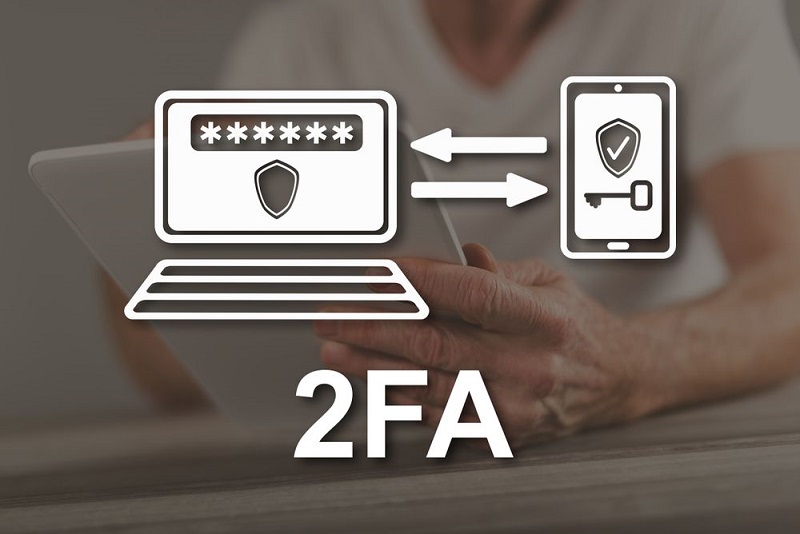
Even if an exchange has strong infrastructure security, your personal account can still be compromised through phishing, password leaks, or social engineering. Most crypto theft happens at the user level, not the platform level. Attackers often target weak passwords, reused credentials, or unprotected accounts.
Important features:
- Two-Factor Authentication (2FA) — preferably app-based (not SMS-only).
- Withdrawal whitelist — restricts withdrawals to pre-approved wallet addresses.
- Anti-phishing codes — personalized codes in official emails.
- Device/session management — ability to monitor and revoke active sessions.
What to check:
- Is 2FA required for withdrawals?
- Can you restrict withdrawals to specific addresses?
- Does the exchange notify you instantly about login attempts?
- Are there account lock or recovery safeguards?
Red flags:
- SMS-only 2FA with no stronger alternative.
- No withdrawal confirmation process.
- Weak or unclear account recovery procedures.
If an exchange does not strongly encourage (or require) 2FA and withdrawal confirmation, consider it a security weakness.
Withdrawals & Operational Reliability
A trustworthy exchange must demonstrate consistent operational stability, especially during periods of high market volatility. Liquidity crises often reveal themselves through withdrawal restrictions. If a platform cannot process withdrawals smoothly, it may indicate deeper financial or operational problems.
Warning signs:
- Repeated or unexplained withdrawal delays.
- “Technical maintenance” during sharp price movements.
- Sudden changes in withdrawal limits.
- Slow or scripted support responses.
What to check:
- Independent user reviews specifically about withdrawals.
- Public status pages showing uptime and incident history.
- Transparency about downtime or service interruptions.
- Fee structure for withdrawals (hidden or excessive fees are a red flag).
Before depositing a significant amount, make a small test withdrawal. This verifies processing speed, fees, and overall functionality.
An exchange that handles stress periods transparently and communicates clearly during disruptions is far more trustworthy than one that stays silent.
Liquidity & Market Quality
Liquidity determines how easily you can enter or exit a position without significantly affecting the price. For beginners, this directly impacts execution quality and hidden costs. Low liquidity leads to slippage, where your trade executes at a worse price than expected. This is especially risky during volatility or when trading less popular assets.
Indicators of good liquidity:
- Tight spreads — small difference between buy and sell prices.
- Deep order books — large volume available at multiple price levels.
- Stable pricing — minimal gaps and smoother price movement.
What to check:
- Compare the same trading pair across multiple exchanges — large price differences are a warning sign.
- Look at order book depth, not just the last price.
- Check 24h volume consistency (sudden spikes may indicate fake activity).
- Test a small market order and observe execution.
Red flags:
- Artificial or inflated trading volume.
- Thin order books despite “high volume” claims.
- Noticeable slippage even on small trades.
- Large price deviations from market average.
If an exchange offers unusually “perfect” conditions (zero slippage, ultra-tight spreads on illiquid assets), the volume may be manipulated.
Reputation & Track Record
An exchange’s history provides critical insight into how it operates under pressure. Reliability is not just about avoiding problems — but about how those problems are handled. Even well-known exchanges can face incidents. The key difference is in response quality — transparency, compensation, and speed of resolution.
What to research:
- Past hacks, breaches, or fund losses.
- Regulatory actions, fines, or investigations.
- Long-term user feedback (not just recent reviews).
What to check:
- Did the exchange compensate affected users after incidents?
- Was there clear communication, or silence and delays?
- Does the platform acknowledge past issues openly?
- Are complaints about withdrawals or account freezes recurring?
Red flags:
- Repeated unresolved complaints.
- Attempts to hide or downplay incidents.
- Sudden reputation shifts (e.g., many recent negative reviews).
A single past incident doesn’t automatically make an exchange unsafe. However, patterns of poor handling, lack of transparency, or repeated issues are strong warning signals.
Business Model & Risk Signals
Not all exchanges are built the same. While some focus on long-term sustainability and gradual growth, others pursue aggressive marketing and high-risk strategies to attract traders quickly. Understanding a platform’s business model can help you avoid risky exchanges that may collapse or engage in unethical practices.
Red flags include:
- Extremely high leverage (100x+) — encourages excessive speculative trading, increasing the chance of sudden liquidation and losses.
- Unrealistic promotions or guarantees — e.g., “double your money in a week” or “guaranteed returns” often signal scams or unsustainable business practices.
- Overly complex investment features — platforms offering exotic instruments, auto-trading schemes, or opaque financial products may be hiding risks.
- Heavy focus on referral programs — platforms emphasizing recruitment over real trading volume may resemble a pyramid or Ponzi model.
A platform built on high-risk or manipulative tactics is less likely to survive long-term. Even if it appears profitable initially, users may face sudden liquidity issues, withdrawal freezes, or operational failures.
What to check:
- Look at the types of products offered — simple spot trading is generally safer than extremely leveraged derivatives.
- Evaluate the marketing claims — if promises sound too good to be true, they probably are.
- Review the company’s history and transparency — do they provide clear reports on revenue sources, fees, and business operations?
- Assess the user base and activity — high volatility in accounts or sudden influx of new users due to aggressive promotions may indicate unsustainable growth.
Prefer exchanges that emphasize transparent operations, clear revenue sources, and sustainable trading products. Avoid platforms that rely on hype, extreme leverage, or aggressive marketing campaigns.
Practical Checklist for Beginners
Before using any exchange, go through this quick checklist:
- Verify the exchange is licensed or legally registered.
- Confirm the company’s jurisdiction and legal entity.
- Check for Proof of Reserves and audit transparency.
- Review how funds are stored (cold storage, segregation).
- Enable all available security features (2FA, whitelist).
- Test withdrawals with a small amount.
- Analyze liquidity (spreads, order book depth).
- Research user reviews and past incidents.
- Avoid platforms with unrealistic promises.
- Never store all funds on a single exchange.
Conclusion
No crypto exchange is completely risk-free. Even the most reputable platforms can face technical failures, regulatory pressure, or security incidents. The key is not to find a “perfect” exchange — but to minimize risk through informed decisions. By applying the checklist above, you can significantly reduce your exposure to scams, poor platforms, and operational failures.
When in doubt, remember a simple rule: if something feels unclear, unverified, or too good to be true — it probably is.
Get professional help with your case.