
How to Avoid Phishing and Fake Crypto Websites
- What Is Crypto Phishing and Why It Works
- Common Types of Fake Crypto Websites
- Fake Exchange Websites
- Wallet Connection Traps
- Fake Airdrops and Giveaways
- Phishing Through Ads and Social Media
- Real-Life Scenarios
- Scenario 1: Fake Reward Email
- Scenario 2: Fake Exchange Search
- How to Check a Website URL
- Tools to Detect Phishing Websites
- How Wallet Phishing Actually Works
- Key Rules to Stay Safe
- What to Do If You Already Clicked a Phishing Link
- Final Thoughts
At first glance, everything looks normal. A familiar logo, a clean interface, even a secure-looking URL. But in crypto, that’s often exactly how scams begin. Phishing remains one of the most common ways users lose funds — and once the transaction is done, there’s usually no way back.
Even experienced users fall into these traps. Not because they don’t understand crypto — but because scammers have become very good at looking legitimate.
What Is Crypto Phishing and Why It Works
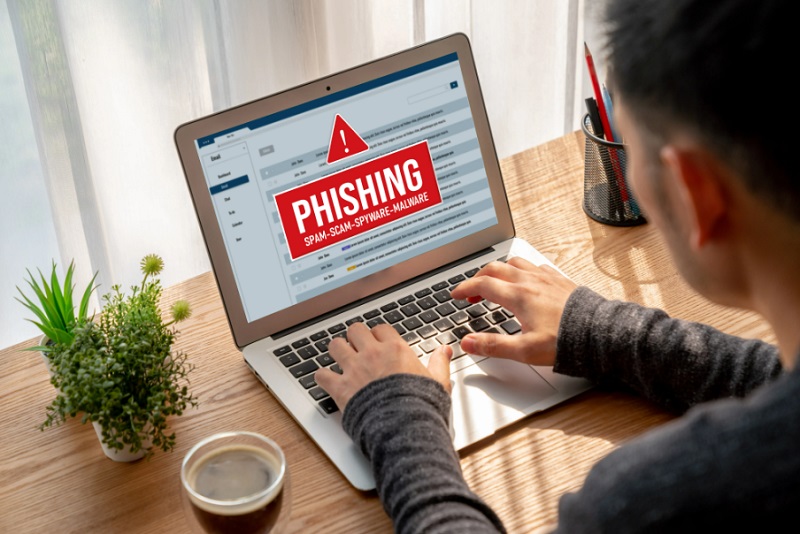
Crypto phishing is a type of fraud where attackers trick users into interacting with fake platforms that imitate real services — exchanges, wallets, or DeFi apps. The goal is simple: get access to your funds.
What makes crypto especially vulnerable:
- transactions are irreversible;
- there’s no central authority to cancel transfers;
- users often manage their own security.
Phishing doesn’t rely on hacking — it relies on psychology:
- urgency: “Your account will be suspended”;
- greed: “Claim your free tokens”;
- trust: “Official support message”.
If a user believes the situation is real, they act quickly — and that’s exactly what scammers want.
Common Types of Fake Crypto Websites
Phishing scams tend to follow repeatable patterns.
Fake Exchange Websites
These are among the most common and dangerous phishing formats in crypto. Scammers create almost identical copies of well-known exchanges like Binance or Coinbase, replicating everything from UI to login flows and even support chat widgets.
At first glance, nothing seems suspicious. The logo, color scheme, and structure are cloned with high precision. However, the key difference lies in the domain.
Typical signs:
- slight misspellings (binanse, coinbsae);
- added words (secure-binance, coinbase-login);
- alternative domains (.net, .pro, .site instead of .com).
How the attack works:
- A user lands on the fake site (via ad, email, or typo).
- They enter login credentials.
- The data is instantly sent to attackers.
Real account gets compromised within minutes (password change, withdrawal, API key abuse).
In more advanced cases:
- the site may show a “temporary error” after login to delay suspicion;
- attackers may wait before acting to avoid immediate detection.
Key risk: even 2FA does not always fully protect if attackers capture session tokens or trick users into entering codes.
Wallet Connection Traps
This type of phishing doesn’t target passwords — it targets permissions. It’s especially common in DeFi and NFT ecosystems. You’re invited to connect your wallet to access a feature:
- NFT mint page;
- staking or yield farming platform;
- token claim or reward dashboard.
- The interface looks legitimate and often mimics real Web3 platforms.
What actually happens:
- You connect your wallet (e.g. MetaMask).
- The site prompts you to sign a transaction or approve access.
- The permission you grant allows attackers to move your funds.
No password is stolen. You voluntarily approve access — often without realizing the scope.
Common tricks:
- labeling malicious transactions as “verify” or “continue”;
- hiding critical details in complex smart contract data;
- using “Approve unlimited spend” requests.
Why it’s dangerous:
- transactions are irreversible;
- funds can be drained instantly or gradually;
- users often don’t notice until it’s too late.
Best practice: never sign transactions you don’t fully understand, especially on newly discovered websites.
Fake Airdrops and Giveaways
This is one of the oldest scams in crypto — but it still works extremely well, especially during hype cycles.
Typical messaging:
- “Send 1 ETH — receive 2 ETH back”;
- “Limited-time giveaway for early users”;
- “Official campaign celebrating a milestone”.
These scams often impersonate well-known brands or public figures to build trust.
Common elements:
- fake transaction feeds showing “recent payouts”;
- countdown timers creating urgency;
- professional-looking landing pages;
- fake social proof (comments, likes, testimonials).
Distribution channels:
- hacked social media accounts;
- fake livestreams;
- spoofed websites,
- How users lose money:
- they send funds expecting a return;
- nothing is sent back;
- the wallet is controlled entirely by scammers.
Important: there are no legitimate “send funds to receive more back” mechanics in real crypto ecosystems.

Phishing Through Ads and Social Media
One of the most underestimated risks is paid and organic promotion of scam links. Users tend to trust platforms like Google or YouTube, assuming that visible content is safe — which is not always the case.
Where scams appear:
- Google Ads (fake exchange links at the top of search results);
- YouTube livestreams impersonating crypto events;
- Twitter/X posts with trending hashtags;
- Telegram and Discord communities.
Typical scenario:
- User searches for a platform (e.g. exchange login).
- Clicks the first promoted link.
- Lands on a phishing site.
- Enters credentials or connects wallet.
Advanced tactics:
- fake verified accounts;
- bots amplifying posts;
- cloned comment sections.
Visibility doesn’t mean legitimacy. Even top search results or viral posts can lead to phishing sites.
Real-Life Scenarios
Phishing scams in crypto are designed to feel completely normal until it’s too late. They exploit trust, urgency, and the familiarity of popular platforms.
Scenario 1: Fake Reward Email
- You receive an email: “You have pending crypto rewards” or “Claim your exclusive airdrop now.”
- You click the link, which leads to a website that visually mimics a legitimate platform — logo, color scheme, even live-feel dashboards.
- The site asks you to connect your wallet. Everything seems fine, and sometimes they even show fake balances.
- Within seconds or minutes, your funds are drained because the site requested approval for transactions you didn’t understand.
Scenario 2: Fake Exchange Search
- You search for a crypto exchange on Google or another search engine.
- You click the first sponsored link or a “top result.”
- You land on a cloned site that looks real: all menus, charts, and login fields match the authentic platform.
- Everything works — until you try to withdraw. Then your login is captured or wallet permissions allow attackers to transfer funds.
Always double-check the URL and access platforms via bookmarks you created yourself.

How to Check a Website URL
Checking a URL is one of the simplest yet most effective ways to avoid scams. Small differences often signal a phishing site.
Key checks:
- Exact spelling — no extra letters, missing characters, or swapped letters. Example: “binanse.com” instead of “binance.com.”
- Extra words or hyphens — fake sites may use “secure-coinbase.com” or “binance-login.net.”
- HTTPS enabled — look for the lock icon in the browser. While HTTPS doesn’t guarantee legitimacy, its absence is a clear red flag.
- Matches your bookmarks — platforms you’ve used before should be accessed through saved URLs, not search results.
Best practices:
- Bookmark legitimate exchanges and wallet platforms and always use those links.
- Hover over links in emails or social media posts to check where they actually lead.
- If in doubt, type the domain manually rather than clicking any link.
- Use a domain-checker tool (like who.is or ICANN lookup) if a site seems unusual.
Tools to Detect Phishing Websites
You don’t have to rely only on intuition. Useful tools include:
- Google Safe Browsing — checks if a site is flagged.
- VirusTotal — scans URLs across multiple security engines.
- WHOIS lookup — shows when a domain was created (new domains are risky).
- Browser extensions — warn about known phishing sites.
A simple rule: if something feels off, verify before interacting — not after.
How Wallet Phishing Actually Works
Many users confuse “connecting a wallet” with “signing a transaction,” but this difference is critical.
Step-by-step scam flow:
- You connect your wallet to a website (MetaMask, Trust Wallet, Ledger, etc.).
- The site asks you to “confirm” or “verify” something — often using ambiguous terms like “approve access” or “claim reward.”
- You sign the transaction, thinking it’s harmless.
- The signature grants permissions for the site to access and transfer your funds.
- Sometimes the theft isn’t immediate — attackers can move funds later when it’s convenient.
Key points:
- Connecting is not signing. Connecting is usually safe if no transaction is requested. Signing allows transfers.
- Unlimited permissions are dangerous. Some scam sites request “approve unlimited spend,” giving attackers ongoing access.
Most wallets display the smart contract address and token amounts — read carefully. Use wallets with built-in phishing alerts. Avoid signing transactions on unknown or suspicious sites and review smart contract permissions regularly using tools like revoke.cash.
Key Rules to Stay Safe
A simple checklist that covers most risks:
- Never click links from emails or DMs.
- Never share your seed phrase — under any circumstances.
- Never send crypto to receive more back.
- Always type URLs manually or use bookmarks.
- Avoid connecting wallets to unknown platforms.
- Use hardware wallets for large amounts.
- Double-check every transaction before signing.
- If something feels rushed or too good to be true — stop.
What to Do If You Already Clicked a Phishing Link
Immediate action can reduce or even prevent losses. Time is critical.
Step 1: Protect your wallet
- Disconnect your wallet from the suspicious site immediately.
- Revoke permissions using platforms like revoke.cash or wallet management tools.
- Transfer any remaining funds to a new wallet with a fresh seed phrase.
Step 2: Check your devices
- Scan your computer or phone for malware using updated antivirus or anti-malware software.
- Clear browser cache and saved passwords if you interacted with a fake website.
Step 3: Secure accounts
- Change passwords for exchange accounts, email, and crypto wallets.
- Enable 2FA on all accounts where possible.
Step 4: Report the incident
- Notify the official exchange or wallet provider immediately. They may freeze suspicious deposits or provide guidance.
- Report phishing links to platforms like Google Safe Browsing, Meta, or the relevant social media platform.
- File complaints with crypto fraud authorities if applicable.
Even if funds are gone, acting fast prevents further compromise. Many users recover partial access if they revoke permissions immediately.
Final Thoughts
Phishing scams in crypto are no longer obvious. They look clean, professional, and convincing — sometimes indistinguishable from real platforms. And they’re getting more advanced, especially with AI-generated content and fake interfaces.
The only reliable defense is behavior. Slow down, verify everything and don’t trust urgency. In crypto, security is a responsibility.
Get professional help with your case.