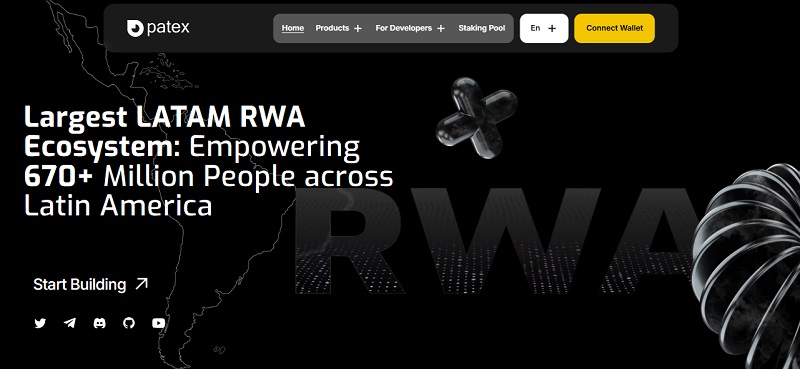
The digital service Patex is not simply a cryptocurrency exchange. The project positions itself as a full blockchain ecosystem focused on Latin America, combining a Layer 2 network, CEX, wallet infrastructure, bridge solutions, staking products, validators, and CBDC-related technology. According to the website patex.io, the ecosystem is designed to support digital assets, tokenized real-world assets (RWAs), and future central bank digital currencies (CBDCs).
Unlike many recently launched trading services, the platform has a longer domain history dating back to 2023 and publicly discloses a broader ecosystem structure. However, users should distinguish between the Patex blockchain ecosystem and the C-Patex exchange, as they represent different components of the same project.
Exploring the Patex Ecosystem and Its Core Components
Patex platform promotes a multi-product ecosystem targeting cryptocurrency adoption across Latin America.
The publicly presented infrastructure includes:
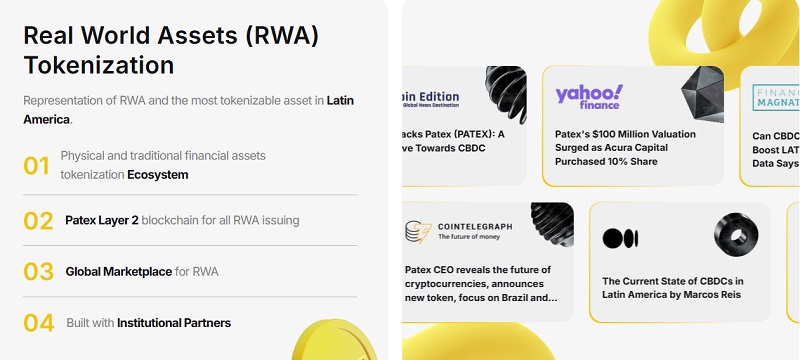
The project states that its Layer 2 network is designed for issuing and tracking digital assets, including CBDCs and tokenized assets. The PATEX token acts as the ecosystem's governance and utility token.
| Patex Product | Purpose |
|---|
| Patex Network | Layer 2 blockchain infrastructure |
| C-Patex Exchange | Centralized trading platform |
| Patex Wallet | Cross-chain non-custodial wallet |
| Patex Bridge | Cross-chain asset transfers |
| Proof of Value | Validator reward mechanism |
| Explorer Tools | Blockchain analytics and monitoring |
Digital Assets and Tokens Available Through Patex
The Patex exchange supports dozens of cryptocurrencies, stablecoins, and ecosystem tokens.
| Asset Category | Examples |
|---|
| Major Cryptocurrencies | BTC, ETH, SOL, TON |
| Stablecoins | USDT, USDC, USDQ, USDR |
| DeFi Assets | AAVE, UNI, COMP, SNX |
| Ecosystem Tokens | PATEX, NPT, ENT, INCA |
| Wrapped Assets | WBTC |
| Meme Tokens | APEPE, MEW |
The PATEX token serves as the ecosystem's native utility and governance asset. According to publicly available token information, the project reports a total supply of 8 million tokens.
Trading Conditions and Fees on C-Patex Exchange
The standard trading commission published by the exchange is 0.2%. Compared with many centralized trading services, this fee level is relatively average.
The Patex platform also provides publicly available deposit and withdrawal schedules for a large number of cryptocurrencies.
| Trading Parameter | Condition |
|---|
| Spot Trading Fee | 0.20% |
| PATEX Withdrawal Fee | Free |
| BTC Withdrawal Fee | 0.00016666666 BTC |
| ETH Withdrawal Fee | 0.0032 ETH |
| USDT Withdrawal Fee | 2 USDT |
| Crypto Deposits | Generally free |
Unlike many anonymous exchanges, the project publishes a detailed fee schedule covering numerous supported assets.
Creating a Patex Personal Account and Verification Process
Opening a Patex personal account follows a standard exchange registration process.
According to the platform:
Users register through the website patex.io.
Email verification is required.
A password must be created.
Captcha verification is completed.
Identity verification is required before withdrawals.
The Patex personal account serves as the central hub for trading, wallet management, staking participation, and access to ecosystem products.
The platform also offers:
This broad software ecosystem is one of the project's stronger operational features.
Asset Management, Deposits and Withdrawals of Money from Patex
The Patex exchange publishes minimum deposits and withdrawal thresholds for supported cryptocurrencies.
Examples include:
According to the FAQ section, withdrawing money from Patex typically takes around three hours once identity verification has been completed. This provides more transparency than many recently launched exchanges.
| Asset | Withdrawal Fee | Minimum Withdrawal |
|---|
| BTC | 0.00016666666 BTC |
| ETH | 0.0032 ETH |
| USDT | 2 USDT |
| SOL | 0.02 SOL |
| TON | 10.06 TON |
| PATEX | Free |
Patex Network Technology and Proof of Value Mechanism
One aspect that differentiates Patex from ordinary exchanges is its proprietary blockchain infrastructure.
The project promotes:
According to project documentation, validators receive rewards derived from network activity and transaction fees, while ecosystem participants can earn PATEX tokens through engagement with the network.
This approach makes the Patex project closer to a blockchain ecosystem than a standalone exchange.
Corporate Information and Domain History of Patex
DomainTools information shows:
Unlike many recently launched trading platforms, Patex exchanges has maintained its domain for several years.
However, the project does not prominently publish a detailed corporate structure, headquarters address, or financial licenses on the main ecosystem pages.
This creates a moderate transparency gap despite the broader ecosystem presentation.
| Corporate Indicator | Status |
|---|
| Domain Registration | 2023 |
| Public Ecosystem Documentation | Available |
| Headquarters Address | Not clearly disclosed |
| License Number | Not publicly displayed |
| Telegram Community | Available |
| Email Support | Available |
Patex Reviews and Community Reputation
Patex reviews available on Trustpilot are predominantly negative at the time of writing.
The Trustpilot profile for C-Patex shows a TrustScore of approximately 1.9 out of 5, with a significant majority of reviews being one-star ratings. Common complaints mention:
At the same time, some positive Patex reviews describe the exchange as easy to use and supportive of emerging crypto projects.
Outside Trustpilot:
Analytical conclusion:
The reputation profile remains mixed, with publicly visible criticism outweighing positive feedback.
Risk Assessment and Expert Conclusion for Patex
| Evaluation Category | Assessment |
|---|
| Ecosystem Development | Strong |
| Product Diversity | High |
| Fee Transparency | High |
| Corporate Transparency | Moderate |
| User Reputation | Weak |
| Overall Risk Level | Medium-High |
Final Verdict on Patex
Patex cannot be classified as a typical anonymous exchange. The project has developed a relatively broad ecosystem that includes a Layer 2 blockchain, staking infrastructure, wallet products, validators, bridging tools, and a centralized exchange. The project also demonstrates a stronger level of product development than many recently launched crypto platforms.
Potentially suitable for:
users interested in emerging blockchain ecosystems;
traders exploring LATAM-focused crypto projects;
participants interested in staking and validator programs;
users comfortable with developing infrastructure projects.
Not suitable for:
conservative investors;
users seeking top-tier regulatory oversight;
investors who prioritize long-established exchanges;
traders uncomfortable with mixed user feedback.
Overall assessment: Medium-High Risk
The technology stack and ecosystem breadth appear substantially stronger than many newly launched exchanges. However, negative Trustpilot reviews, limited corporate disclosure, and the absence of widely recognized regulatory oversight prevent Patex project from being categorized as a low-risk platform. Users should conduct additional due diligence and avoid committing capital beyond their risk tolerance.


