MetaMask Money Account 2026: Is the Wallet Becoming a Full Financial Service?
- What Is MetaMask Money Account?
- The Platform at a Glance
- How the New Model Differs From a Regular Wallet
- Regular Wallet vs. New Service
- Is It Still Truly Self-Custodial?
- Where Do the Earnings Come From?
- Why mUSD Matters
- From Wallet to Financial Interface
- Why the Card Changes the Equation
- One Balance, Multiple Functions
- Is Money Account a Banking Product?
- What Happens If the DeFi Strategy Fails?
- The Hidden Complexity of “No Lockup”
- Does Money Account Require KYC?
- The Security Problem Is Moving With the Product
- Why Fake Support Is Especially Dangerous in 2026
- Does More Functionality Mean Less Self-Custody?
- What Does “Self-Custody” Actually Protect?
- The Bigger Industry Shift
- What Should Users Check Before Using Money Account?
- MetaMask Money Account: Risk Assessment
- Is MetaMask Becoming a Full Financial Service?
- Conclusion
- FAQ
- Sources
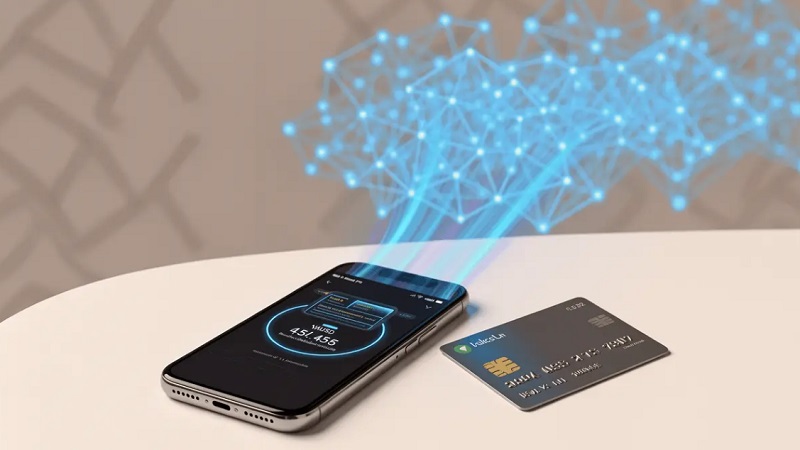
The world’s leading Web3 client is expanding its role far beyond basic token storage and decentralized web connections. In mid-2026, Consensys introduced a feature that unifies digital dollar holdings, automated returns, transfers, and daily shopping into one seamless space. Built upon a native asset operating on a high-speed blockchain, this tool also pairs with physical payment solutions for point-of-sale transactions globally.
This shift fundamentally alters the traditional non-custodial model. Standard crypto tools mainly grant individuals private key authority while facilitating direct chain interactions. By contrast, the updated structure incorporates features typically expected from fintech applications — such as earning on idle cash, transferring value across platforms, and paying at retail checkouts.
What Is MetaMask Money Account?
This financial feature functions natively within mobile software rather than operating as a conventional bank. According to official documentation, the system utilizes specialized tokens on the Monad network to deploy deposited funds into third-party earning strategies behind the scenes. Generated growth is calculated on a daily basis, allowing stored value to remain available for immediate use.
The base advertised return currently reaches up to 4% variable APY, with limited promotions climbing higher through late September 2026.
- Deposit or convert supported digital assets
- Mint specialized stablecoins on high-throughput networks
- Route holdings through external decentralized protocols
- Accumulate yield continuously on a daily schedule
- Utilize the resulting balance for retail purchases or transfers
This automated process removes several manual hurdles previously required to participate in decentralized lending strategies.
The Platform at a Glance
| Feature | How it works |
|---|---|
| Custody model | Self-custodial |
| Main asset | mUSD |
| Blockchain | Monad |
| Base advertised yield | Up to 4% variable APY |
| Promotional return | Approximately 6% for a limited period |
| Lock-up | None |
| Minimum balance | None |
| Platform fee | None |
| Yield frequency | Accrues daily |
| Spending | MetaMask Card |
| Access | MetaMask Mobile v8.0+ |
| Availability | Global except UK and U.S.-sanctioned countries |
The critical distinction is that these added conveniences do not transform digital tools into conventional deposit institutions.
How the New Model Differs From a Regular Wallet
A standard crypto holder maintains direct control over their on-chain assets. If someone wishes to generate interest via decentralized markets, they must execute multiple transactions manually — such as approving allowances, funding lending pools, and monitoring vault health.
The updated framework streamlines this entire sequence by automating backend interactions. Specialized backend code manages all underlying protocol calls, sparing the user from manual transaction management. Consequently, the overall experience feels closer to a modern consumer fintech application.
Crucially, ultimate administrative authority remains with the end-user. The software team notes that balances stay protected by personal Secret Recovery Phrases, ensuring no external entity can access or freeze client capital. Regulatory frameworks similarly distinguish pure digital utilities from centralized entities that maintain active custody over customer keys.
Regular Wallet vs. New Service
| Function | Standard MetaMask platform | Money Account |
|---|---|---|
| Hold crypto | Yes | Yes |
| Self-custody | Yes | Yes |
| Automatic yield | No | Yes |
| Manual DeFi setup | Usually required for return | Abstracted |
| mUSD integration | Available separately | Core component |
| Spending through Card | Supported | Directly integrated |
| DeFi risk | Depends on chosen protocol | Built into yield mechanism |
| Export to another wallet | Standard solution can be imported | Money Account itself cannot be exported |
The final row highlights a notable technical detail. The new financial setup lacks a standard public address and cannot be exported directly into alternative software, though users remain free to transfer funds to regular services internally.
Is It Still Truly Self-Custodial?
According to developer statements, user-held keys remain the single point of authority. Capital stays tied to the primary recovery phrase, keeping funds immune to centralized account freezes.
However, non-custodial architecture does not render an asset immune to economic or technical loss. Because earnings rely heavily on external smart contracts, several distinct vectors of exposure emerge:
- Vulnerabilities within smart-contract code
- Protocol-level economic failures
- Sudden liquidity contractions in underlying pools
- De-pegging events affecting secondary stablecoins
- Underlying network outages
- Integration software glitches
- Rapid fluctuations in variable interest rates
Official disclaimers prominently highlight these factors, reiterating that advertised returns are subject to constant market movement rather than fixed guarantees.
Also Read: Why More Crypto Users Are Switching From MetaMask to Rabby
Where Do the Earnings Come From?
Returns are not generated simply by maintaining a balance inside the application. Instead, deposited assets are routed directly into vetted third-party lending and liquidity platforms.
Understanding this distinction is vital when assessing financial claims. While commercial banks supply interest via central balance sheets and regulated lending operations, decentralized returns fluctuate according to open-market demand, pool liquidity, and protocol activity.
Regulatory agencies frequently note that lending-based yields carry unique structural vulnerabilities. Therefore, an advertised APY must never be interpreted as equivalent to a guaranteed bank savings rate.
Why mUSD Matters
This rollout grants the developer deeper integration within the stablecoin market. By anchoring the service to a proprietary dollar token, all supported collateral converts directly into this single native asset to power the earning engine.
This establishes an interconnected financial cycle:
- Funding: The account is funded first.
- Native Token: Funds are converted into the platform's native token.
- Earnings Generation: The token is then used to generate yield.
- Card Spending: Available balances can subsequently be used for card payments.
Consequently, the underlying token evolves from a simple tradeable asset into core functional infrastructure. Controlling the primary interface where users purchase, hold, and spend stablecoins grants the application significantly greater leverage across the broader lifecycle of digital assets.
From Wallet to Financial Interface
Viewing this rollout alongside other recent product updates reveals a broader strategic trajectory. The platform already facilitates fiat onboarding, cross-chain swaps, and direct debit card payments at point-of-sale terminals. Additionally, integrated trading features now encompass perpetual contracts and prediction markets.
Adding an automated yield engine fills a key remaining gap: productive capital that doubles as immediate liquidity. Rather than acting purely as a transaction signer, the application functions as a comprehensive, self-directed financial dashboard.
Why the Card Changes the Equation
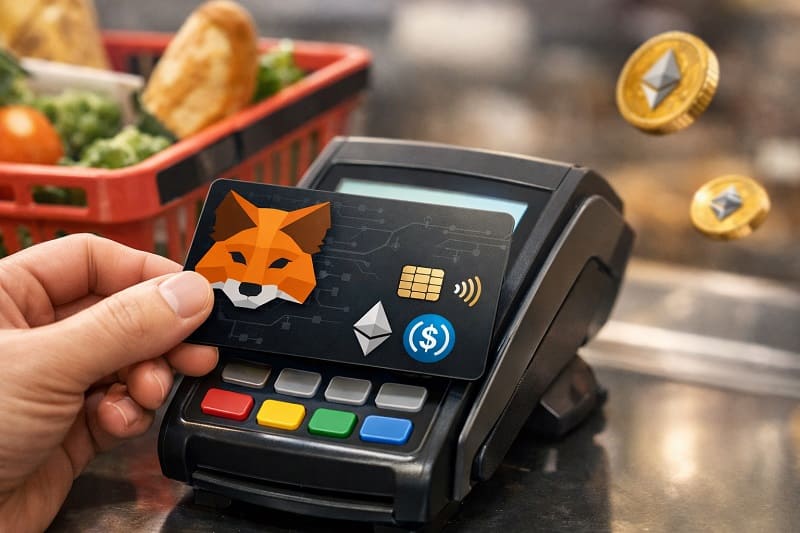
Integrating instant payment mechanics makes this evolution particularly clear. By converting digital assets into local fiat currency at checkout via major payment networks, users can bypass central exchanges entirely.
Linking yield-bearing balances directly to a physical payment card creates an all-in-one financial tool:
- Capital stays stored under personal cryptographic keys
- Holdings continuously earn variable market returns
- Balances can be spent instantly at millions of merchant locations
- Funds move effortlessly into broader decentralized applications
This setup mirrors modern consumer banking behavior while remaining entirely built upon decentralized infrastructure.
One Balance, Multiple Functions
| Activity | Traditional financial product | Money Account model |
|---|---|---|
| Hold value | Deposit or cash balance | mUSD balance |
| Earn return | Savings/investment product | DeFi-generated variable APY |
| Transfer | Bank transfer | Blockchain transfer |
| Spend | Debit card | MetaMask Card |
| Trade | Brokerage/exchange | MetaMask trading services |
| Custody | Institution generally involved | User-controlled SRP |
| Deposit insurance | May apply depending on jurisdiction | Not provided |
| Yield guarantee | Depends on product | No |
While the functional experience feels familiar, the legal and operational foundations remain completely distinct.
Is Money Account a Banking Product?
No. Official documentation explicitly clarifies that this service is neither a licensed bank nor an insured depository product. Variable yields carry risks of partial or total capital loss.
Maintaining this clarity is vital for consumer protection. Despite visual similarities to modern banking apps — such as dollar figures, APY counters, and payment cards — no formal banking relationship or government deposit insurance exists.
What Happens If the DeFi Strategy Fails?
Risk exposure remains a central consideration for anyone utilizing yield-bearing features. While promotional materials emphasize fast liquidity, disclaimers highlight the possibility of smart-contract vulnerabilities, economic exploits, or pool illiquidity.
If an underlying lending protocol suffers a major breach, the non-custodial nature of the interface cannot shield the invested capital from loss. Similarly, market stress can stall asset redemptions regardless of how smoothly the front-end application functions.
Cryptographic control protects key ownership; it does not eliminate systemic risk across connected financial protocols.
Also Read: Fake MetaMask Updates in 2026: How a “Mandatory Upgrade” Scam Drains Wallets
The Hidden Complexity of “No Lockup”
Flexible access is a primary marketing highlight of the new feature, allowing users to spend or transfer funds without unbonding delays.
However, instant availability during calm market conditions should not be confused with guaranteed liquidity during crises. Protocol liquidity can contract rapidly under severe market stress, a reality explicitly noted within the provider’s risk disclosures.
Does Money Account Require KYC?
Initial setup does not require traditional identity verification or product creation steps. Anyone holding a compatible non-custodial wallet can access the core feature natively.
That said, third-party fiat gateways used to purchase or off-ramp assets may still require identity checks according to local regulatory laws.
The Security Problem Is Moving With the Product
Expanding functional features inevitably increases the surface area for social engineering attacks. Community moderators consistently remind users that official team members will never initiate direct messages or request Secret Recovery Phrases.
As software handles larger volumes of active capital, phishing scams become increasingly sophisticated. Scammers targeting yield-earning users now have more believable angles to exploit.
Why Fake Support Is Especially Dangerous in 2026
Traditional phishing scams relied on simple lures, such as claiming an account was compromised and required immediate re-verification. Today, fraudsters craft highly convincing narratives around genuine product capabilities:
- Fake notices regarding product verification requirements
- Messages claiming earning yields have stalled and require activation
- Fraudulent alerts about blocked debit card transactions
- Phishing links promising exclusive promotional APY boosts
Regardless of the scenario, safety protocols stay unchanged: never expose your recovery seed phrase to any website, support form, or direct message.
Does More Functionality Mean Less Self-Custody?
Not necessarily. As long as private keys remain exclusively in user hands, the core definition of self-custody holds true.
However, increased feature integration creates a complex chain of technical dependencies:
- Primary software interface stability
- Scalable Layer-1 execution environments
- Underlying stablecoin stability
- Third-party smart-contract integrity
- External payment processor uptime
While private key authority remains intact, the overall user experience becomes inextricably linked to multiple external technical layers.
What Does “Self-Custody” Actually Protect?
Non-custodial setups specifically prevent unauthorized asset seizures by the digital provider, as the company lacks access to private keys.
However, key ownership offers zero protection against external market or user-driven security failures:
| Risk category | Self-custody helps with | Self-custody does not eliminate |
|---|---|---|
| Provider seizure | Stronger user control | — |
| Exchange bankruptcy | Reduces direct exchange exposure | — |
| Seed compromise | — | Full loss possible |
| Phishing | — | User can authorize malicious transactions |
| Smart-contract exploit | — | Funds may be exposed |
| Stablecoin failure | — | Value can decline |
| DeFi liquidity crisis | — | Withdrawal economics may deteriorate |
| Network failure | — | Transfers can be disrupted |
| Regulatory restrictions | — | Product availability can change |
The Bigger Industry Shift
The launch reflects a broader trend across Web3 development, where wallet applications are transforming into unified financial dashboards. Swaps, rewards generation, debit spending, and derivatives trading are increasingly consolidated into single-app interfaces.
This consolidation lowers entry barriers for mainstream adoption by hiding complex technical mechanics like cross-chain bridging or manual vault management behind clean user interfaces.

What Should Users Check Before Using Money Account?
- Verify key ownership: Ensure you hold full authority over your recovery phrases.
- Review yield terms: Remember that advertised APY rates fluctuate based on market conditions.
- Assess token exposure: Understand the underlying mechanics of the primary stablecoin asset.
- Check regional availability: Confirm feature support within your jurisdiction, as certain regions remain restricted.
- Secure recovery data: Never input recovery seeds into unverified support portals or external links.
MetaMask Money Account: Risk Assessment
| Area | Assessment |
|---|---|
| Custody | Self-custodial according to developer documentation |
| Yield | Variable, not guaranteed |
| Liquidity | Designed for immediate use, but underlying protocols carry liquidity risk |
| Smart contracts | Additional technical exposure |
| Stablecoin | mUSD introduces its own ecosystem and market risks |
| Deposit insurance | None |
| Traditional banking status | Explicitly not a bank service |
| KYC | Not generally required for the feature itself |
| Phishing risk | Significant, especially with expanding functionality |
| Overall model | More versatile, but more complex than a basic wallet |
Is MetaMask Becoming a Full Financial Service?
Functionally, Web3 technology is rapidly approaching parity with conventional consumer fintech apps by bundling earnings, transfers, and debit spending into one unified hub.
Legally and structurally, however, these tools remain non-bank software protocols. Approaching them as self-directed monetary operating layers — rather than traditional bank accounts — ensures users stay fully aware of the underlying market and smart-contract risks.
Conclusion
The evolution of Web3 software into multi-functional financial hubs represents a pivotal shift in consumer crypto access. Combining automated earnings, debit card spending, and asset transfers within a single self-directed interface significantly reduces onboarding friction.
However, user safety relies on recognizing that familiar fintech user interfaces do not eliminate the technical risks inherent to decentralized smart contracts. Approaching these evolving tools with strong operational security and a clear understanding of protocol risk ensures users can take full advantage of added convenience without compromising their payment safety.
FAQ
What is MetaMask Money Account?
It is an integrated feature using mUSD on Monad to generate automated variable yield while maintaining liquid access for transfers and card spending.
Is it a banking product?
No. Official documentation explicitly clarifies that it is non-bank software devoid of government deposit insurance.
How much APY does Money Account pay?
The baseline rate offers up to 4% variable APY, with promotional tiers reaching approximately 6% for limited periods. Rates fluctuate based on market demand.
Is the service self-custodial?
Yes. Assets remain secured via the user's Secret Recovery Phrase, preventing the technology provider from accessing or freezing balances.
Where does the yield come from?
Deposits are deployed into external third-party lending protocols that generate variable market returns automatically.
Can MetaMask freeze my Money Account balance?
No. Because the underlying architecture is non-custodial, the software provider lacks the administrative access required to freeze client funds.
Can I export the solution to another wallet?
Not directly. The specialized yield balance lacks a standard visible platform address, though funds can be moved internally to regular addresses anytime.
Does the product have deposit insurance?
No. The product operates outside traditional banking frameworks and carries no FDIC-style coverage.
Does using the solution eliminate DeFi risk?
No. Users remain exposed to underlying smart-contract vulnerabilities, protocol economic failures, and market illiquidity.
Is MetaMask support going to DM me about Money Account?
No. Official representatives will never initiate unsolicited direct messages or ask for recovery seed phrases.
Why could phishing become more dangerous with the service?
Expanded feature sets provide scammers with sophisticated lures, such as fake yield activations or card authorization alerts, making social engineering harder to spot.
Sources
Get professional help with your case.