


Coinbase is very simple, but you pay for that convenience with higher fees.
4
Melanie Lopez
Overview: the crypto exchange Coinbase is one of the most established digital trading platforms globally, founded in 2012 and headquartered in the United States. Unlike many offshore exchanges, the service operates within a regulated environment and is publicly listed, which significantly affects its transparency model and operational structure.
The Coinbase exchange positions itself as a compliance-first platform, prioritizing accessibility, regulatory alignment, and user protection over aggressive trading features.
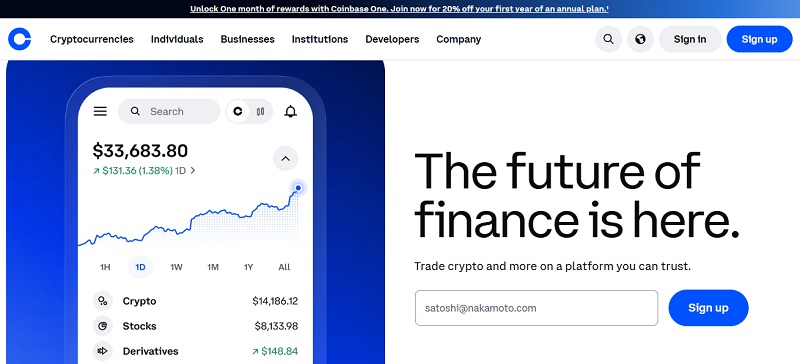
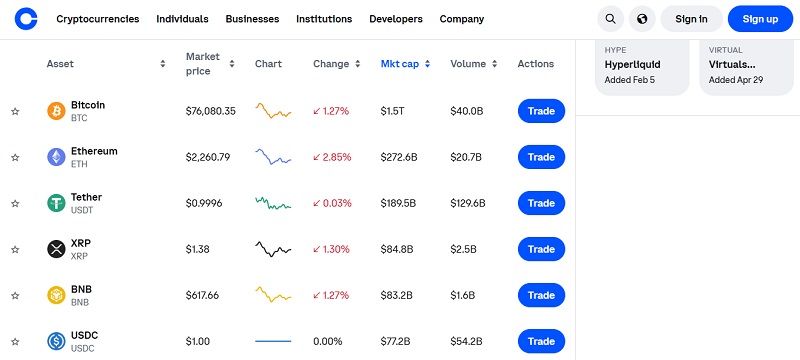
Coinbase crypto exchange supports a broad but curated range of cryptocurrencies, focusing on assets that meet internal compliance and listing standards.
Currently, the platform offers:
250+ cryptocurrencies
Major pairs (BTC, ETH, USDC)
Selected altcoins and DeFi tokens
Staking-supported assets
Compared to offshore competitors, the selection is more selective than expansive, reflecting a filtering approach tied to regulatory exposure rather than market speculation.
Coinbase exchange applies a tiered fee system, with different pricing layers depending on the interface used (simple vs advanced).
Core fee mechanics:
Maker fees: from ~0.40% to 0.00%
Taker fees: from ~0.60% to 0.05%
Spread (retail interface): ~0.5%
Card purchases: up to ~3.99%
| Parameter | Details |
|---|---|
| Fee model | Tiered (volume-based) |
| Entry-level fees | Relatively high |
| Advanced platform | Lower fees (Coinbase Advanced) |
| Leverage | Limited / regulated |
| Execution | Order book |
The cost structure is less competitive at entry level, but becomes more efficient for active traders using advanced tools.
Creating a Coinbase personal account involves a fully regulated onboarding process, reflecting its compliance obligations.
Steps include:
Email registration
Identity verification (KYC mandatory)
Address and document confirmation
The Coinbase personal account provides:
Custodial wallet
Trading interface
Fiat on/off-ramp integration
Unlike many exchanges, full functionality is not accessible without verification, which limits anonymity but increases regulatory clarity.
Coinbase exchange supports both crypto and fiat transactions, making it one of the most accessible platforms for beginners.
Available methods:
Bank transfers (ACH, SEPA)
Wire transfers
Debit/credit cards
Crypto deposits
| Method | Deposit | Withdrawal | Fees | Speed |
|---|---|---|---|---|
| Bank transfer | Yes | Yes | Often low/free | 1–3 days |
| Card | Yes | Limited | Up to ~3.99% | Instant |
| Crypto | Yes | Yes | Network-based | Minutes |
When withdrawing money from Coinbase, conditions vary:
ACH withdrawals: often free
Wire transfers: ~$25
Crypto withdrawals: network-dependent
The platform offers strong fiat integration, but cost efficiency depends heavily on the chosen payment channel.
Company: Coinbase, Inc.
Founded: 2012
Jurisdiction: United States
Public company (NASDAQ: COIN)
Domain data:
Created: 2011-07-02
Updated: 2024-06-01
Infrastructure: Cloudflare (US)
Source: DomainTools
Unlike many crypto platforms, Coinbase exchange demonstrates high corporate transparency, supported by public filings and regulatory reporting obligations.
Additionally:
Operates under multiple regulatory frameworks
Expanding into regulated derivatives in Europe
Aligning with upcoming MiCA standards
General Coinbase reviews indicate a polarized but predictable pattern, largely driven by user experience level.
Positive aspects:
Strong security reputation
Clear interface for beginners
Regulatory credibility
Reported drawbacks:
Higher fees compared to competitors
Strict verification requirements
Limited advanced trading features
User feedback tends to correlate with expectations:
beginners often have a positive experience
advanced traders are more critical, especially when it comes to fees
| Criteria | Assessment |
|---|---|
| Regulation | High (US-regulated) |
| Corporate transparency | High (public company) |
| Trading conditions | Moderate (fee-sensitive) |
| Platform transparency | High |
| Overall risk | Low to Medium |
Coinbase crypto exchange represents a compliance-driven trading environment, prioritizing safety and regulatory alignment over aggressive market features.
It is best suited for:
beginners entering crypto markets
users requiring fiat integration
traders prioritizing legal transparency
Less suitable for:
high-frequency traders seeking minimal fees
users requiring high leverage or anonymity
Bottom line: Coinbase exchange offers a structured and transparent ecosystem, where reduced flexibility is exchanged for increased regulatory security and operational clarity.
Checking a company's activities is accessible to everyone through specialized online resources. When evaluating an exchange, it is important to pay attention to the presence of legal status, the length of operation, and transparent earning conditions. It is crucial that the stated information is genuine and not fake. Fraudsters use fake data and documents to imitate the work of legitimate service providers.
To make the right choice, it is better to consult specialists. They will conduct a verification of the cryptocurrency exchange and determine what it really is — a reliable partner or a fraudulent project.
Thanks to comments about the company's services, potential clients receive information about the possibility of real earnings under the proposed conditions. These are written by both experienced traders who have conducted a preliminary assessment of the project and actual clients.
It is important to consider that unscrupulous exchanges may pay for positive reviews. In them, supposedly satisfied users share their achievements and encourage cooperation with a reliable company. You can distinguish such opinions from genuine ones by their content and presentation. They are filled with template and simplistic phrases, as well as expressive statements.
Manipulations involving extortion of additional investments to withdraw capital are undeniable facts of fraud. Real exchanges do not require clients to make payments for fees such as insurance, taxes, transfer commissions, opening transit accounts, etc. This is how scammers operate to profit by tricking traders into making further deposits.
If the exchange refuses to withdraw money, it is important not to fall for the tricks of fraudsters. This can lead to even greater financial losses. In such cases, it is better to consult experts. They will assist in withdrawing capital considering the circumstances.
The first thing to do is to contact the company's representatives and find out the reason for the block. If they ignore the sent requests and do not provide clear instructions for resolving the issue — they are scammers. Blocking accounts is one way to prevent clients from accessing their assets and to deny further service.
Consulting with specialized professionals will be the optimal solution in this situation. They will help determine the source of the exchange account closure and suggest ways to restore access to the personal account.
Various factors can lead to the inactivity of the exchange portal. These can include DDoS attacks, technical failures in server operation, or the company's own decision to cease operations. There may also be blocking of the platform according to the client's jurisdiction laws or violations of platform rules by the user themselves.
In fraudulent companies, a non-functioning website is one of the manipulations used to limit services to existing clients. When faced with such a situation, it is advisable to utilize the services of experts . They will help establish the true cause of the problem and provide useful recommendations for further actions.
Refusal to withdraw money is a common occurrence among illegal service providers. To initiate a refund, you should gather all available information (screenshots, wallet addresses, transaction IDs) and submit a request for a chargeback.
Disputing cryptocurrency transfers is a rather specific procedure that requires a competent approach. That is why it is best to entrust its initiation to qualified specialists. They will help recover assets in accordance with established timelines and regulations.