The digital exchange Binance is one of the largest cryptocurrency platforms globally, offering the widest range of assets, advanced trading tools, and some of the lowest fees in the industry. However, its legal structure remains opaque, and regulatory risks vary significantly by jurisdiction. Binance exchange is not available in certain regions, including the United States (main platform), and has faced regulatory scrutiny.
What is Binance
Binance crypto exchange, launched in 2017, has evolved into a full-scale crypto ecosystem, offering:
Today, the platform serves millions of users globally and processes extremely high trading volumes, positioning itself as the largest crypto exchange by liquidity.
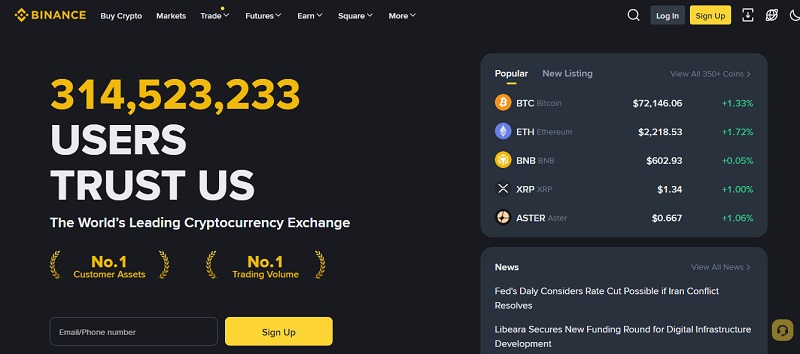
Available Crypto Assets on Binance
Binance crypto exchange provides access to one of the broadest selections of digital assets in the market, making it suitable for both retail and advanced traders.
| Asset Type | Availability | Details |
|---|
| Cryptocurrencies | 500+ | BTC, ETH, altcoins |
| Spot | Available | Core trading |
| Futures | Available | Derivatives |
| Options | Available | Advanced trading |
| NFT | Available | Marketplace |
Trading Conditions and Fees on Binance
Binance exchange is known for its competitive fee structure.
| Fee Type | Value |
|---|
| Spot Fees | 0.1% |
| Futures Fees | 0.02–0.05% |
| Deposits | Free |
| Withdrawals | Network-based |
Important details:
fees decrease with trading volume (VIP tiers)
BNB token reduces fees significantly
P2P trading may have zero fees
Hidden costs:
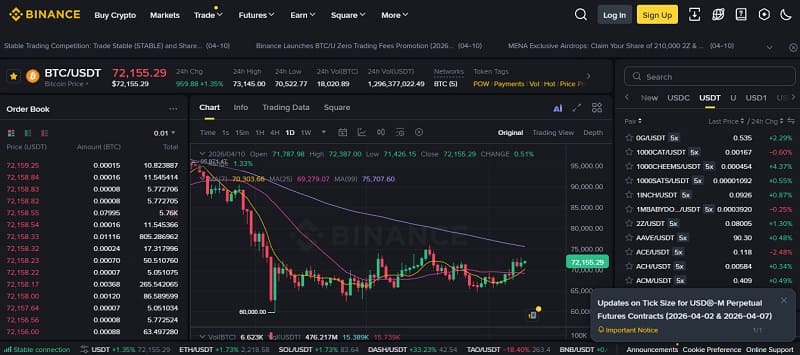
Account Registration and Verification on Binance
Binance digital exchange uses a tiered KYC system. Full functionality requires identity verification in line with AML regulations.
| Level | Requirements | Access |
|---|
| Basic | Email | Limited |
| Verified | ID | Full |
| Advanced | Extra checks | Higher limits |
Depositing Funds and Withdrawing Money from Binance
The exchange supports both crypto and fiat funding methods. When withdrawing funds from Binance, users primarily pay blockchain fees, not platform fees.
| Feature | Status |
|---|
| Crypto Deposits | Free |
| Fiat Methods | Available |
| Withdrawal Fees | Network-based |
| Processing Time | Minutes–hours |
Background and Domain Information of Binance
Established domain history of Binance exchange contributes to overall credibility, indicating a longer operational presence. However, the ownership structure and corporate affiliations remain insufficiently transparent, limiting the ability to fully assess accountability and control. This lack of clarity may raise questions for users seeking verifiable background information.
| Parameter | Details |
|---|
| Domain Created | April 1, 2017 |
| Updated | March 1, 2025 |
| Server | New York (AWS) |
| Ownership | Hidden |
Source: DomainTools
Regulation and Legal Structure of Binance
Binance crypto exchange operates under a fragmented and jurisdiction-dependent regulatory model, which differs significantly from traditional financial institutions.
The platform does not have a clearly defined global headquarters and functions through multiple legal entities across different regions. As a result, users may not always know which entity they are entering into a contractual relationship with.
Binance exchange is not uniformly regulated and has faced regulatory actions in several jurisdictions. For example:
the UK Financial Conduct Authority (FCA) stated that Binance entities are not authorized to conduct regulated activities
the platform does not hold direct FCA authorization and operates under alternative compliance structures
Binance has faced restrictions, warnings, and investigations in multiple countries, including the US and EU
The service is not unregulated, but unevenly regulated, with legal protection depending on the user’s jurisdiction. This creates a specific risk profile:
regulatory coverage varies by country
legal accountability may be unclear
dispute resolution can be complex
| Regulatory Aspect | Status |
|---|
| Global Headquarters | Not clearly defined |
| Licensing Model | Multi-entity, jurisdiction-based |
| FCA Authorization (UK) | Not authorized |
| US Market Access | Restricted (Binance.US) |
| Regulatory Actions | Warnings, restrictions, investigations |
| Legal Transparency | Limited |
| Investor Protection | Jurisdiction-dependent |
Binance Reviews and User Feedback
Independent Binance reviews highlight both strengths and concerns.
Strengths:
low trading fees
deep liquidity
wide asset selection
advanced tools
Weaknesses:
complex interface for beginners
regulatory uncertainty
inconsistent availability across regions
regulatory penalties and compliance failures in some jurisdictions
Using a Binance Personal Account
A Binance personal account provides:
However, it also involves:
Risk Assessment: Is Binance Exchange Safe?
According to BrokerChooser insights:
Strengths:
Risks:
unclear legal entity structure
operates across multiple jurisdictions
difficult dispute resolution
Binance exchange combines strong infrastructure with structural regulatory ambiguity.
Final Verdict on Binance
| Criteria | Assessment |
|---|
| Assets | Excellent |
| Fees | Very low |
| Platforms | Advanced |
| Regulation | Unclear |
| Risk | Moderate |
Binance exchange is best understood as a technologically strong but legally complex global exchange.
Suitable for:
Not ideal for:
Binance exchange is not inherently unsafe, but it operates in a regulatory gray zone. It offers top-tier trading capabilities, but requires users to take full responsibility for jurisdictional and platform-related risks.


