The digital exchange Antarctic is a cryptocurrency trading platform that entered the market in 2024. Based on publicly available information, the project combines centralized trading with decentralized infrastructure, promoting perpetual derivatives, spot markets, automated strategies, and Web3-oriented services. The technical setup is outlined through an accessible Litepaper and a dedicated documentation portal.
This review evaluates the Antarctic Exchange's transparency, published conditions, corporate background, and independently verifiable data. Unlike many established cryptocurrency systems, the available materials contain limited corporate disclosures. The reviewed documentation does not clearly identify the operating legal entity, company registration number, physical business address, named financial regulator, or a license number.
| Company Overview | Public Information |
|---|
| Launch year | 2024 |
| Official website | antarctic.exchange |
| Legal entity | Not publicly identified |
| Registered office | Not publicly disclosed |
| Regulatory licence | No publicly verifiable licence found |
| Documentation | Litepaper and documentation portal available |
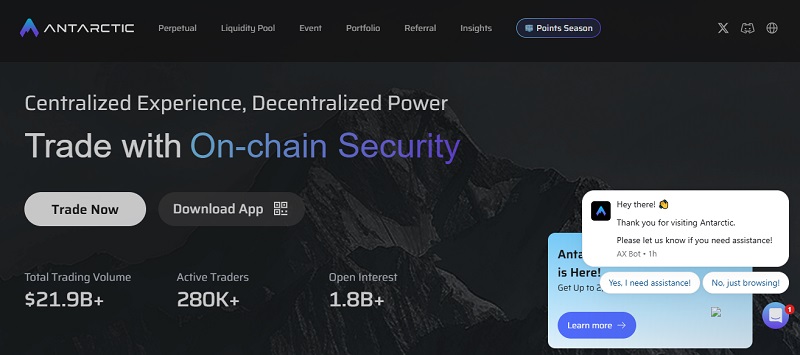
Range of Cryptocurrencies on Antarctic Exchange
The asset provider advertises access to a broad range of crypto products covering major digital currencies, stablecoins, DeFi tokens, and perpetual contracts. The exact roster of supported assets fluctuates over time based on current listing adjustments.
Examples of available digital assets include:
Major coins: BTC, ETH, SOL, BNB, XRP, ADA, LTC, AVAX
Ecosystem & meme tokens: DOGE, TRX, TON, LINK, ARB, SUI, PEPE
Besides spot markets, the Antarctic crypto exchange promotes perpetual futures with leverage together with automated tools such as Grid Trading. Management states that leverage may significantly scale both potential profits and structural losses.
| Disclosed Markets | Publicly Available Information |
|---|
| Spot Trading | Available |
| Perpetual Futures | Available |
| Grid Trading | Available |
| Copy Trading | Advertised |
| Earn & Staking | Advertised |
| Supported assets | Multiple asset options are publicly listed |
Registration and Verification on antarctic.exchange
Creating an Antarctic Exchange personal account begins through the official web portal. Users sign up using an email address before configuring authentication parameters and wallet connection settings.
The onboarding process generally includes:
Public entries indicate that additional identity verification requirements may apply depending on the specific services used and applicable compliance obligations. The developers recommend enabling two-factor authentication to improve security.
Trading Conditions and Fees of Antarctic
The Antarctic digital exchange focuses primarily on perpetual futures trading while also supporting spot transactions and automated execution features. Public materials place particular emphasis on derivatives, a non-custodial infrastructure, and liquidity provided through an internal protocol rather than a traditional centralized order book.
The system applies a VIP fee schedule based on the user's rolling 14-day volume. Standard rates are outlined below:
| Trading Conditions | Publicly Available Information |
|---|
| Spot & Futures | Operational |
| Grid & Copy Trading | Operational |
| Maker fee | From 0.0200% |
| Taker fee | From 0.0500% |
| VIP discounts | Based on 14-day trading volume |
| Gas fees for trading | Not charged according to the platform's published documentation |
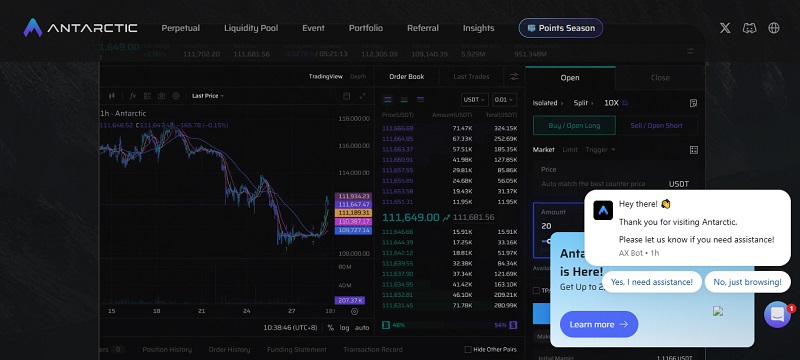
Depositing Funds and Withdrawing Money from Antarctic Exchange
The digital network Antarctic uses a non-custodial architecture in which users retain control of their assets through connected blockchain wallets. Deposits and withdrawals are executed via smart contracts rather than by transferring custody to a centralized operator.
The technical documentation indicates support for the following blockchain networks:
Ethereum
Arbitrum
BNB Chain
Funding requires connecting a compatible wallet, selecting the appropriate network, and confirming the blockchain transaction. For users considering withdrawing money from Antarctic Exchange, the public FAQ provides several operational details:
| Deposits & Withdrawals | Publicly Available Information |
|---|
| Custody model | Non-custodial |
| Supported networks | Ethereum, Arbitrum, BNB Chain |
| Minimum deposit | 10 USDT |
| Minimum withdrawal | Not specified |
| 24-hour transfer limit | 20,000 USDT (trading account to funding account) |
| Withdrawal processing | Requires blockchain confirmation |
| Wallet ownership | Users retain full control of assets through their connected wallet |
Background and Domain Information of Antarctic Exchange
The digital exchange Antarctic is a relatively new asset platform whose public footprint begins in 2024.
| Parameter | Details |
|---|
| Launch year | 2024 |
| Official website | antarctic.exchange |
| Domain registration | March 13, 2024 |
| Latest domain update | January 15, 2025 |
| Hosting infrastructure | Cloudflare |
Source: DomainTools
At the time of review, no operating company, registered business address, or financial license number could be independently verified from accessible materials. The published technical papers do not identify the legal entity responsible for managing the firm's commercial operations.
Client Feedback and Antarctic Exchange Reviews
Independent Antarctic Exchange reviews can be found on the project's official Trustpilot profile. It contains a relatively small number of comments, meaning customer feedback should be interpreted cautiously because a limited sample size may not fully represent the experience of the broader user base.
Positive user input most commonly highlights:
Low structural transaction fees
Smooth trading interface layout
Perpetual futures functionality
Critical feedback primarily refers to:
Difficulties withdrawing funds from Antarctic
Prolonged compliance or security reviews
Delayed support responses and unresolved requests
Individual comments represent personal experiences and should not be treated as conclusive evidence regarding the overall reliability of the environment.
Risk Assessment and Expert Conclusion for Antarctic
The Antarctic Exchange provides more technical documentation than many newly launched setups and publishes clear info regarding its trading model, fee schedule, and non-custodial architecture.
At the same time, several important elements of corporate transparency remain unavailable through public sources, including the identity of the parent company and verified regulatory credentials.
An additional analytical observation is that BrokerChooser does not currently maintain a dedicated review profile for the Antarctic digital exchange. This could stem from the platform's short operational history, a lack of verifiable regulatory status, or the fact that it has not yet been queued for evaluation.
Overall Assessment
Risk level: Medium to High
Suitable for: Experienced traders familiar with perpetual futures, self-custody solutions, and smart contract configurations.
Not suitable for: Beginners entering the market for the first time, or investors seeking entities supervised by Tier-1 financial regulators.
The Antarctic crypto exchange presents a technically ambitious environment with documented infrastructure, but its limited corporate transparency and short operating history suggest that prospective users should perform careful independent due diligence before committing significant digital assets.


