Why Fraud Networks Are Creating Their Own Financial Watchdogs
- What Is the International Securities & Financial Compliance Authority?
- Why the Portal Appears Convincing
- How the Portal Supports Investment Fraud
- Why the FCA Issued a Public Warning
- Why Investors Fall for Interconnected Networks
- How to Spot a Fake Watchdog
- Why Mock Supervisory Bodies Are Spreading
- Conclusion
- FAQ
- Sources
Investment scams have moved far beyond convincing broker portals. Today, illicit operators construct entire ecosystems engineered to replicate legitimate market oversight.
Rather than simply claiming to hold a business license, perpetrators steer prospective clients to an external domain that poses as an independent supervisor.
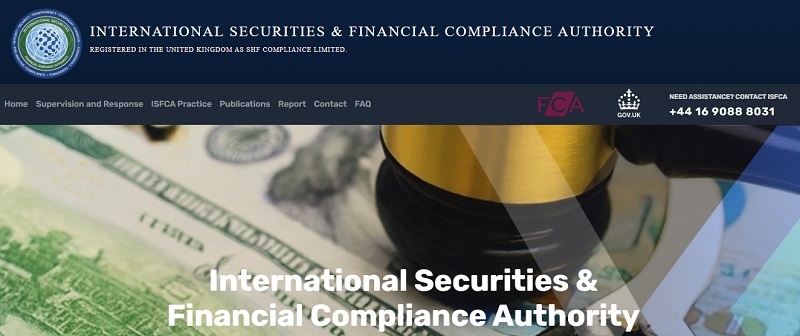
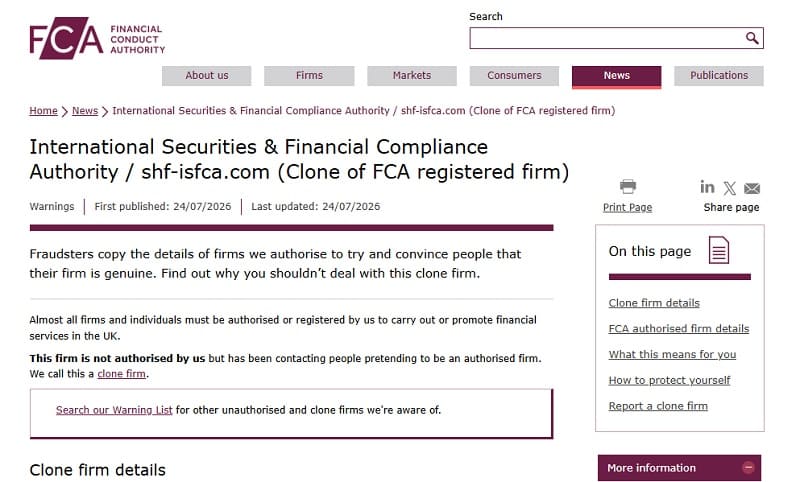
The International Securities & Financial Compliance Authority (ISFCA) illustrates this operational model. Records from the UK’s Financial Conduct Authority (FCA) show that shf-isfca.com was added to the FCA Warning List on July 24, 2026, as an unauthorized entity copying registered firms. The official alert reminds the public never to assume an organization is real simply because it adopts the appearance of an official agency.
The rollout of these mock institutions highlights a significant shift in financial schemes. Instead of asking individuals to rely on a single website, criminal groups build a constellation of connected nodes that validate one another. This multi-layered strategy makes modern traps far more convincing than traditional fraudulent trading pages.
What Is the International Securities & Financial Compliance Authority?
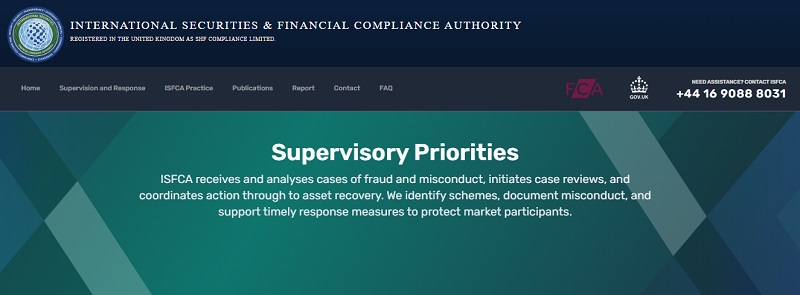
The platform presents itself as an international body responsible for supervising market participants. Its pages detail an extensive range of duties typically handled by established public watchdogs.
Purported responsibilities include:
- Authorization checks
- Entity background reviews
- Operational compliance monitoring
- Investor safety protocols
- Dispute mediation services
- Regulatory policy guidance
- Public register maintenance
Upon arrival, the portal feels remarkably authentic. Visitors find formal corporate language, dense policy documentation, and references to international standards that resemble material published by authentic authorities. Specific tools suggest that trading platforms can be independently cross-checked before transferring capital.
This design creates a deceptive psychological bridge. Rather than relying solely on a broker’s promotional claims, users are encouraged to run what appears to be an impartial record search. When the lookup portal confirms that a company is "approved" or "registered," confidence rises immediately.
However, no statutory framework establishes the International Securities & Financial Compliance Authority as a genuine enforcement body. Unlike statutory institutions such as the FCA, SEC, ASIC, or CySEC, ISFCA possesses no legal mandate, legislative backing, or formal supervisory powers. No public records link the entity to recognized national governments or global regulatory associations.
Polished visual design cannot substitute for statutory authority.
Why the Portal Appears Convincing
Modern investment traps rarely rely on poorly constructed web pages. Illicit networks deploy significant resources to establish an aura of institutional authority.
Elements used to create false credibility:
- Formal legal and financial terminology
- Detailed citations of compliance standards
- Interactive database lookup features
- Verification search fields
- Elaborate terms of service disclosures
- Institutional corporate identity
- Structured inquiry forms
Viewed separately, each detail seems reasonable. Combined, they create the impression that an impartial supervisory board is auditing platforms behind the scenes.
This dynamic leverages a clear psychological principle: people naturally trust information more when it appears to come from an unlinked third party rather than the platform itself. That reality makes fake validation portals extremely valuable tools for organized schemes.
Public warnings from the FCA consistently note that bad actors create clone firms and elaborate portals designed to mirror legitimate institutions. Regulators advise individuals to verify every firm through official portals like the FCA Financial Services Register rather than trusting logos, badges, or third-party links.
| Claim Presented on the Site | What Users Should Check Independently |
|---|---|
| Global financial oversight body | Confirm whether the entity was established by public law or government act. |
| License lookup service | Verify whether statutory government agencies recognize the entity's authority. |
| Public directory of approved firms | Cross-check listed companies against primary state registries. |
| Investor protection functions | Determine whether formal legal powers and compensation mechanisms actually exist. |
| Official authorization certificates | Validate certificate numbers directly within recognized government databases. |
| Institutional branding & legal language | Check whether established global regulators recognize the body as a peer institution. |
The International Securities & Financial Compliance Authority highlights an evolving tactic across the industry. Rather than creating an isolated broker platform, bad actors set up interconnected networks that validate each other before any money changes hands.
Also Read: How Scam Brokers Manipulate Trading Platforms

How the Portal Supports Investment Fraud
The ISFCA platform does not function as a brokerage site; its purpose is strategic. Instead of taking funds directly, it provides a layer of synthetic credibility that illicit trading venues can reference during customer communications.
A typical interaction progresses through several steps:
- Initial Pitch: A representative asserts that their platform operates under global supervision.
- Verification Request: A client asks for proof of authorization before depositing funds.
- Redirect to Proxy: The representative provides a link to the ISFCA portal instead of an official government directory.
- False Validation: The client searches the business name and finds a record confirming valid status.
- Dismantled Skepticism: The investor drops their guard, assuming the platform’s claims have been independently confirmed.
This process generates what analysts call borrowed credibility. Trust flows from the bogus watchdog directly to the trading venue, even though both sites belong to the same underlying network. Third-party validation routinely carries far more persuasive power than self-interested claims.
Why the FCA Issued a Public Warning
On July 24, 2026, the UK's Financial Conduct Authority added the International Securities & Financial Compliance Authority (shf-isfca.com) to its official Warning List. The entry identifies the domain as a copycat entity imitating an authorized firm, warning the public against trusting the site based on its formal appearance.
A clone operation differs from a basic fake web page. Instead of building an unlinked brand from scratch, operators adopt the details, registration numbers, or corporate identity of genuine institutions to mislead consumers.
The FCA points out that bad actors routinely duplicate official registration numbers, business addresses, branding assets, and contact channels. Because of this, consumers are advised to verify web addresses, phone numbers, and emails against public government records rather than materials supplied directly by sales representatives.
A functional search bar or downloadable certificate does not grant legal standing. Only statutory public agencies can confirm whether a supervisor exists under applicable laws.
Why Investors Fall for Interconnected Networks
Contemporary cybercrime relies heavily on multi-site structures rather than standalone platforms. Each web property serves a distinct purpose within the broader story:
- Site A: Promotes investment packages and trading returns.
- Site B: Purports to check licenses and track regulatory status.
- Site C: Claims to handle dispute resolutions or fund recovery.
Working together, these resources reinforce one another. Clients conclude they are navigating a legitimate financial ecosystem rather than a series of coordinated traps.
Industry observers note that warning list additions increasingly reflect this systemic design. Organized groups use institutional facades to cultivate trust, moving well beyond simple promises of rapid profits.
| Stage of the Operation | Core Objective |
|---|---|
| 1. Promotional campaign | Attracts initial user interest through marketing. |
| 2. Request for regulatory proof | Opens the door to introduce the proxy supervisor. |
| 3. Validation lookup via ISFCA | Delivers false third-party confirmation. |
| 4. Investor trust established | Lowers psychological barriers to committing capital. |
| 5. Subsequent financial demands | Uses false oversight to justify ongoing deposits. |
| 6. Withdrawal obstacles arise | Shifts the interaction toward account restrictions or loss. |
The ISFCA site is part of a broader shift in digital deception. It shows how organized groups construct entire supervisory structures to make financial traps significantly harder to spot.
How to Spot a Fake Watchdog
Formal visual design and legal phrasing do not equal legal authority. A systematic check of key objective criteria quickly reveals non-genuine entities.
Practical verification steps:
- Was the entity created under national legislation or formal government acts?
- Is the organization listed on official government domain suffixes (.gov, .gov.uk, etc.)?
- Is it recognized by global institutions like IOSCO (International Organization of Securities Commissions)?
- Are formal enforcement notices, legal actions, and warning lists accessible to the public?
- Can management teams and office locations be confirmed through independent public records?
- Do statutory watchdogs acknowledge the entity as a peer institution?
It is equally essential to examine the broker asking for deposits. If a firm appears exclusively in a private directory but remains absent from primary government registries, extreme caution is necessary.
Why Mock Supervisory Bodies Are Spreading
Financial fraud has expanded past basic trading pages. Illicit networks now build comprehensive infrastructure featuring:
- A retail investment interface
- A mock supervisory board
- A fake arbitration council
- A staged compliance review team
- A bogus asset recovery service
Although each component appears autonomous, all belong to the same underlying operation. Encountering multiple domains that confirm the exact same narrative naturally reduces skepticism.
This layered approach explains why clone entities remain a major challenge for regulators worldwide. Official warning lists continue to expand as agencies flag unauthorized operators, proving that visual polish can never substitute for direct cross-checking with government registries.
| Warning Sign | Why It Matters |
|---|---|
| Unknown supervisory entity | Legal standing does not exist outside its own network. |
| Single-source license lookup | Authentic approvals are always reflected in primary government databases. |
| No statutory foundation | Real watchdogs are established by public law, not private domain registrations. |
| No public enforcement record | Statutory agencies regularly publish disciplinary actions and public notices. |
| Broker references obscure watchdogs | Often indicates an attempt to manufacture false third-party validation. |
| Flagged on an official Warning List | Strong reason to break off communication and withhold funds immediately. |
Conclusion
The International Securities & Financial Compliance Authority demonstrates how financial schemes have evolved beyond basic trading pages. By imitating the regulatory environment surrounding global markets, organized groups build persuasive setups that capitalize on consumer trust.
An external platform claiming to audit or approve an investment firm carries far more weight than simple marketing claims. However, the FCA’s decision to blacklist shf-isfca.com highlights why independent cross-checking against official government records remains indispensable.
The golden rule for investors remains simple: verify both the investment firm and the organization claiming to oversee it. If either party cannot be confirmed through an official government portal, the safest option is to pause and investigate further before transferring any capital.
FAQ
What is the International Securities & Financial Compliance Authority?
It is an unauthorized web portal posing as a global financial watchdog. In July 2026, the UK's Financial Conduct Authority added shf-isfca.com to its Warning List as a clone operation.
Does a professional website design prove an organization is real?
No. Illicit networks regularly invest in high-end web design, dense legal phrasing, and interactive lookup tools. Visual polish does not equal legal authority.
How can investors verify whether a regulator is real?
Cross-reference the entity with official government portals, confirm its statutory foundation under public law, and verify whether global bodies like IOSCO recognize its status.
What is a clone firm?
According to regulatory definitions, a clone operation adopts the name, registration details, or visual identity of an authorized institution to deceive consumers into believing it is genuine.
Why do scammers create fake oversight platforms?
A secondary site offering false confirmation lowers user skepticism, making investment schemes appear safe by fabricating third-party validation.
Sources
- FCA Warning List – International Securities & Financial Compliance Authority / shf-isfca.com (Clone of FCA registered firm)
- FCA – How to protect yourself from clone firms and financial scams
- FCA — Clone firms and individuals
Get professional help with your case.