
A Practical Guide to Detecting Clone Crypto Exchange Websites
- What a Clone Exchange Actually Is
- How Clone Exchanges Are Distributed Today
- Technical Signals Most Users Miss
- Domain-Level Manipulation
- HTTPS Misconception
- Interface Cloning
- Wallet Interaction Red Flags
- Behavioral Red Flags
- Advanced Verification Framework
- Why Even Experienced Users Get Tricked
- What to Do If You Used a Clone Exchange
- Conclusion
- Sources
If a crypto exchange website looks exactly like a well-known platform, most users assume it must be safe. In 2025–2026, that assumption has become dangerous. Clone exchange websites are now so sophisticated that even experienced traders struggle to distinguish them from legitimate platforms.
These sites don’t just imitate branding — they replicate full interfaces, trading dashboards, and account balances. The result is a highly convincing illusion that often leads users to deposit funds into what appears to be a real exchange. Understanding how these clone systems operate is now essential for anyone investing online.
What a Clone Exchange Actually Is
A clone exchange is not simply a fake website — it is a fully engineered fraud environment designed to simulate real trading activity.
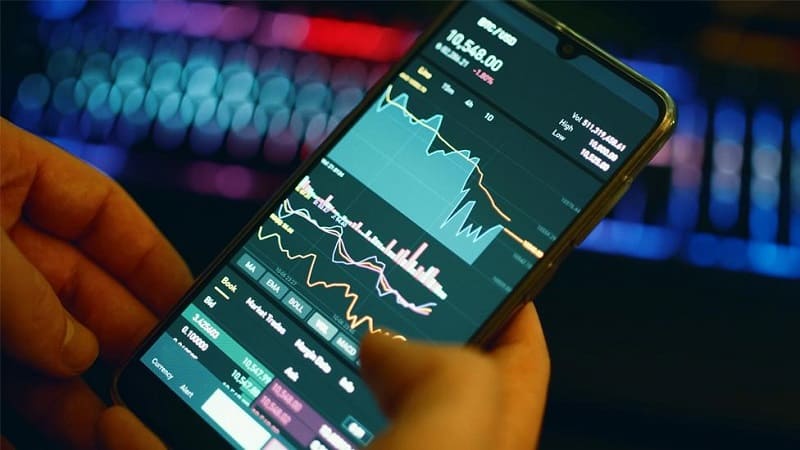
At the surface level, the platform copies the visual interface of a legitimate exchange: charts, order books, balances, and transaction history. However, behind the interface, there is often no real trading engine at all.
Instead:
- Deposits go directly to wallets controlled by scammers
- Trades are simulated, not executed on real markets
- Account balances are artificially generated
- Profits are fake and cannot be withdrawn
In many cases, users believe they are actively trading and earning profits, while in reality, all activity is scripted to build trust and encourage larger deposits.
How Clone Exchanges Are Distributed Today
Modern clone exchanges rarely rely on random discovery. They are distributed through targeted social and psychological channels.
The most common entry points include:
- Telegram, WhatsApp and Discord “signal groups” offering insider trades
- Social media messages from fake analysts or traders
- Paid ads that appear in search results (SEO poisoning)
- Phishing emails imitating known exchanges
- Fake endorsements using AI-generated or deepfake content
In many cases, the victim is guided step by step — from initial contact to account creation and first deposit — creating a false sense of trust before any money is transferred.
Technical Signals Most Users Miss
One of the main reasons clone exchanges succeed is that users focus on visual appearance instead of technical verification.
Domain-Level Manipulation
Clone sites often use domains that look almost identical to real exchanges:
- slight misspellings (e.g., “binanse” instead of “binance”)
- added words (“pro,” “vip,” “global”)
- unusual domain extensions like .site, .vip, or .club
These differences are subtle but critical.
HTTPS Misconception
Many users assume that a secure (HTTPS) connection means a site is safe. This is incorrect. Scam websites can easily obtain SSL certificates, making them appear “secure” in the browser.
Interface Cloning
Modern clone exchanges replicate:
- real-time charts
- trading dashboards
- portfolio views
However, key elements are missing:
- no real liquidity
- no connection to actual markets
- no verifiable transaction records
Wallet Interaction Red Flags
A major warning sign is how deposits are handled:
deposit addresses may remain static (real exchanges rotate addresses) no verifiable transaction ID appears on the blockchain withdrawal requests fail or remain “pending” indefinitely
Also Read: Top 5 Regulated Exchanges for 2026: Where to Trade Safely

Behavioral Red Flags
Clone exchanges are not just technical scams — they are behavioral traps.
Common manipulation tactics include:
- Urgency pressure: “Deposit now to access this opportunity”
- Exclusivity: “VIP trading group access”
- Authority bias: fake analysts or “mentors” guiding decisions
- Escalation: increasing deposits after showing fake profits
One of the clearest warning signs is when withdrawals require:
- additional fees
- taxes
- account upgrades
Legitimate exchanges do not require extra payments to release your funds.
Advanced Verification Framework
To detect clone exchanges effectively, users need a structured approach.
Step 1 — Verify the Domain via Official Sources
Always access exchanges through their official websites. Never rely on links from messages, ads, or social media.
Step 2 — Check Regulatory Presence
Look for licensing or registration with financial regulators. While not all exchanges are regulated, complete absence of transparency is a major red flag.
Step 3 — Analyze Domain History
Check how long the domain has existed. Many scam sites are newly created and disappear within months.
Step 4 — Test Withdrawals Early
If possible, deposit a small amount and attempt a withdrawal before committing larger funds.
Step 5 — Validate Market Activity
Compare prices and trading activity with known exchanges. If data cannot be verified externally, it may be fake.
Why Even Experienced Users Get Tricked
Clone exchanges succeed because they combine technical precision with psychological manipulation.
Even experienced users can be deceived because:
- interfaces are nearly identical to real platforms
- initial deposits may appear to “work”
- fake profits create confidence
- social proof (groups, testimonials) reinforces trust
The typical pattern looks like this:
- deposit,
- simulated profit,
- larger deposit,
- withdrawal blocked.
By the time users recognize the scam, significant funds have already been transferred.
What to Do If You Used a Clone Exchange
If you suspect that you interacted with a clone exchange, act quickly:
- Stop sending any additional funds immediately.
- Save all evidence, including wallet addresses, transaction hashes, screenshots of the platform.
- Contact the exchange (if impersonating a real brand).
- Report the incident to relevant authorities.
- Use blockchain explorers to track fund movement.
While recovery is not guaranteed, early action can improve the chances of tracing funds and supporting investigations.
Conclusion
Clone exchange websites are no longer simple scams — they are highly engineered systems designed to replicate trust. Their success depends on users relying on appearance instead of verification. The key takeaway is simple: a professional interface does not equal legitimacy.
By combining technical checks, behavioral awareness, and structured verification, users can significantly reduce their exposure to these increasingly sophisticated threats.
Sources
If you deposited funds into a suspicious or cloned exchange website, you can request a free consultation with the StockView team. Specialists can analyze blockchain transactions, identify suspicious wallet activity, and help you understand possible next steps.
Get professional help with your case.