Trust Wallet vs MetaMask in 2026: Which Is Actually Safer?
- The Real Security Problem Changed
- Why MetaMask Became the Biggest Target
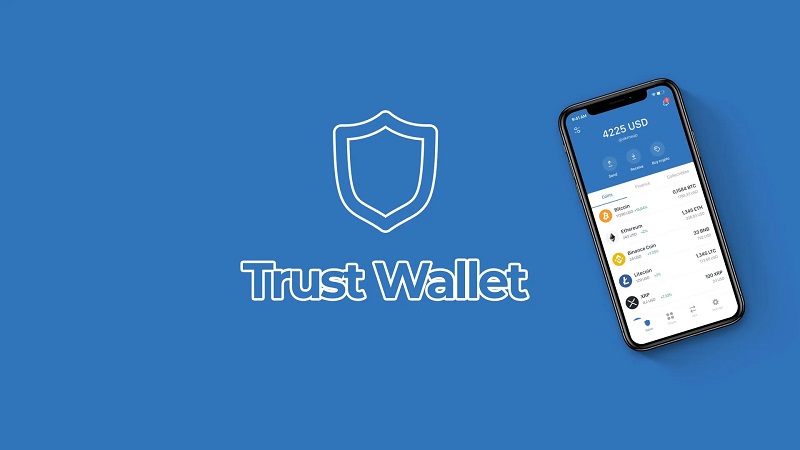
- Trust Wallet Built Around Simplicity
- Browser Security vs Mobile Security
- Phishing Resistance Became the Key Metric
- The dApp Economy Expanded the Attack Surface
- Hardware Devices Matter More Than This Comparison
- MetaMask vs Trust Wallet: Security Comparison
- The Biggest Misconception About Safety
- Conclusion
- FAQ
- Sources
Few debates in Web3 generate as much disagreement as the comparison between Trust Wallet and MetaMask.
Some users argue that MetaMask has become too dangerous because it is constantly targeted by phishing campaigns. Others claim Trust Wallet is safer because its mobile-first design feels simpler and less exposed to browser-based attacks. Across Reddit and crypto communities, the discussion continues almost daily.
The problem is that the question itself is often framed incorrectly.
In 2026, security is no longer determined solely by the application someone uses. The larger issue is how people interact with decentralized ecosystems. Most major losses today happen after users:
- voluntarily approve malicious transactions,
- connect to fraudulent dApps,
- reveal recovery phrases,
- fall victim to increasingly sophisticated social-engineering attacks.
The modern threat landscape looks very different from the early years of crypto. As decentralized finance expanded, attackers adapted as well. Instead of attempting to break encryption or compromise software directly, criminals increasingly focus on manipulating human behavior.
That shift completely changed how self-custody security should be evaluated.
The Real Security Problem Changed
A few years ago, discussions about digital-asset protection were largely focused on private keys and storage methods. Today, the biggest risks usually appear after a person already controls their funds.
Blockchain-security reports throughout 2025–2026 show a sharp rise in signature phishing, malicious approvals, fake NFT campaigns, address poisoning attacks, and so-called “drainers” that empty balances after users authorize dangerous permissions. MetaMask's own security reports highlighted a major increase in approval-based scams, showing how attackers increasingly rely on deception rather than technical exploits.
This distinction matters because it changes the entire comparison.
The central question is no longer: “Can someone hack the application?”
The more relevant question is: “How difficult is it for an attacker to trick the user?”
Why MetaMask Became the Biggest Target
MetaMask remains one of the most important gateways into Ethereum and the broader EVM ecosystem.
Its dominance created enormous advantages. Almost every major DeFi protocol, NFT marketplace, Layer-2 network, and Web3 application supports MetaMask integration. Advanced users appreciate its flexibility, extensive customization, hardware-device connectivity, and deep compatibility with decentralized infrastructure.
But popularity comes with consequences.
Because MetaMask became the default gateway to Web3, attackers naturally focus enormous resources on targeting its users:
- Fake MetaMask websites regularly appear in search results.
- Fraudulent browser extensions imitate official software.
- Scammers launch cloned dApps specifically designed to capture approvals from MetaMask users.
- Even fake “security updates” and recovery requests remain common attack methods.
- Recent phishing campaigns impersonated mandatory security upgrades and tricked victims into revealing recovery phrases through convincing fake websites.
This is one reason many community discussions create the impression that MetaMask is less secure.
In reality, its visibility simply attracts more attacks than most competitors.
Reddit discussions frequently repeat the same observation: MetaMask often becomes the primary target because it remains the largest entry point into decentralized finance. The more dominant a product becomes, the more aggressively attackers attempt to exploit its user base.
Also Read: Why More Crypto Users Are Switching From MetaMask to Rabby
Trust Wallet Built Around Simplicity
Trust Wallet followed a different trajectory.
Instead of becoming heavily associated with browser-based DeFi activity, it developed a reputation as a mobile-first solution focused on accessibility and multi-chain support. For many users entering crypto for the first time, Trust Wallet feels easier to understand:
- The interface is generally less intimidating.
- Asset management is straightforward.
- Multi-network support is integrated directly into the experience without requiring extensive manual configuration.
That simplicity became one of the main reasons for its growth. However, ease of use should not be confused with stronger protection.
The mobile environment introduces a different set of threats. Instead of malicious browser extensions or fake desktop portals, attackers increasingly rely on Telegram messages, Discord impersonation, fake support agents, social-media links, and fraudulent mobile applications.
Security researchers repeatedly warn that phishing campaigns are becoming more personalized and increasingly powered by AI-generated content. Users are now encountering highly convincing fake support conversations, cloned websites, and realistic social-engineering scenarios that are difficult to distinguish from legitimate communication.
Trust Wallet has responded by expanding its protection systems. One of its most significant recent additions is automatic address-poisoning detection, designed to identify suspicious destination addresses before transactions are completed.
According to Trust Wallet, more than 225 million poisoning attempts have already been detected globally, with hundreds of millions of dollars linked to this type of fraud.
The feature represents an important improvement, but it does not eliminate user-driven mistakes.
Also Read: Trust Wallet Scams: How Users Lose Funds and How to Protect Yourself
Browser Security vs Mobile Security
One reason the debate remains unresolved is that both products operate within fundamentally different environments:
- MetaMask emerged from browser-based Web3 infrastructure. That approach offers exceptional compatibility with decentralized applications but also increases exposure to browser-related risks. Malicious extensions, spoofed websites, poisoned search results, clipboard malware, and fake login portals remain common threats on desktop systems.
- Trust Wallet, meanwhile, is heavily associated with mobile behavior. Smartphones often feel safer because operating systems restrict certain types of software access. Yet mobile users tend to interact more impulsively with content shared through social platforms.
Many incidents begin with a simple tap on:
- a Telegram link;
- a Discord announcement;
- an X post;
- a fake airdrop campaign.
The attack vectors differ, but the underlying goal remains the same: convince the victim to authorize something dangerous.
This is why cybersecurity specialists increasingly argue that comparing environments is less important than understanding behavior.
Neither desktop nor mobile usage automatically guarantees stronger protection.
Phishing Resistance Became the Key Metric
If one factor defines modern self-custody security, it is phishing resistance.
Both MetaMask and Trust Wallet spent recent years investing heavily in transaction warnings, scam detection systems, and threat intelligence.
- MetaMask now displays trust indicators, malicious-address alerts, transaction simulations, and security notifications designed to identify suspicious activity before approvals occur. These protections rely on ecosystem intelligence, threat-detection systems, and security partners that continuously analyze on-chain activity and scam infrastructure.
- Trust Wallet expanded similar protections through address verification systems and scam-detection mechanisms designed to prevent address substitution attacks.
The challenge is that warning systems only work when people pay attention to them.
Many modern scams are intentionally built around urgency and emotional pressure. Users are told:
- rewards are expiring;
- staking opportunities are ending;
- airdrops require immediate action;
- verification must be completed instantly.
Under those conditions, even experienced participants sometimes ignore warnings.
This explains why many security experts now describe education as the strongest defense layer available.
The dApp Economy Expanded the Attack Surface
The growth of decentralized applications fundamentally changed the role of self-custody tools.
Years ago, most people simply stored assets. Today, users constantly interact with:
- DeFi protocols;
- NFT marketplaces;
- staking platforms;
- memecoin ecosystems;
- token launches.
Every new connection introduces additional exposure. The more active someone becomes in decentralized finance, the larger the attack surface becomes.
This reality affects both MetaMask and Trust Wallet users.
Although MetaMask is more closely associated with Ethereum-based DeFi, Trust Wallet users face similar risks whenever they interact with external protocols.
The danger comes from permissions and smart-contract interactions, not necessarily from the software brand itself.
Hardware Devices Matter More Than This Comparison
One theme appears repeatedly across Reddit discussions whenever security debates emerge.
Many experienced users argue that hardware protection matters significantly more than choosing between Trust Wallet and MetaMask.
For larger balances, isolating private keys through Ledger or Trezor devices dramatically reduces exposure to many common attack scenarios.
- MetaMask offers extensive integration with hardware-based solutions and remains a preferred interface for many advanced users.
- Trust Wallet also supports external-device connectivity, although its ecosystem remains more mobile-oriented.
For long-term holders, moving assets behind hardware protection typically improves security far more than switching between software platforms.
That reality often gets overlooked in online comparisons.
MetaMask vs Trust Wallet: Security Comparison
| Security Factor | MetaMask | Trust Wallet |
|---|---|---|
| Primary environment | Browser + mobile | Mobile-first |
| Multi-chain support | Strong EVM focus | Extensive multi-chain coverage |
| dApp compatibility | Extremely high | High |
| Phishing exposure | Very high | High |
| Hardware integration | Extensive | Available |
| Beginner accessibility | Moderate | High |
| Advanced customization | Strong | Moderate |
The Biggest Misconception About Safety
Many people continue asking:
“Is MetaMask safe?”
“Is Trust Wallet safe?”
The problem is that these questions imply security depends entirely on software. In reality, most modern losses occur because users:
- reveal recovery phrases;
- approve malicious permissions;
- connect to fraudulent websites;
- trust fake support agents.
The strongest protection still comes from cautious behavior, transaction verification, and understanding what is being signed before approval.
Technology can reduce risk, but it cannot eliminate responsibility.
Conclusion
The Trust Wallet versus MetaMask debate remains popular because users want a clear winner. But modern Web3 security rarely works that way.
MetaMask offers stronger integration with decentralized finance and advanced workflows. Trust Wallet delivers simplicity, broad chain support, and a mobile-first experience. Both continue investing heavily in threat detection, scam prevention, and user protection.
Yet neither can fully protect someone who signs a malicious transaction or shares sensitive credentials with an attacker.
The largest threat in 2026 is no longer software vulnerability. It is social engineering. As phishing campaigns become more sophisticated and AI-powered scams continue expanding, the safest option is often not determined by which application someone installs.
It is determined by the security habits they practice every day.
FAQ
Is Trust Wallet safer than MetaMask?
Not necessarily. They operate in different environments and face different attack models.
Why do scammers target MetaMask so heavily?
Because it remains one of the largest gateways into Ethereum and decentralized finance.
Is mobile usage automatically safer?
No. Mobile devices reduce some risks but introduce others, especially phishing through social platforms.
What are address-poisoning attacks?
They involve scammers creating lookalike addresses to trick users into sending funds to the wrong destination.
Are browser extensions dangerous?
Not inherently, but malicious extensions and fake websites remain common attack vectors.
Can fake NFTs steal funds?
Not directly, but NFT-related scams often lure victims into approving malicious transactions.
Which option is better for DeFi?
MetaMask generally provides deeper integration with Ethereum-based protocols.
Should I use a hardware device?
For significant balances, hardware protection usually provides the strongest security improvement.
What causes most losses today?
Phishing, malicious approvals, recovery-phrase theft, and social-engineering attacks.
Can warning systems stop all scams?
No. They reduce risk, but users still make the final decision when approving transactions.
Sources
Get professional help with your case.