Why More Crypto Users Are Switching From MetaMask to Rabby
- MetaMask Became the Default Web3 Wallet
- Why Users Started Experiencing “MetaMask Fatigue”
- The Blind Signing Problem
- Why Rabby Feels Different to Many Users
- MetaMask vs Rabby UX Differences
- Anti-Scam Features Became a Major Selling Point
- Multi-Chain DeFi Changed User Expectations
- Is Rabby Actually Safer Than MetaMask?
- Common Risks That Exist Regardless of Wallet Choice
- Why Some Users Still Prefer MetaMask
- Web3 Wallets Are Becoming Security Interfaces
- Conclusion
- FAQ
- Sources
For years, MetaMask was practically synonymous with Web3. If someone wanted to use Ethereum, connect to a DeFi protocol, mint NFTs, or interact with a decentralized application, MetaMask was usually the first wallet they installed.
That dominance hasn’t disappeared. MetaMask still remains one of the most widely used non-custodial wallets in crypto.
But in 2026, a noticeable shift is happening across Reddit, X, and DeFi communities. More advanced users are increasingly moving part — or all — of their activity to Rabby and other modern Web3 wallets.
The reason is not simply hype or trend-chasing. It reflects growing frustration with older wallet workflows as DeFi interactions become more complex, multi-chain, and security-sensitive.
For many users, the conversation is no longer only about storing assets. It is about:
- understanding what they are signing;
- avoiding malicious approvals;
- reducing phishing risk;
- simplifying multi-chain activity;
- improving transaction visibility.
That is where Rabby has started gaining traction.
MetaMask Became the Default Web3 Wallet
MetaMask earned its position for good reason.
During the early DeFi boom, it became the standard browser-extension wallet for Ethereum-based applications. Almost every dApp integrated it first, which created a powerful network effect.
Its strengths are still significant:
- broad compatibility;
- large ecosystem support;
- hardware wallet integration;
- mobile availability;
- strong developer adoption.
For beginners entering Web3, MetaMask often remains the default starting point.
Even today, many experienced traders still use it daily because nearly every Ethereum Virtual Machine (EVM) protocol supports it out of the box.
But as decentralized finance evolved, user expectations evolved too.
Why Users Started Experiencing “MetaMask Fatigue”
The term “MetaMask fatigue” increasingly appears in crypto discussions, especially among active DeFi participants.
The complaints are rarely about one catastrophic flaw. Instead, users describe accumulated friction:
- constant network switching;
- confusing signing prompts;
- cluttered approval flows;
- poor readability of transactions;
- extension instability;
- limited visibility into smart contract actions.
Modern DeFi is significantly more complicated than it was during Ethereum’s earlier years. Users now interact with:
- bridges;
- restaking protocols;
- perpetual trading platforms;
- cross-chain swaps;
- staking aggregators;
- automated vaults.
As workflows became more advanced, many users began feeling that older wallet interfaces did not evolve fast enough.
The Blind Signing Problem
One of the biggest security issues in Web3 is something called blind signing.
In simple terms, blind signing happens when a wallet cannot clearly explain what a transaction actually does. Instead of human-readable information, users may see:
- raw hexadecimal data;
- unreadable contract calls;
- vague permission requests.
As a result, many users approve transactions without fully understanding the consequences.
This became a massive attack surface for:
- wallet drainers;
- malicious approvals;
- fake staking platforms;
- phishing dApps;
- scam airdrops.
According to Ledger Academy, blind signing creates situations where users may unknowingly approve malicious permissions or unintended asset transfers.
Researchers have also increasingly warned about “blind message attacks” inside Web3 authentication systems.
The issue became especially visible when Ledger announced changes around blind-signing support, triggering widespread discussion among MetaMask users interacting with DeFi protocols.
For many users, this highlighted a deeper problem: they were signing transactions they could not meaningfully interpret.

Why Rabby Feels Different to Many Users
Rabby approached wallet design differently from the beginning.
Instead of acting primarily as a transaction relay, Rabby focuses heavily on transaction interpretation and contextual warnings.
Its interface tries to answer a simple question before the user clicks “Confirm”: “What exactly will happen if you sign this transaction?”
That design philosophy became one of Rabby’s biggest differentiators.
Users frequently mention:
- transaction simulation;
- asset-change previews;
- suspicious contract warnings;
- clearer approval visibility;
- automatic chain detection.
Unlike traditional signing windows that display limited technical data, Rabby often attempts to show:
- token balance changes;
- estimated asset movement;
- approval consequences;
- contract risk indicators.
Also Read: Best Practices for Using Multisig and Cold Storage
MetaMask vs Rabby UX Differences
| Feature | MetaMask | Rabby |
|---|---|---|
| Transaction simulation | Limited/native absent | Built-in previews |
| Network switching | Mostly manual | Automatic chain detection |
| Approval visibility | Basic | More detailed |
| Risk alerts | Limited warnings | Integrated alerts |
| Multi-chain usability | Functional | Streamlined |
Wallet comparison discussions increasingly focus on usability rather than pure storage functionality.
Anti-Scam Features Became a Major Selling Point
The explosion of phishing attacks and wallet drainers changed user expectations dramatically.
In earlier DeFi cycles, wallets mainly served as access tools. Today, many users expect them to actively help identify dangerous interactions.
This includes:
- suspicious approval warnings;
- malicious-site detection;
- risky contract alerts;
- transaction simulation;
- easier permission management.
MetaMask itself has expanded security warnings in recent years. Its official documentation now includes phishing and malicious-activity alerts.
However, many users argue that Rabby integrates these protections more visibly into the signing experience itself.
That difference matters psychologically.
Instead of simply asking: “Do you approve this transaction?”
Modern users increasingly want wallets to explain: “What risks are involved?”
Multi-Chain DeFi Changed User Expectations
Another reason for the shift is the rise of multi-chain activity.
Active users rarely stay on one network anymore. Many regularly move between:
- Ethereum;
- Arbitrum;
- Base;
- Optimism;
- BNB Chain;
- zkSync;
- Blast and others.
Older workflows often required constant manual chain switching, which became increasingly frustrating for active traders and DeFi participants.
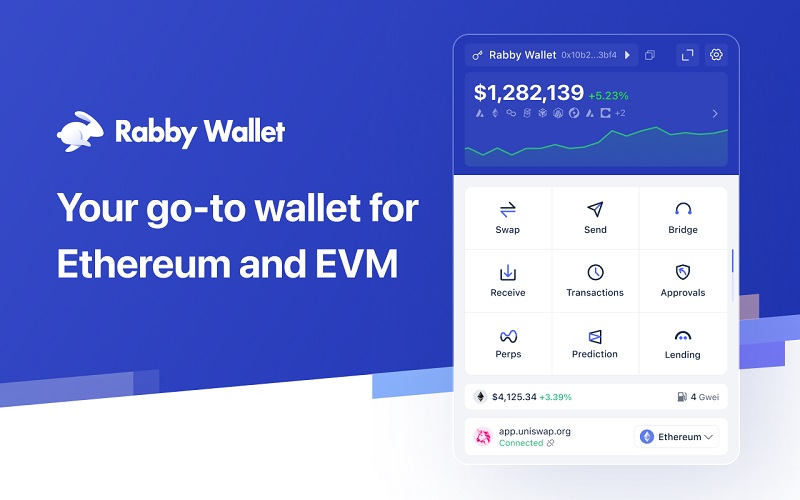
Rabby gained popularity partly because it reduces that friction through automatic network detection.
That sounds like a small improvement, but for users interacting with multiple protocols daily, it significantly changes the overall experience.
The shift reflects a broader evolution in Web3: users increasingly expect wallets to behave more like polished consumer software rather than developer tools.
Is Rabby Actually Safer Than MetaMask?
This question requires nuance.
No browser-extension wallet is completely safe.
Whether someone uses Rabby, MetaMask, or another hot wallet, core risks still remain:
- phishing websites;
- malicious approvals;
- seed phrase theft;
- compromised devices;
- social engineering.
Rabby improves transaction visibility, but visibility alone cannot fully eliminate user mistakes.
A malicious contract can still drain assets if the user ultimately signs approval requests.
Also Read: Financial Tools and Services That Flag Suspicious Wallets
Common Risks That Exist Regardless of Wallet Choice
| Risk | Still Possible? |
|---|---|
| Phishing websites | Yes |
| Malicious approvals | Yes |
| Seed phrase theft | Yes |
| Fake airdrops | Yes |
| Compromised device | Yes |
Security still depends heavily on:
- hardware-wallet usage;
- seed phrase protection;
- approval hygiene;
- phishing awareness.
Even enthusiastic Rabby users regularly acknowledge this limitation in community discussions.

Why Some Users Still Prefer MetaMask
Despite growing criticism, MetaMask remains dominant for several important reasons.
It still offers:
- enormous ecosystem compatibility;
- broad dApp support;
- established infrastructure;
- mobile adoption;
- large community resources.
Some users also simply trust the industry standard more than newer alternatives.
MetaMask’s Snaps ecosystem and hardware-wallet integrations continue making it attractive for advanced setups as well.
There is also a practical reality: many DeFi protocols optimize for MetaMask first.
As a result, numerous traders continue using both wallets simultaneously depending on the workflow.
Web3 Wallets Are Becoming Security Interfaces
The rise of Rabby reflects something bigger than one wallet gaining popularity. It shows how user expectations around Web3 security are changing.
Wallets are increasingly becoming:
- transaction interpreters;
- security layers;
- risk-analysis interfaces;
- approval-management tools.
Users no longer want to blindly approve unreadable smart-contract interactions.
Instead, they increasingly expect:
- human-readable transaction explanations;
- risk scoring;
- phishing detection;
- approval transparency;
- better contextual warnings.
Future wallet development will likely move even further toward:
- AI-assisted transaction analysis;
- automatic scam detection;
- permission monitoring;
- chain abstraction;
- behavior-based security alerts.
The era of simple “sign and hope” UX is gradually disappearing.
Also Read: How to Identify Fake Wallets on App Stores
Conclusion
The growing interest in Rabby is not really about one wallet “winning” over another. It reflects a broader shift in how experienced Web3 users think about usability and security.
As DeFi becomes more complex, users increasingly prioritize:
- transaction clarity;
- readable approvals;
- workflow efficiency;
- built-in safety signals.
MetaMask still remains one of the most important tools in crypto. But newer wallets are changing expectations around what the signing experience should actually look like.
And in 2026, that difference matters more than ever.
FAQ
Is Rabby safer than MetaMask?
Rabby improves transaction visibility and warning systems, but no hot wallet is fully safe. Security still depends heavily on user behavior.
Why are people switching from MetaMask?
Many users mention better transaction previews, smoother multi-chain workflows, and clearer approval visibility.
What is transaction simulation?
Transaction simulation attempts to show what will happen before a user signs a smart-contract interaction.
Can Rabby prevent scams?
It may help identify suspicious interactions, but users can still approve malicious transactions.
Does Rabby support hardware wallets?
Yes. Rabby supports several hardware-wallet integrations.
Is MetaMask still good for beginners?
Yes. MetaMask remains one of the easiest entry points into Ethereum and EVM ecosystems.
Can you use both wallets together?
Many advanced users use multiple wallets depending on security preferences and workflows.
What are blind-signing risks?
Blind signing means approving transactions without clearly understanding what the smart contract does.
Is Rabby open source?
Parts of the project are publicly available, although some community discussions continue debating transparency levels.
Which wallet is better for DeFi?
That depends on user priorities. Some prefer MetaMask’s ecosystem support, while others value Rabby’s transaction visibility and UX.
Sources
Get professional help with your case.