


The interface feels slow, and sometimes the wallet freezes or stops responding
1
David Mourato
The digital service MetaMask is one of the most widely used non-custodial crypto wallets globally, serving as a primary gateway to Web3 and DeFi ecosystems. With a domain history since 2015, backing from ConsenSys, and massive adoption, the service is considered a low-risk industry-standard solution, though it remains exposed to typical browser wallet vulnerabilities such as phishing and user-side errors.
Meta Mask wallet is not just a crypto storage — it functions as a core infrastructure layer for decentralized applications.
It is available as:
browser extension
mobile application
Unlike traditional services, MetaMask wallet is deeply integrated into:
DeFi platforms
NFT marketplaces
Web3 protocols
This makes it one of the most critical tools in the Ethereum ecosystem.
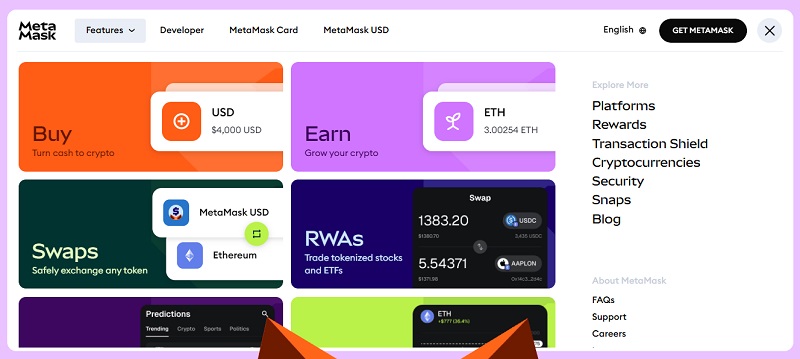
Meta Mask wallet is optimized for Web3 interaction rather than passive storage:
Ethereum and EVM network support
DApp connectivity
token swaps
NFT storage
custom network configuration
Unlike wallets like Exodus, MetaMask is less focused on UI simplicity and more on ecosystem compatibility.
Meta Mask wallet primarily supports:
Ethereum (ETH)
Arbitrum
Optimism
BNB Chain
Polygon
ERC-20 tokens
Important:
lacks native Bitcoin support
limited compatibility with non-EVM chains; requires bridges
This makes MetaMask crypto wallet ideal for DeFi users, but limited for full portfolio storage.
Setting up a MetaMask personal account is quick but security-critical.
Users:
Install extension
Generate wallet
Save seed phrase
Set password
The Meta Mask personal account is:
fully non-custodial
anonymous
unrecoverable without seed phrase
Most security incidents with the service are user-side failures, not platform breaches.
When evaluating withdrawing money from MetaMask, everything operates on-chain.
Core mechanics:
deposits via wallet address
withdrawals via blockchain transactions
Additional features:
token swaps
bridge integrations
gas fee customization
However:
gas fees can be high (especially on Ethereum)
transactions are irreversible
incorrect network usage can lead to loss of funds
MetaMask wallet uses a client-side security model:
Strengths:
private keys stored locally
open-source components
regular updates
Real risks:
phishing attacks
malicious browser extensions
fake websites
Meta Mask digital wallet itself has not suffered a systemic hack like Atomic Wallet, but users frequently lose funds due to external threats.
Domain created: July 2, 2015
Updated: July 21, 2025
Infrastructure: Cloudflare (USA, Miami)
Ownership: hidden (DATA REDACTED)
The domain profile reflects a mature, well-established product rather than a newly launched startup.
| Criteria | Assessment |
|---|---|
| Domain Age | Strong (since 2015) |
| Infrastructure | Cloudflare (USA) |
| Update Activity | Active |
| Ecosystem Presence | Industry-leading |
Source: DomainTools
MetaMask wallet is developed by ConsenSys, one of the most recognized companies in the Ethereum ecosystem.
This provides:
a high level of trust
long-term development trajectory
integration with infrastructure-level products
However, the service is not regulated and there is no bank-level protection of funds.
Reviews of MetaMask form a relatively consistent picture:
Positive:
versatility
Web3 integration
flexibility
Negative:
complexity for beginners
risk of user errors
phishing incidents
| Feature | Status |
|---|---|
| Web3 Compatibility | Excellent |
| Asset Support | EVM-focused |
| Built-in Swap | Yes |
| NFT Support | Yes |
| Custody Type | Non-custodial |
Meta Mask wallet is not a risk-free product, but its risks are transparent and predictable. Despite the lack of regulation, the software demonstrates a high level of transparency and a clean security track record, which strengthens its credibility. The strong domain history and overall low–moderate risk profile further position it as a reliable solution within the Web3 ecosystem.
| Criteria | Assessment |
|---|---|
| Regulation | Not regulated |
| Transparency | High |
| Security Track Record | Clean |
| Domain Age | Strong |
| Overall Risk | Low–Moderate |
The crypto wallet Meta Mask is an industry-standard gateway to Web3, but not a universal solution for storing all assets.
Strengths:
extensive ecosystem
strong DeFi support
high platform reliability
Weaknesses:
high dependence on user actions
phishing risks
no support for non-EVM chains
Using a MetaMask personal account, users gain full control — but must fully understand the associated risks.
The software is suitable for:
DeFi users
NFT and Web3 interactions
working with dApps
Not suitable for:
storing all assets (especially BTC)
beginners without experience
Expert recommendation: MetaMask is a core Web3 tool, but for storing large amounts it is better to use it in combination with a hardware wallet.
To determine if a wallet is a legitimate service, it is important to study its reputation among real users and experts. Special attention should be paid to the legality of its operations — the presence of registration and a license from the relevant authorities. The quality of the presentation portal and customer support is also an important factor in the verification process. Additionally, one should pay attention to URLs, as scammers can create phishing websites with domains that resemble official ones.
To make the right decision when choosing a crypto wallet, it is better to trust the verification to specialists . They will monitor the basic aspects of the service and provide a corresponding verdict.
Fake comments are characterized by a lack of specifics. Typically, they contain only general phrases without describing real user experiences. Additionally, artificially inflated reviews often show unnatural enthusiasm, indicating attempts at manipulation and psychological influence. The mass appearance of fake reviews within the same period is another sign of their inauthenticity.
Real comments provide a balanced assessment of the service. They include both the advantages and disadvantages of the wallet. A good indicator is if the reviews are published on different, independent platforms.
This is a classic sign of fraud. Legitimate platforms can only charge clients transaction fees, which are deducted from the withdrawal amount or paid at the time of the transaction. Any attempts to convince a client of the necessity of making additional payments to withdraw their own assets are pure manipulation.
If faced with such a situation, one should cease interaction with the platform and not make any transfers. To resolve the withdrawal issue, it is better to consult competent specialists. They will help clarify the circumstances and withdraw the assets.
You should contact the service support to find out the reason for the block. If the issues are related to a lack of verification, you need to provide the necessary information to personalize your profile. You can try to regain access by backing up data or using a seed phrase.
If the listed actions do not help resolve the issue, the block of the personal account may be related to fraud. This is how scammers terminate cooperation with clients and deprive them of the ability to withdraw their own assets. Seeking professional support will be the optimal solution. Experts will help identify the reason for the block and suggest measures for further actions.
This may be related to issues with user software and the digital platform. In the first case, the reasons for disruptions could be weak internet or its absence, VPN connection, or an outdated browser version. In the second case, incorrect software operation may result from server malfunctions, scheduled maintenance work, or service blocking due to numerous complaints.
Fraudulent services use website and app blocking to steal client assets. This way, they cut off contact with the user and appropriate their funds. In such situations, it is better to consult specialists . They will provide comprehensive answers to any questions.
In this case, it is advisable to use the services of experts who specialize in chargeback procedures. It is important for the client to prepare all available evidence of cooperation with the digital platform — screenshots of correspondence, receipts or statements of transfers, wallet addresses, etc.
When faced with the issue of recovering funds, it is crucial to act promptly. The chargeback procedure has its timelines and can only be conducted once. To ensure an effective recovery, it is essential to contact specialists immediately. This will allow for thorough preparation for initiating return payments in accordance with established regulations and requirements.