The digital wallet Atomic is a multi-asset non-custodial crypto service operating since 2017. Despite its long market presence and broad functionality, the 2023 security breach involving large-scale user losses remains a defining risk factor, placing the software in a medium-to-high risk category.
How Atomic Positions Itself
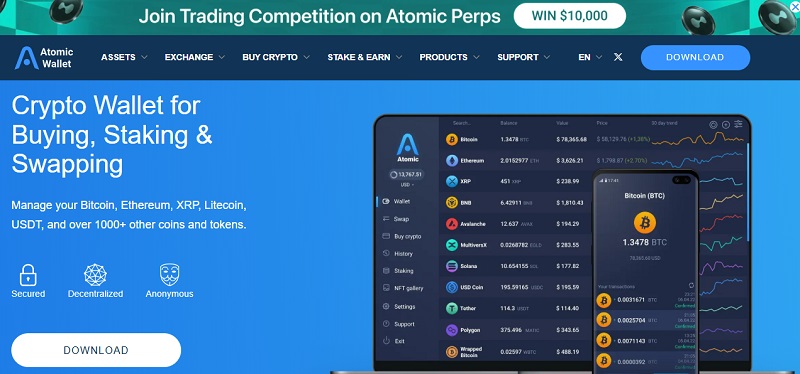
Atomic Wallet is designed as a multi-functional non-custodial service, combining storage, exchange, and staking capabilities within a single interface.
It operates across:
desktop platforms
mobile devices
Unlike browser-only wallets, AtomicWallet attempts to provide a more comprehensive ecosystem, reducing the need for external services.
Core Capabilities and Use Cases of Atomic
The wallet Atomic goes beyond basic storage and offers:
multi-asset management (300+ coins)
integrated swap functionality
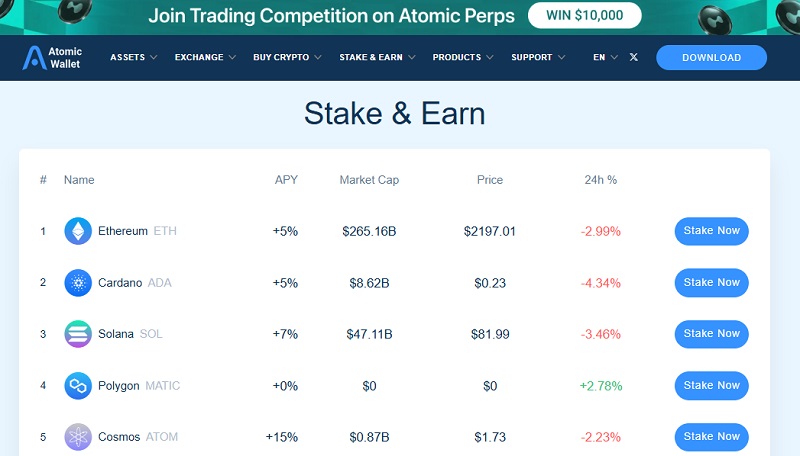
staking features
fiat purchase options via partners
portfolio tracking
This positions the service as a hybrid wallet solution, bridging the gap between traditional wallets and lightweight exchanges.
What Assets Are Supported Inside Atomic
Atomic Wallet supports a broad range of cryptocurrencies, including:
Bitcoin (BTC)
Ethereum (ETH)
XRP
Litecoin (LTC)
BNB
ERC-20 tokens
Compared to many non-custodial wallets, this is above-average asset coverage, making it suitable for diversified portfolios.
Setting Up an Atomic Personal Account
Creating an Atomic Wallet personal account follows a standard non-custodial workflow, but with important implications.
Users generate a storage locally and receive a seed phrase, which becomes the only access recovery mechanism.
The Atomic personal account is:
This architecture ensures autonomy, but also introduces irreversible risk in case of key loss.
Deposits and Withdrawing Money from Atomic Actually Work
When evaluating withdrawing money from Atomic, it's essential to distinguish between wallet mechanics and integrated services.
Direct wallet operations:
Additional layers:
However:
exchange rates often include hidden spreads
third-party providers may impose KYC
transaction speed depends on network load
This creates a mixed execution environment, not always predictable.
Atomic Wallet Security Model and the Impact of the 2023 Hack
AtomicWallet uses a non-custodial model with local encryption. But this is where the key risk emerges.
In mid-2023:
users reported unauthorized fund withdrawals
estimated losses exceeded tens of millions USD
thousands of wallets were affected
Important observations:
no definitive root cause publicly confirmed
potential vectors included malware or supply-chain compromise
compensation to users remained limited
This was not an isolated case, but a systemic event, which significantly damaged trust in Atomic.
Domain History and Infrastructure Behind AtomicWallet
Unlike many newer wallets, the crypto wallet Atomic has a long-standing domain history.
Domain created on 2017-11-16
Updated on 2025-10-15
Infrastructure: Cloudflare (USA)
Organization: DNStination Inc.
A long domain history is a positive signal, but it does not mitigate security failures. Past incidents demonstrate that even established products can face critical vulnerabilities, especially in non-custodial environments. As a result, historical credibility should be weighed alongside real security performance rather than viewed as a standalone trust factor.
| Criteria | Assessment |
|---|
| Domain Age | Established (since 2017) |
| Infrastructure | Cloudflare-based |
| Update Activity | Active |
| Historical Presence | Strong |
Source: DomainTools
Transparency and Ownership Structure of Atomic
Atomic Wallet is associated with a team historically linked to Eastern Europe (Estonia is often mentioned in sources); however:
This is typical for a non-custodial wallet, but it reduces the level of legal protection available to users.
Atomic Wallet Reviews Breakdown
Atomic Wallet reviews reflect a split user experience.
Before 2023:
After the breach:
| Criteria | Assessment |
|---|
| User Sentiment | Mixed |
| Security Complaints | Elevated |
| Support Quality | Inconsistent |
| Reputation Trend | Declining after 2023 |
Functional Strengths and Limitations of Atomic
| Feature | Status |
|---|
| Asset Support | Extensive |
| Staking | Available |
| Built-in Exchange | Yes |
| Fiat Integration | Via partners |
| Custody Type | Non-custodial |
Risk Profile of Atomic Wallet
Atomic Wallet cannot be categorized as a scam, but it also does not meet the criteria of a low-risk wallet. The lack of regulation combined with only moderate transparency limits accountability and user protection. The compromised security track record, despite a strong domain history, ultimately contributes to its medium–high risk classification.
| Criteria | Assessment |
|---|
| Regulation | Not regulated |
| Transparency | Moderate |
| Security Track Record | Compromised (2023 incident) |
| Domain Age | Strong |
| Overall Risk | Medium–High |
Final Expert Verdict on Atomic Wallet
From an analytical standpoint, AtomicWallet represents a mixed reliability case.
Strengths:
long operational history
broad functionality
multi-asset support
Weaknesses:
Using an AtomicWallet personal account gives full control over funds — but without systemic safeguards.
The service is suitable for:
Not suitable for:
Expert recommendation: Atomic Wallet should be used as a secondary service, while primary storage should rely on more secure solutions (e.g., hardware wallets).


