A well-established cryptocurrency wallet Blockchain.com has been serving users since 2011, offering a combination of wallet functionality and platform services for digital assets. Headquartered in London, United Kingdom, Blockchain is registered as a legal entity with operations in multiple countries, providing a broad reach for both retail and institutional users.
Support is offered through an online help center at support.blockchain.com. While the company holds Money Transmitter licenses in several U.S. states (NMLS ID# 2024031), users may still consider the level of oversight when comparing it with fully regulated financial institutions.
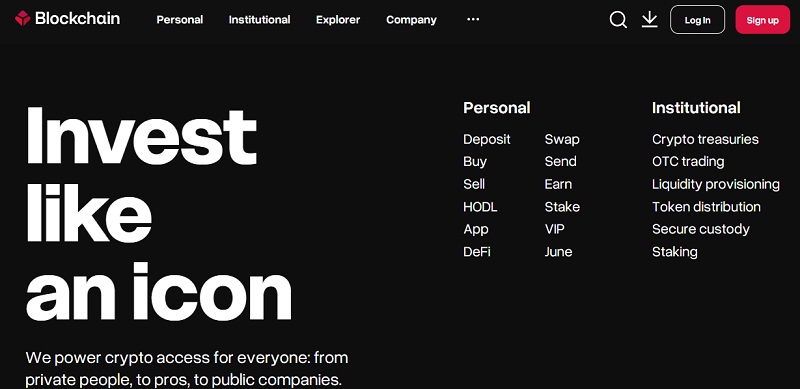
Supported Cryptocurrencies on Blockchain.com
The crypto wallet Blockchain.com supports a wide spectrum of cryptocurrencies, covering major blockchains such as:
Bitcoin (BTC),
Ethereum (ETH),
Bitcoin Cash (BCH),
Stellar (XLM),
Litecoin (LTC).
In addition, the service accommodates thousands of ERC-20 tokens, including USDC, USDT, DAI, AAVE, LINK, UNI, SHIB, and many more.
Through Blockchain.com Pay and integrated DeFi features, users can interact with a large variety of assets, making the wallet suitable for both routine crypto transactions and decentralized finance operations.
Key Functions of Blockchain
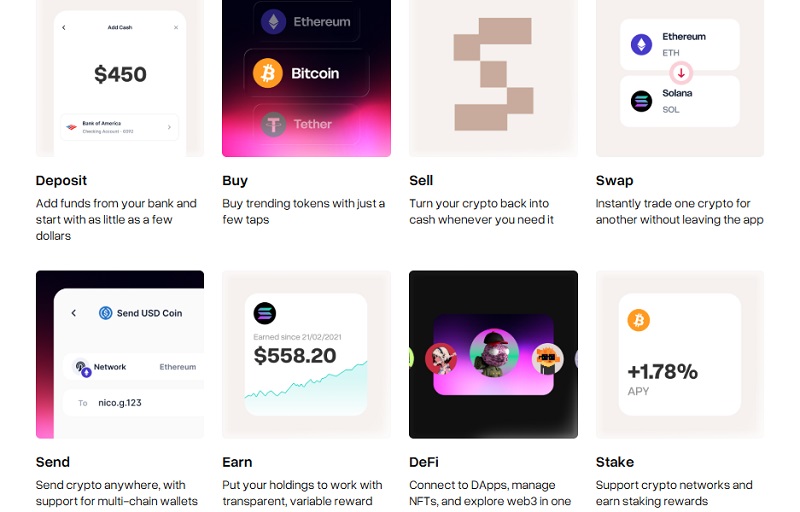
The Blockchain cryptocurrency wallet offers extensive features for managing digital assets:
Crypto storage and transfers: secure holding, sending, and receiving of cryptocurrencies.
Buy, sell, and swap: purchase or sell crypto for fiat currencies like USD, EUR, GBP using bank transfers or cards.
Decentralized wallet access: self-custody keys and connection to DApps.
DeFi earning and staking: the Blockchain.com wallet enables users to generate returns from staking and other earning programs.
Exchange and institutional tools: access trading, OTC operations, and lending for professional clients.
Analytics and developer resources: blockchain explorer and API support.
The personal account Blockchain.com centralizes these features, allowing users to manage both wallet balances and platform operations from a single interface.
Account Registration and Login on blockchain.com
Setting up a Blockchain personal account requires entering:
Additional identity verification may be requested, including documents for proof of identity, date of birth, and address. This process provides users with access to the Blockchain.com wallet and platform features while maintaining compliance with licensing requirements.
Depositing and Withdrawing Funds from Blockchain.com
Users can fund the wallet with cryptocurrency deposits, which are free of charge, or use Blockchain.com Pay to deposit fiat via cards or bank transfers.
The withdrawal of funds from Blockchain.com involves sending crypto to external addresses, with network (on-chain) fees applied. These fees fluctuate based on blockchain congestion, while deposits remain free.
Fraud and Scams Pretending to Be from Blockchain.com
As one of the most widely used cryptocurrency wallet providers in the world, Blockchain.com is frequently impersonated by scammers using increasingly sophisticated tactics.
Fraudulent emails
A core principle of crypto security is that your password, private key, and recovery phrase are strictly personal. Blockchain.com’s official security guidance clearly states that their support staff will never contact you to request your login credentials, seed phrase, or wallet access details. All recognized communications come only through the official support portal or verified email domains.
Scammers routinely send fraudulent emails that appear to be from Blockchain.com, claiming there has been a failed login attempt or account breach. These messages encourage you to click a link to “secure” or “reactivate” your account, but they redirect to fake login pages designed solely to capture your credentials. Sophisticated phishing pages may even mimic the look of the real site but use slightly different URLs or insecure connections.
Fake Websites and Clone Domains
Imitation websites and cloned login pages are among the most common fraud methods. Attackers buy domain names that look similar to the genuine Blockchain.com address and advertise them through ads or search results. Once a user enters their private information into these pages, fraudsters can steal access and drain funds. Always verify that you are on the legitimate blockchain.com domain before entering any data.
In some cases, phishing goes beyond email. Fake login forms attached to search ads or other promotional content appear to be official but lead victims to hand over their credentials. These scams exploit the trust users place in brand recognition and convincing page design.
Fake Refund, Recovery, and “Chargeback” Schemes
Scammers also target people who have lost money in other crypto scams by posing as recovery services allegedly affiliated with Blockchain.com. These fake recovery schemes often begin with convincing emails from addresses that look official, complete with company logos, and walk victims through a process that supposedly guarantees the return of lost assets. The requirements usually include paying up‑front “processing” or “synchronization” fees — which go straight to the scammers.
One variant involves fraudulent recovery agencies that send forged letters claiming that your funds are “found” in a special reserve and require you to pay a portion of that sum to access them. Victims are then directed to a spoofed wallet registration page controlled by fraudsters, where they are convinced to pay additional funds that are never returned.
Be Informed, Stay Skeptical
Crypto scammers continue evolving their techniques, exploiting the name of popular services like Blockchain.com, and 2025–2026 has seen scam tactics grow more advanced, including use of AI to generate credible spoof emails and impersonations.
For your own protection, be extremely cautious with unsolicited communications:
Never enter your passwords or recovery phrases after clicking links in emails.
Always manually navigate to the official Blockchain.com website instead of trusting hyperlinks you didn’t request.
Enable two‑factor authentication (2FA) and update your browser and wallet software regularly.
Report suspicious messages through official support channels.
Understanding and recognizing these scams can save you from losing your crypto. Never let the promise of “fund recovery”, account reactivation, or a security alert prompt you to share confidential data.
Brief Conclusion about Blockchain.com
Despite being a widely recognized platform with licensing in certain U.S. states, Blockchain.com operates in a fast-evolving crypto environment, and users should carefully consider both fees and network conditions. As with any cryptocurrency service, it is important to remain aware of potential security risks and fraudulent schemes that may target users of popular wallets. Reviewing independent reviews of Blockchain.com can help gauge reliability and suitability for managing personal digital assets.


