The online exchange Coincheck operates as a major Japanese digital asset platform catering primarily to Asia-Pacific retail traders and institutional crypto participants. Established originally in 2012 as ResuPress Inc. before rebranding to its current brand identity, the venue functions under Coincheck, Inc. and is a subsidiary of Monex Group.
While its portal coincheck.com displays credentials issued by domestic authorities, prospective clients must analyze its regulatory standing, service scope, and fee arrangements prior to committing capital.
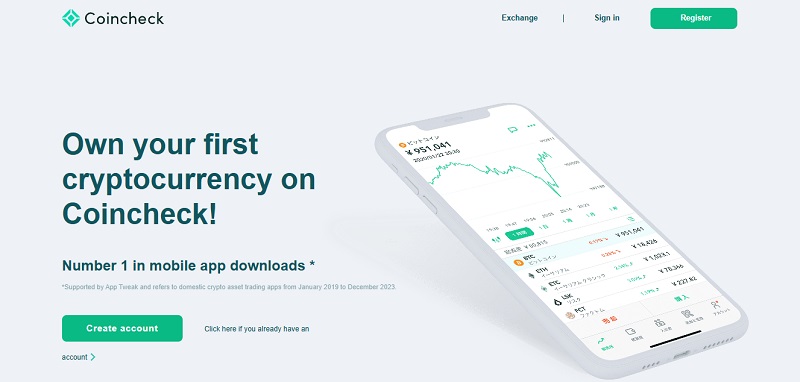
Digital Asset Portfolio and Trading Instruments on Coincheck
The Coincheck exchange provides access to leading digital currencies alongside specialized domestic tokens tailored to the Japanese market. The platform focuses primarily on spot transactions and simplified order-execution mechanisms for retail account holders.
Supported digital currencies on the Coincheck exchange include:
In addition to traditional spot trading, the platform provides OTC capabilities for high-volume transactions, automated periodic buying schedules, and an NFT marketplace ecosystem.
| Product Line | Public Operational Status | Verification Status |
|---|
| Spot Trading Terminal | Active | Verified |
| OTC Desk | Active | Verified |
| Coincheck NFT Marketplace | Active | Verified |
| Coincheck Reserve (DCA) | Active | Verified |
| Staking / Yield Programs | Select assets supported | Verified |
Trading Conditions, Operational Fees, and Infrastructure at Coincheck
Transaction costs on the Coincheck exchange depend heavily on whether trades are conducted via the basic marketplace interface or the specialized exchange board. While market-board trading on standard pairs often carries zero maker and taker commissions, the instant buy/sell portal relies on embedded spread costs that can increase trading friction.
Key fee and Coincheck crypto exchange metrics include:
Platform Board Spot Fees: 0.00% maker / 0.00% taker for standard pairs (e.g., BTC/JPY);
Instant Retail Marketplace Spreads: Ranging from 0.1% to upwards of 5.0% depending on asset liquidity;
Japanese Yen (JPY) Withdrawal Fee: Standard 407 JPY flat fee;
On-Chain Crypto Withdrawal Fees: Asset-specific (e.g., 0.0005 BTC for Bitcoin transfers).
From a technical standpoint, the web environment coincheck.com utilizes cloud service infrastructure provided by Amazon Web Services (AWS) in the United States, backed by active SSL encryption and standard Web Application Firewall (WAF) mitigations.
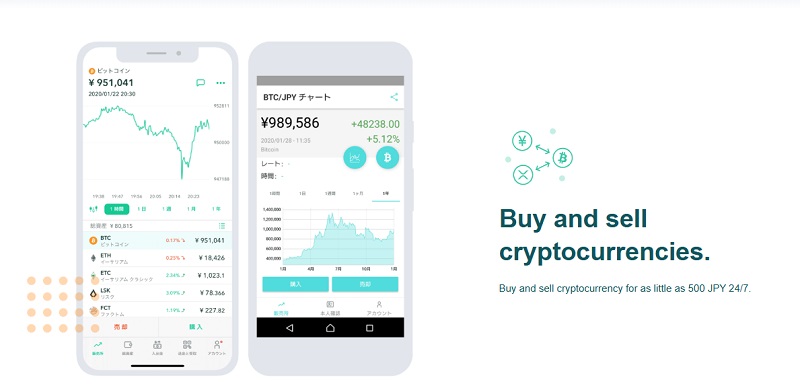
Identity Verification and Managing a Coincheck Personal Account
Accessing trading operations requires creating a Coincheck personal account through the official portal or mobile app. The platform enforces strict KYC procedures under Japanese Anti-Money Laundering legislation.
The onboarding process within a Coincheck personal account includes:
Submitting personal user credentials and email verification;
Identity document uploading (Japanese residence card, driver's license, or passport);
Real-time facial recognition verification via mobile device;
Account approval prior to activating fiat deposit or crypto transfer options;
Setting up two-factor authentication (2FA) and security notification preferences.
Depositing Capital and Withdrawing Money from Coincheck
Funding a user profile on the venue is structured primarily around Japanese Yen (JPY) channels and direct blockchain asset transfers.
| Funding Method | Deposit Fee | Withdrawal Conditions |
|---|
| Bank Transfer (JPY) | Free (client pays bank charges) | 407 JPY flat processing fee |
| Convenience Store Deposit | 770 JPY – 1,018 JPY (tier-based) | Not supported for fiat payouts |
| Quick Deposit (Pay-easy) | 770 JPY – 1,018 JPY (tier-based) | Not supported for fiat payouts |
| On-Chain Crypto Transfer | Free | Fixed asset-specific blockchain fee |
When withdrawing money from Coincheck, account holders encounter fixed JPY processing fees alongside blockchain network costs for crypto asset payouts. Complete execution rules for payouts are visible directly within the account management menu prior to order submission.
Corporate Background, Domain Records, and Licensing of Coincheck
The project traces its origin back to 2012 when founders Koichiro Wada and Yusuke Otsuka created ResuPress Inc., which launched the Coincheck exchange in 2014. Following a security incident in 2018, the firm was acquired by the major Japanese financial conglomerate Monex Group, Inc., leading to comprehensive restructuring.
DomainTools technical record:
Official website: coincheck.com
Created on: December 10, 2001
Updated on: May 14, 2026
IP Location: Portland, Oregon — Amazon.com Inc.
WHOIS Organization: c/o whoisproxy.com
According to company statements, the operating firm Coincheck, Inc. holds several corporate licenses in Japan:
Digital Currency Exchange Registration: Kanto Local Finance Bureau No. 00014;
Type 1 Financial Instruments Business Registration: Kanto Local Finance Bureau (Kinsho) No. 3540;
Electronic Payment Instruments Service Provider Registration: Kanto Local Finance Bureau No. 00002;
Member Association: Japan Virtual and Crypto Assets Exchange Association (JVCEA).
The firm lists its corporate headquarters at 1-4-1 Marunouchi, Chiyoda-ku, Tokyo 100-0005, Japan.
Public Reputation and Independent Coincheck Reviews
The official Trustpilot page for coincheck.com tracks verified and organic public sentiment regarding the exchange's retail services.
Currently, the venue holds a low score (classified under the "Poor" rating category, with roughly 1.8 out of 5 stars based on customer contributions). A detailed breakdown of Coincheck reviews reveals consistent themes regarding service functionality and customer support:
Critical feedback and recurring complaints:
Complex Verification Workflow: Users, especially international or non-native English speakers, express strong dissatisfaction with the KYC procedure, citing frequent document rejections and unclear error notifications.
Geographic Restrictions: Multiple Coincheck reviews highlight frustration over account limitations for non-residents of Japan, leaving users unable to complete full identity clearance.
Customer Support Delays: Negative comments report long response times from help desk channels when addressing locked balances or compliance verification issues.
Positive sentiment and platform advantages:
Domestic Convenience: Japanese residents praise the Coincheck app for its direct integration with local bank transfers (JPY) and straightforward fiat deposit options.
Simplified Interface: Beginner crypto buyers appreciate the clean mobile user layout for executing quick spot orders without dealing with complex order books.
Risk Evaluation, BrokerChooser Status, and Final Conclusion for Coincheck Exchange
When evaluated by international rating services, BrokerChooser does not classify the Coincheck exchange as a trusted service provider based on publicly available regulatory criteria.
Specifically, BrokerChooser notes that the operator lacks authorization from top-tier global oversight bodies, which may increase financial exposure for international market participants despite its local Japanese registration.
| Analytical Parameter | Observation / Finding |
|---|
| Foundation Year | 2012 (Rebranded/Acquired 2018) |
| Parent Company | Monex Group, Inc. |
| Local Regulation | Kanto Local Finance Bureau (Japan) |
| Top-Tier Global Licenses | None identified |
| BrokerChooser Rating | Not classified as a trusted provider |
| Overall Risk Classification | Medium Risk |
Target Audience Analysis:
Suitable for: Japanese residents, beginner traders seeking an intuitive JPY fiat gateway, and users prioritizing domestic Monex Group oversight.
Not suitable for: International investors outside Japan, high-frequency traders seeking low spreads on altcoin retail markets, or users seeking protection under Western top-tier regulatory frameworks.
Summary Verdict: The Coincheck exchange offers a well-established trading environment inside Japan backed by robust corporate governance under Monex Group. However, high retail market spreads and the absence of international top-tier financial licensing restrict its overall appeal for global investors.


