Overview: the digital wallet TokenPocket is a multi-chain self-custody cryptocurrency service introduced in 2018. The project positions itself as a Web3 gateway that combines digital asset storage, decentralized applications, token swaps, staking, and cross-chain transfers within a single ecosystem.
According to the official website tokenpocket.pro, the platform serves more than 35 million users across over 200 countries and supports hundreds of blockchain networks. Unlike custodial services, the crypto application stores private keys only on the user's device, giving the owner full control over assets. At the same time, this security model means there is no centralized account recovery mechanism if recovery credentials are lost.
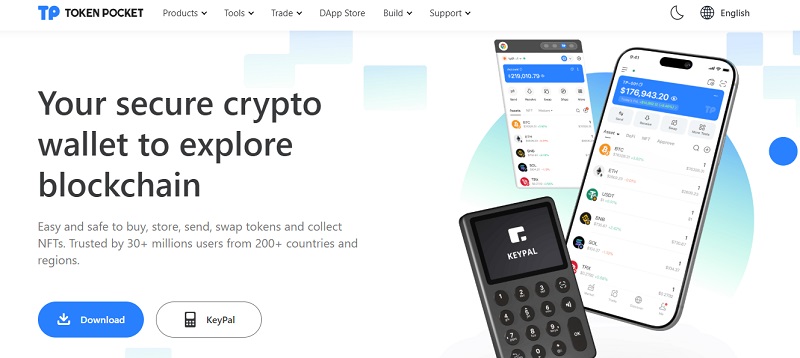
Digital Assets Supported by TokenPocket Wallet
The Token Pocket wallet is designed as a multi-chain solution rather than an application for a single blockchain. The officially supported ecosystems include:
The project also claims compatibility with more than one thousand networks and thousands of decentralized applications through its integrated Web3 browser. Asset support is significantly broader than many single-chain wallets.
Main Capabilities of TokenPocket
Beyond cryptocurrency storage, the TokenPocket wallet includes several built-in blockchain services:
decentralized token swaps;
cross-chain bridge functionality;
NFT management;
staking for selected assets;
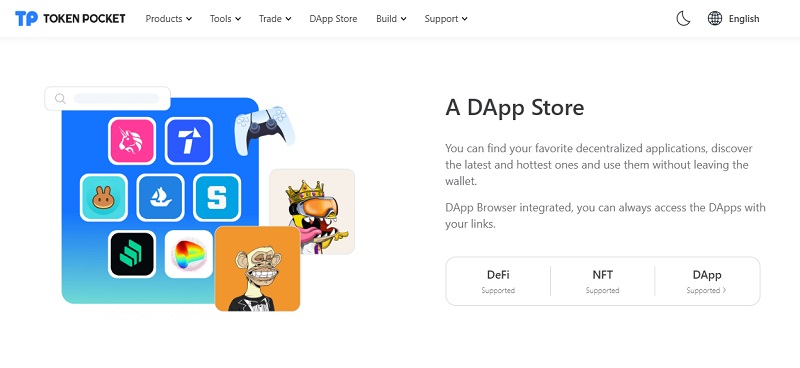
integrated DApp browser;
browser extension;
hardware wallet compatibility through KeyPal;
fiat cryptocurrency purchases via third-party providers.
Because many financial functions rely on external protocols and liquidity providers, transaction fees and exchange rates may vary depending on the selected service rather than the crypto service itself.
| Feature | Availability |
|---|
| Wallet type | Non-custodial |
| Mobile applications | Yes |
| Browser extension | Yes |
| Hardware wallet support | Yes (KeyPal) |
| NFT support | Yes |
| DApp browser | Yes |
| Cross-chain transfers | Yes |
Creating a Token Pocket Personal Account
Unlike centralized exchanges, creating a TokenPocket personal account does not involve registering an email address or opening a traditional customer account. Users simply generate a new wallet or import an existing recovery phrase or private key.
The Token Pocket personal account is controlled entirely by locally stored credentials. Recovery phrases remain on the user's device and, according to the developer, are never uploaded to company servers. This architecture improves privacy but also transfers responsibility for backups entirely to the storage platform owner.
Deposits, Transfers, and Withdrawing Money from TokenPocket
Receiving cryptocurrency requires only the appropriate blockchain address. Withdrawing money from TokenPocket is performed directly through the underlying crypto network, meaning confirmation speed depends primarily on network congestion rather than wallet processing.
Typical transaction characteristics include:
| Operation | Fee | Notes |
|---|
| Deposit | Free | Subject to the applicable blockchain network rules. |
| Withdrawal | Network fee | The final cost depends on the selected blockchain. |
| Token Swap | Variable | Pricing depends on third-party liquidity providers. |
| Cross-chain Bridge | Variable | Additional bridge charges may apply depending on the network. |
Because Token Pocket is a non-custodial wallet, it does not approve or manually review outgoing transactions. Once a blockchain transaction is confirmed, it generally cannot be reversed.
Company Background and Domain Analysis of TokenPocket
Public information indicates that the TokenPocket wallet was founded in 2018. The official website states that the project has expanded into a broader ecosystem including mobile application, browser extensions and the KeyPal hardware solution.
DomainTools information:
Although the project publicly discloses these operational details, the website tokenpocket.pro provides relatively limited information about the legal entity responsible for operating the wallet, which slightly reduces overall corporate transparency compared with some competitors.
Community Opinion and TokenPocket Reviews
Analysis of TokenPocket reviews shows a mixed pattern typical for self-custody wallets.
Positive observations frequently mention:
extensive blockchain compatibility;
convenient Web3 integration;
large DApp ecosystem;
intuitive mobile interface.
Negative comments are generally associated with:
assets lost after compromised recovery phrases;
interaction with fraudulent decentralized applications;
occasional criticism of customer support responsiveness.
Importantly, many reported losses involve phishing attacks or malicious smart contracts rather than confirmed vulnerabilities in the project software itself. As with most non-custodial platforms, overall security depends heavily on how users protect their recovery phrase and verify the applications they connect to.
Expert Assessment of Token Pocket Wallet
| Factor | Assessment |
|---|
| Wallet Model | Non-custodial |
| Blockchain Support | Very High |
| Feature Set | Extensive |
| Corporate Transparency | Medium |
| Security Model | User-controlled |
| Overall Risk | Medium |
Final Verdict
The Token Pocket wallet can be classified as a medium-risk cryptocurrency service. The underlying technology is mature, the project has operated since 2018, and its broad multi-chain support makes it attractive for active Web3 users. However, the self-custody model means there is no institutional protection if recovery credentials are lost or compromised.
Suitable for:
experienced cryptocurrency users;
DeFi and NFT participants;
users managing assets across multiple blockchains.
Less suitable for:
beginners unfamiliar with seed phrase management;
users expecting centralized customer protection;
investors seeking regulated custodial storage.
Overall, the TokenPocket wallet provides a feature-rich Web3 environment with extensive blockchain compatibility. Its security largely depends on responsible key management, while the limited disclosure regarding the operating entity should be considered by users who place a high value on corporate transparency.


