The digital exchange Riscoin presents itself as a “global professional station” for digital asset trading. The platform claims to serve users in more than 130 countries and advertises futures trading, perpetual contracts, liquidity mining, and crypto investment services.
The project operates through the domains:
riscoin69.com;
riscoinz3.com.
At the same time, publicly available information about Riscoin crypto exchange raises substantial transparency concerns. Multiple regulators and scam-monitoring resources have published warnings connected to Riscoin-related domains and associated promotional activity.
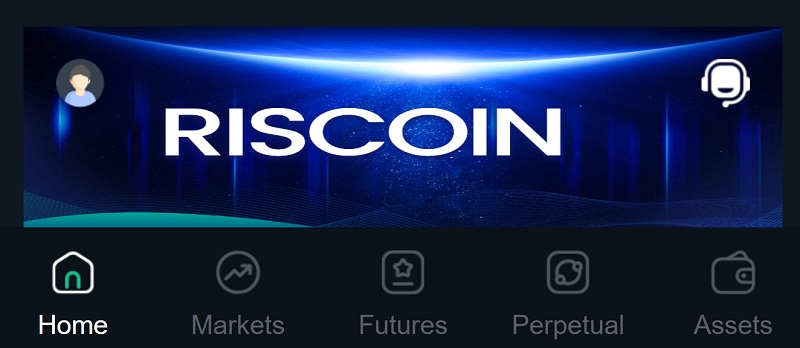
Riscoin Trading Products and Available Markets
The exchange claims to provide more than 40 digital asset trading products, although the exact number of available markets cannot be independently verified without registration.
Before creating a Riscoin personal account, the platform publicly displays several crypto trading pairs.
| Trading Pair | Market Type | Visibility Status |
|---|
| BTC / USDT | Spot trading | Publicly visible |
| ETH / USDT | Spot trading | Publicly visible |
| DOGE / USDT | Spot trading | Publicly visible |
| YFI / USDT | Spot trading | Publicly visible |
| DOT / USDT | Spot trading | Publicly visible |
| XRP / USDT | Spot trading | Publicly visible |
The platform also references futures and perpetual trading functionality, although trading conditions remain inaccessible for non-registered users.
Analytical interpretation:
The Riscoin exchange attempts to resemble a full-scale global crypto service, but independently verified liquidity metrics, reserve reports, and market-making disclosures were not identified during this review.
Riscoin Exchange Trading Mechanics
Riscoin crypto exchange advertises advanced trading infrastructure including perpetual contracts and futures products. However, most operational information remains hidden behind account registration.
Without opening a Riscoin personal account, users cannot independently verify:
| Trading Parameter | Current Observation |
|---|
| Spot trading | Advertised |
| Futures section | Accessible after registration |
| Perpetual contracts | Claimed available |
| Fee disclosure | Not publicly available |
| Reserve transparency | Not verified |
| Liquidity audits | Not confirmed |
The service repeatedly references:
global infrastructure;
institutional-grade security;
professional trading systems;
blockchain financial services.
Interpretation:
The Riscoin crypto exchange relies heavily on broad institutional marketing terminology while disclosing very limited independently verifiable operational data.
Riscoin Personal Account Registration and User Access
Opening a Riscoin personal account reportedly unlocks full service functionality including liquidity mining, deposits, withdrawals, and futures trading.
According to statements published on the platform:
demo accounts have limited functionality;
full accounts can access all exchange services;
liquidity mining is restricted to verified users.
| Account Type | Available Features |
|---|
| Demo account | Limited trading functionality |
| Demo account | Monthly virtual balance distribution |
| Full account | Deposits and withdrawals enabled |
| Full account | Liquidity mining access |
| Full account | Perpetual and futures trading |
Riscoin exchange does not clearly explain:
KYC verification procedures;
jurisdiction restrictions;
fund segregation policies;
investor protection mechanisms.
Analytical observation:
The lack of transparent compliance documentation significantly complicates evaluation of user protections and dispute resolution procedures.
Deposits and Withdrawing Money From Riscoin
Public information regarding deposits and withdrawals remains highly limited.
The digital exchange does not openly disclose:
banking partners;
transaction commissions;
minimum withdrawal limits;
blockchain confirmation policies;
reserve management procedures.
The process of withdrawing money from Riscoin cannot currently be independently validated because the exchange does not publish complete withdrawal documentation or proof-of-reserves reports.
Several user discussions and scam-monitoring resources specifically reference allegations involving blocked withdrawals and additional fee requests.
| Funding and Withdrawal Area | Transparency Status |
|---|
| Deposit conditions | Not fully disclosed |
| Withdrawal commissions | Unavailable publicly |
| Processing times | Not independently verified |
| Liquidity mining payouts | Claimed available |
| Banking infrastructure | Not disclosed |
| Reserve attestations | Not identified |
Regulation and Corporate Claims of Riscoin
Riscoin exchange claims to possess a “Company Registration Certificate” allegedly issued by ASIC. However, no verifiable ASIC license number or publicly accessible registry confirmation was identified during this review.
The platform also claims to operate globally with offices in:
However, independently verifiable office addresses and legal entity registrations were not publicly confirmed.
| Corporate Indicator | Observed Status |
|---|
| ASIC registration claim | Claimed but not verified |
| Public ASIC license number | Not identified |
| Headquarters disclosure | Claims United States presence |
| Physical office verification | Not confirmed |
| Public executive team | Not identified |
| Support channels | Telegram only |
Analytical conclusion:
The discrepancy between aggressive global positioning and limited verifiable corporate documentation substantially increases transparency concerns.
Domain History and Technical Profile of Riscoin
The domain history of the exchange indicates a relatively recent launch timeline combined with hidden ownership infrastructure.
Several regulators and independent monitoring organizations have associated Riscoin-related domains with high-risk investment activity.
| Technical Indicator | Observed Data |
|---|
| Primary domain | riscoin69.com |
| Additional domain | riscoinz3.com |
| Domain creation date | 2025-09-06 |
| Latest domain update | 2026-05-12 |
| Hosting provider | Cloudflare Inc. |
| IP location | San Jose, California |
| WHOIS ownership | Redacted for privacy |
Source: DomainTools
Riscoin Reviews and External Warnings
Public Riscoin reviews show an overwhelmingly polarized reputation profile.
Regulatory warnings include:
Multiple external reports and community discussions describe:
Telegram-based recruitment campaigns;
promises of unusually high returns;
referral-style structures;
potential “pig butchering” scam characteristics.
Analytical observation:
The coexistence of aggressive promotional narratives and formal regulatory warnings substantially increases operational risk concerns.
Risk Assessment and Final Conclusion About Riscoin Exchange
| Risk Category | Assessment |
|---|
| Corporate transparency | Very low |
| Regulatory oversight | Unverified |
| Public operational disclosure | Insufficient |
| Withdrawal transparency | Weak |
| External warning signals | Multiple regulatory concerns |
| Overall project risk | High risk |
Riscoin exchange currently demonstrates numerous characteristics commonly associated with elevated-risk crypto trading operations:
hidden ownership infrastructure;
lack of verifiable licensing;
multiple changing domains;
Telegram-focused support systems;
limited withdrawal transparency;
regulatory warning exposure.
Potentially suitable for:
Not suitable for:
conservative investors;
institutional participation;
long-term capital storage;
users prioritizing regulatory protection and operational transparency.
Bottom line:
Despite presenting itself as a global blockchain financial service provider, Riscoin exchange currently lacks many of the independent credibility indicators expected from established crypto trading platforms. The combination of regulatory warnings, unverifiable licensing claims, anonymous infrastructure, and limited transparency substantially increases the project’s overall risk profile.


