The digital exchange Coinbnv is a recently launched cryptocurrency platform operating through the official website coinbnv.com. Most trading functionality remains inaccessible without registration, which complicates independent verification of liquidity, fees, and withdrawal infrastructure.
Publicly available information about Coinbnv crypto exchange remains limited. The project does not disclose:
verifiable licensing data,
corporate ownership information,
or a confirmed headquarters address.
Several external monitoring resources classify the platform as operationally risky due to its recent domain registration and anonymous ownership structure.
Coinbnv Cryptocurrency Coverage
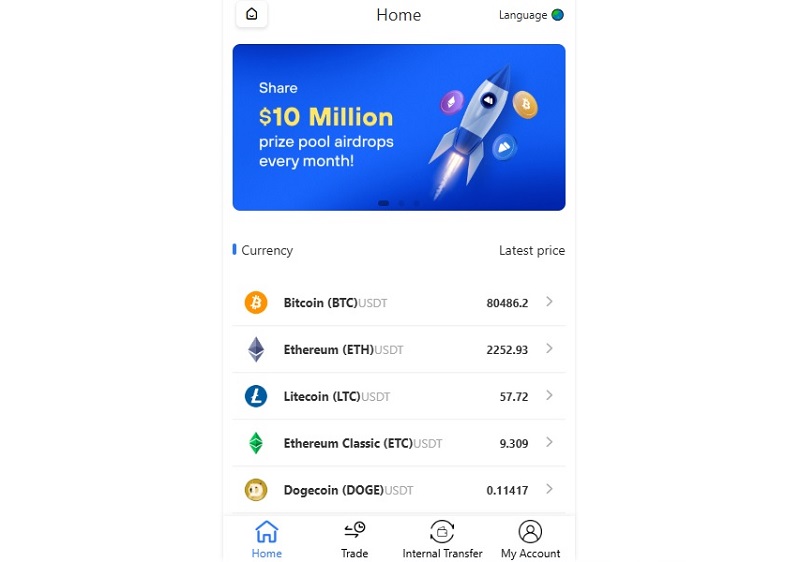
The exchange advertises support for multiple digital assets, including both major cryptocurrencies and lower-visibility altcoins. Access to full trading functionality reportedly requires creating a Coinbnv personal account.
| Asset | Category | Availability Status |
|---|
| Bitcoin (BTC) | Large-cap cryptocurrency | Advertised |
| Ethereum (ETH) | Smart contract blockchain | Advertised |
| Chainlink (LINK) | Oracle infrastructure token | Advertised |
| Dogecoin (DOGE) | Meme cryptocurrency | Advertised |
| FileCoin (FIL) | Storage blockchain asset | Advertised |
| Franko (FRK) | Low-visibility altcoin | Advertised |
The exchange also references Litecoin, XRP, Bitcoin Cash, Bitcoin SV, Ethereum Classic, and Cardano as supported trading assets.
Analytical interpretation:
The presence of recognizable cryptocurrencies does not independently confirm liquidity quality, reserve backing, or exchange solvency. Newly launched platforms frequently replicate the appearance of established exchanges while providing minimal operational disclosure.
Coinbnv Trading Conditions and Platform Mechanics
A major limitation of the crypto exchange is the absence of publicly visible trading conditions prior to registration.
Without opening a Coinbnv personal account, users cannot independently verify:
| Trading Parameter | Current Observation |
|---|
| Trading interface | Restricted before registration |
| Fee disclosure | Limited |
| Liquidity transparency | Unavailable publicly |
| Proof-of-reserves audit | Not identified |
| Institutional partnerships | Not confirmed |
| Technical documentation | Minimal |
Coinbnv exchange currently does not provide independently verified cybersecurity reports, custody disclosures, or third-party reserve audits.
Interpretation:
Restricted-access trading environments create additional transparency concerns because external analysts cannot fully inspect operational conditions before users deposit funds.
Coinbnv Personal Account Registration and Verification
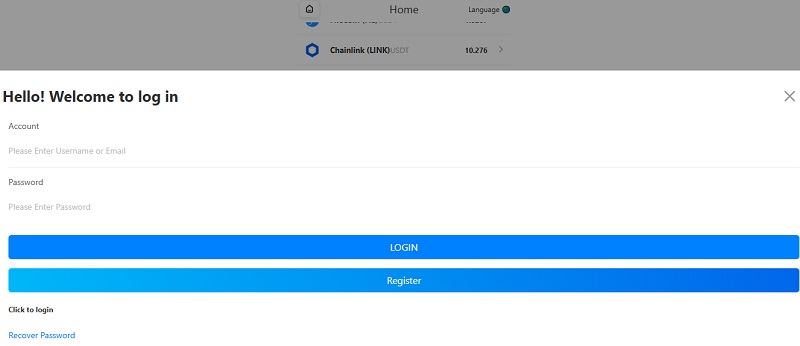
Creating a Coinbnv personal account reportedly requires standard onboarding procedures such as email registration and password setup.
The client area allegedly includes:
wallet management;
cryptocurrency balances;
internal transfers;
deposit functionality;
trading access.
However, Coinbnv exchange does not clearly explain:
KYC verification requirements;
AML procedures;
dispute resolution systems;
regional restrictions;
account recovery protections.
| Verification Area | Transparency Level |
|---|
| Identity verification policy | Partially undisclosed |
| AML compliance visibility | Low |
| Password recovery procedures | Not publicly documented |
| User agreement transparency | Limited |
| Regional compliance disclosure | Unclear |
Analytical observation:
Incomplete compliance disclosure may expose users to elevated operational uncertainty if disputes involving account access or withdrawals occur.
Deposits and Withdrawing Money From Coinbnv
Public information regarding financial infrastructure remains extremely limited. Coinbnv exchange does not openly disclose banking partners, custodial providers, or reserve management systems.
| Payment Method | Availability | Transparency |
|---|
| Cryptocurrency deposits | Claimed available | Limited |
| Cryptocurrency withdrawals | Claimed available | Limited |
| Bank transfer support | Not disclosed | Low |
| Third-party payment systems | Possible | Undefined |
| Withdrawal documentation | Incomplete | Low |
The process of withdrawing money from Coinbnv cannot currently be independently evaluated because the exchange does not publish detailed reserve guarantees or withdrawal procedures.
Several external review resources contain allegations involving:
These reports alone do not conclusively establish misconduct, but they materially increase counterparty risk concerns.
Domain Information and Corporate Background of Coinbnv
The domain profile of Coinbnv exchange indicates a very recent launch timeline combined with anonymous registration infrastructure.
| Corporate Indicator | Observed Status |
|---|
| Domain creation date | 2025-08-31 |
| Latest domain update | 2025-12-03 |
| Hosting provider | Cloudflare Inc. (United States) |
| IP location | Los Angeles, California |
| WHOIS ownership | Hidden via whoisproxy.com |
| Public headquarters address | Not identified |
| Support phone number | Not publicly available |
Source: DomainTools
The service currently does not disclose:
corporate registration numbers;
executive team information;
verified licensing documentation;
independently confirmed office locations.
Analytical conclusion:
The combination of anonymous ownership and a very recent domain registration substantially complicates credibility assessment.
Coinbnv Reviews and External Reputation Signals
Public Coinbnv reviews remain fragmented and relatively limited due to the exchange’s short operational history.
Several external monitoring services classify the domain as risky because of:
Some scam-monitoring resources specifically warn users against paying additional withdrawal “fees” allegedly requested by the platform.
Analytical observation:
This combination of operational opacity and elevated scam-risk indicators is frequently associated with newly launched offshore crypto platforms operating without verified regulatory oversight.
Risk Assessment and Final Conclusion About Coinbnv Exchange
| Risk Category | Assessment |
|---|
| Corporate transparency | Very low |
| Regulatory oversight | Not verified |
| Domain maturity | Very recent |
| Operational disclosure | Insufficient |
| Withdrawal transparency | Limited |
| Overall project risk | High risk |
Coinbnv exchange currently demonstrates multiple characteristics commonly associated with elevated-risk crypto trading environments:
anonymous ownership structures;
lack of verified regulation;
restricted-access infrastructure;
limited operational transparency;
very recent domain registration.
Potentially suitable for:
Not suitable for:
conservative investors;
institutional participants;
long-term capital storage;
users prioritizing regulatory protection and transparent infrastructure.
Bottom line:
Despite advertising support for multiple cryptocurrencies, Coinbnv exchange currently lacks many of the independent credibility indicators typically associated with established digital asset platforms. The combination of anonymous ownership, weak transparency, and limited operational disclosure substantially increases the project’s overall risk profile.


