Can the SEC Help Recover Lost Investment Funds? What Investors Should Know
- What Is the SEC?
- How SEC Regulation Works
- What the SEC Can and Cannot Do
- SEC vs FINRA vs SIPC: Understanding the Difference
- SEC
- FINRA
- SIPC
- Key Differences
- How to Verify a Broker in the United States
- Common Signs of Fake Regulation
- SEC Warnings and Investor Alerts
- Can the SEC Help Recover Money?
- What the SEC Will Never Do
- Why SEC Regulation Still Matters
- FAQ
- Sources
- Need Help?
Many investors assume that regulation automatically guarantees safety. In reality, financial regulation reduces risk — but it does not eliminate it completely. Understanding what regulators actually do, how broker oversight works, and where investor protection begins and ends has become increasingly important in 2025–2026, especially as online trading platforms and crypto-related investments continue expanding globally.
One of the most influential financial regulators in the world is the U.S. Securities and Exchange Commission (SEC). The SEC plays a central role in supervising U.S. securities markets, investigating financial misconduct, and enforcing federal securities laws.
But how reliable is the SEC in practice? Can it help investors recover money lost to broker fraud or fake investment platforms? And how can users verify whether a company is actually regulated in the United States?
What Is the SEC?
The U.S. Securities and Exchange Commission was created in 1934 following the Great Depression and the stock market crash of 1929. Its primary mission is to:
- protect investors;
- maintain fair and orderly markets;
- promote transparency;
- enforce securities laws.
The SEC oversees large segments of the American financial system, including:
- public companies;
- broker-dealers;
- investment advisers;
- securities exchanges;
- certain crypto-related investment activities.
Unlike private financial firms, the SEC does not operate as a bank, broker, or investment provider. It functions as a federal regulatory authority with investigative and enforcement powers.
The agency can:
- investigate suspected fraud;
- bring civil enforcement actions;
- impose penalties;
- suspend market participants;
- refer criminal matters to law enforcement.
However, many investors misunderstand an important limitation: SEC oversight does not guarantee that every regulated company is safe or financially stable.
How SEC Regulation Works
Companies operating in U.S. securities markets must comply with extensive reporting and disclosure requirements. Broker-dealers and investment advisers typically need to register with regulators and maintain ongoing compliance procedures.
SEC regulation focuses heavily on:
- disclosure transparency;
- anti-fraud compliance;
- investor protection standards;
- market integrity;
- operational oversight.
At the same time, the SEC does not “approve” investments or guarantee profitability. A company being registered or regulated does not mean it is risk-free.
This distinction is critical because scammers often misuse the language of regulation to create false trust.
What the SEC Can and Cannot Do
| SEC Can | SEC Cannot |
|---|---|
| Investigate securities fraud | Guarantee investment profits |
| File enforcement actions | Eliminate all investment risk |
| Suspend violators | Personally insure every loss |
| Publish investor alerts | Reverse all transactions |
| Pursue civil penalties | Automatically recover crypto assets |
The SEC’s role is supervisory and enforcement-oriented. It can pursue violators through legal channels, but it does not function as a universal compensation system for every financial loss.
SEC vs FINRA vs SIPC: Understanding the Difference
One of the biggest sources of confusion among investors is the difference between the SEC, FINRA, and SIPC. Although these organizations are connected to financial oversight, they serve different purposes.
SEC
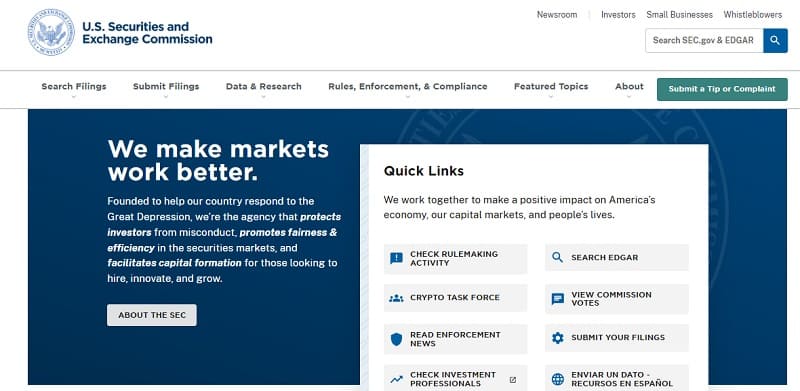
The SEC is the federal regulator responsible for enforcing U.S. securities laws and supervising financial markets.
FINRA
FINRA BrokerCheck is operated by the Financial Industry Regulatory Authority, a self-regulatory organization overseeing brokerage firms and licensed brokers.
FINRA:
- conducts examinations;
- enforces industry rules;
- disciplines brokers;
- maintains BrokerCheck records.
SIPC
SIPC is not a regulator. It is a limited protection organization that may help return customer assets if a brokerage firm becomes insolvent.
Importantly, SIPC does not protect against:
- investment losses;
- bad trading decisions;
- fraudulent promises of profits.
Key Differences
| Organization | Primary Role |
|---|---|
| SEC | Federal securities regulator |
| FINRA | Broker oversight and disciplinary supervision |
| SIPC | Limited customer asset protection during brokerage failure |
Understanding these distinctions helps investors avoid unrealistic assumptions about what “regulated” actually means.
How to Verify a Broker in the United States
Before opening a brokerage account and sending money to any investment platform, investors should independently verify registration claims.
Recommended steps include:
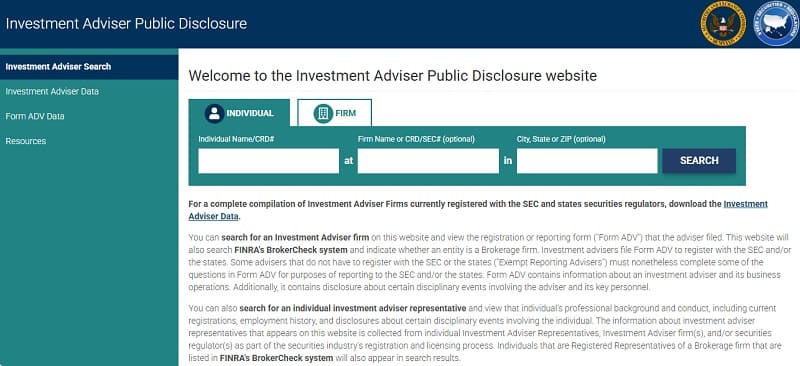
- Search the company through SEC databases.
- Check broker records through FINRA BrokerCheck.
- Verify registration numbers carefully.
- Review disciplinary history and enforcement actions.
- Compare website information with official records.
Scammers frequently create:
- cloned websites;
- fake SEC certificates;
- fabricated registration numbers;
- offshore companies pretending to operate under U.S. regulation.
A professional-looking website alone proves nothing.
Investors should also compare company names carefully. Fraudulent firms often use names similar to legitimate regulated entities to confuse users.
Also Read: How to Verify a Broker: A Step-by-Step Guide
Common Signs of Fake Regulation
- pressure to invest quickly;
- unverifiable license documents;
- missing registration details;
- offshore payment requests;
- promises of guaranteed returns;
- refusal to provide legal disclosures;
- fake “SEC approval” statements;
- suspicious customer support communication.
Many fake brokers also claim to be “fully SEC licensed,” even though the SEC itself does not issue simple consumer-facing approval certificates in the way scammers often imply.
SEC Warnings and Investor Alerts
The SEC regularly publishes investor alerts covering:
- Ponzi schemes;
- crypto investment fraud;
- AI trading scams;
- social media manipulation;
- affinity fraud;
- phishing campaigns.
Its educational portal, Investor.gov, contains resources explaining common investment risks and verification procedures.
Financial regulators increasingly warn that scammers exploit:
- fake urgency;
- celebrity endorsements;
- social proof manipulation;
- complex technical language;
- fabricated licensing claims.
This trend has become especially visible in crypto-related investment schemes and offshore broker operations targeting retail investors globally.
Can the SEC Help Recover Money?
This is one of the most misunderstood aspects of financial regulation.
The SEC can investigate fraud and pursue enforcement actions against violators. In some cases, courts may order:
- penalties;
- disgorgement of profits;
- Fair Fund distributions to harmed investors.
However, recovery is never guaranteed.
Several factors complicate recovery efforts:
- offshore company structures;
- crypto transactions;
- anonymous payment systems;
- missing records;
- rapid fund movement across jurisdictions.
In many broker scam cases, the SEC’s role is primarily regulatory and investigative rather than directly restorative.
This means investors may still need to pursue:
- bank chargebacks;
- private legal action;
- arbitration;
- blockchain tracing;
- specialized fraud recovery analysis.
The situation becomes even more difficult when dealing with completely unregulated offshore entities pretending to operate under U.S. supervision.
Also Read: Chargeback, Crypto Tracing, Courts, or Negotiations: Which Recovery Method Is Right for You?
What the SEC Will Never Do
Scammers increasingly impersonate financial regulators to target previous fraud victims.
It is important to understand what the SEC does not do.
The SEC will never:
- contact investors through Telegram or WhatsApp;
- request crypto transfers;
- ask for wallet credentials;
- demand “unlock” or “release” fees;
- promise guaranteed recovery;
- ask users to install remote access software.
Fraudsters sometimes pretend to represent regulators, law firms, or recovery departments to extract additional payments from victims already affected by investment scams.
Always verify communication through official SEC channels before responding.
Why SEC Regulation Still Matters
No regulator can eliminate financial risk entirely. Even regulated firms can fail, violate rules, or become involved in misconduct.
However, regulation still matters because it creates:
- disclosure obligations;
- reporting standards;
- enforcement mechanisms;
- legal accountability;
- greater operational transparency.
Regulated companies are generally subject to significantly higher oversight standards than completely anonymous offshore platforms.
The key is understanding the limitation of regulation. Investors should never assume that oversight replaces due diligence.
Checking licenses, verifying registration details, researching company history, and remaining cautious of unrealistic promises remain essential parts of investment safety in 2026.
FAQ
Is SEC regulation reliable?
SEC regulation is considered one of the most influential financial oversight systems globally. However, regulation reduces risk rather than eliminating it entirely.
Can the SEC recover stolen money?
In some enforcement cases, courts may authorize distributions to harmed investors. However, recovery is not guaranteed and depends heavily on the circumstances.
Does the SEC regulate crypto?
The SEC regulates certain crypto-related activities that may qualify as securities offerings, although the regulatory landscape continues evolving.
How do I check if a broker is SEC registered?
Investors can use official SEC databases and FINRA BrokerCheck to verify registration and review disciplinary history.
Is SEC the same as FINRA?
No. The SEC is a federal regulator, while FINRA is a self-regulatory organization overseeing brokerage firms and licensed brokers.
What happens after filing an SEC complaint?
Complaints may contribute to investigations or enforcement actions, but filing a complaint does not automatically result in compensation.
Can scammers fake SEC licenses?
Yes. Fraudulent platforms frequently fabricate registration claims, fake certificates, or misuse real company information.
Does SEC insurance protect investments?
No. The SEC does not insure investment performance or protect against market losses.
What should I do after broker fraud?
Document transactions, preserve communication records, contact payment providers, verify regulatory status, and seek professional analysis if necessary.
Sources
- U.S. Securities and Exchange Commission (SEC)
- FINRA BrokerCheck
- SIPC
- SEC Investor Education Portal
- FTC Consumer Protection Resources
- FBI Internet Crime Complaint Center (IC3)
Need Help?
If you lost money through a suspected investment scam, fake broker, or unregulated trading platform, obtaining an independent case review may help clarify possible next steps. StockView specialists analyze broker structures, payment flows, crypto wallet activity, and transaction patterns to assess potential recovery pathways.
A free consultation can help determine:
- whether the platform appears regulated or fraudulent;
- what recovery mechanisms may still be available;
- whether blockchain tracing or chargeback options could apply in your case.
Early analysis is often important, especially in cases involving offshore brokers, crypto transactions, or rapidly moving funds.
Get professional help with your case.