The digital exchange Paxful was a peer-to-peer cryptocurrency marketplace launched in 2015. During its operation, the operator connected buyers and sellers directly, supporting a wide range of payment methods, local currencies, and digital asset transactions. The Paxful exchange reported serving over 14 million users across 140+ countries with more than 400 payment methods.
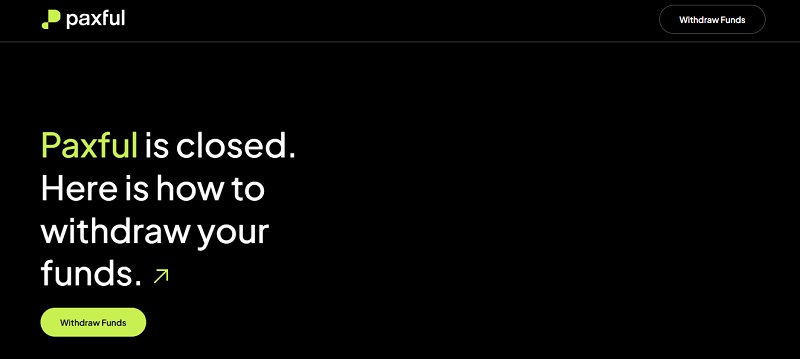
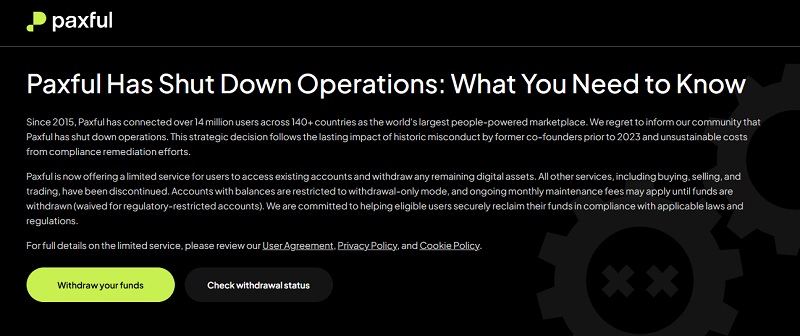
That business model is no longer active. The project announced a full wind-down with limited operations taking effect on November 1, 2025. The platform now provides restricted access solely to facilitate withdrawing money from Paxful for remaining digital assets. All buying, selling, trading, and deposit services through the former marketplace have been permanently discontinued.
This distinction is essential when reading Paxful reviews or older platform guides. While many online references describe an active P2P venue, official documentation outlines a withdrawal-only platform.
How the Former Paxful Worked
The Paxful exchange operated on a direct P2P model rather than a conventional centralized order-book structure. Users published or selected custom offers to arrange cryptocurrency trades using mutually agreed-upon payment channels, including bank transfers, gift cards, and online payment systems.
An escrow system was central to this infrastructure. During a P2P trade, the digital assets were temporarily locked until payment conditions were satisfied. Once confirmed, the funds were released to the buyer's Paxful personal account.
| Historical Feature | Status / Scope |
|---|
| Business Model | P2P cryptocurrency marketplace |
| Transaction Style | Direct buyer-to-seller trades via escrow |
| Payment Methods | 400+ supported historically |
| Global Reach | 140+ countries and markets |
| Hosted Wallet | Paxful wallet |
| Current Trading Availability | Discontinued |
Markets Previously Supported by Paxful
The range of assets available on the Paxful exchange evolved over time and varied by region and payment channel. Primary supported digital assets included:
Bitcoin (BTC),
Ethereum (ETH),
Tether (USDT),
USD Coin (USDC).
Rather than trading conventional exchange order-book pairs (e.g., BTC/USDT), users traded fiat directly for cryptocurrency. At present, there are no active trading pairs or operational markets on the platform.
Historical Fees vs. Current Terms of Paxful
The Paxful exchange did not follow standard spot-trading fee schedules. Costs depended on the seller's terms, chosen payment channels, and platform service rates.
The current limited-service model operates under updated terms:
Standard Withdrawals: Paxful charges no transaction fee, though underlying blockchain network fees still apply.
Maintenance Fee on Banned Accounts: Profiles banned under compliance terms that fail to withdraw remaining balances within 30 days of notice face a monthly maintenance fee equal to 2% of the balance or $2 (whichever is greater).
Paxful Account Registration and Verification
Opening a Paxful personal account previously provided access to trading tools, wallet storage, and P2P liquidity. New account registration is no longer available.
For existing holders accessing a client area, mandatory identity verification (KYC/AML) remains enforced before funds can be released. Identity documentation and selfie verification may be required, and access may be denied if compliance conditions are not met or if sanctions apply.
Process for Withdrawing Money from Paxful
Since November 1, 2025, new deposits, trades, and internal account-to-account transfers are disabled. The platform functions strictly as a gateway for withdrawing money from Paxful to external personal wallets.
| Operational Aspect | Current Status |
|---|
| New Deposits & Trades | Unavailable / Discontinued |
| Internal Asset Transfers | Disabled |
| Asset Withdrawal | Supported for eligible remaining balances |
| Destination | External digital asset wallets |
| Verification Requirements | Mandatory identity checks where applicable |
| Platform Withdrawal Fee | $0 (Blockchain network fees apply) |
| Restricted Jurisdictions | Russia, Crimea, DNR/LNR, Cuba, Iran, North Korea, Syria |
Paxful Corporate Background and Registration
The Paxful exchange was launched in 2015. U.S. regulatory filings identify Paxful Holdings, Inc. as a Delaware corporation incorporated in 2019, previously listing a principal address at 44 W. 28th Street, New York, NY.
Current operations are strictly organized around asset offboarding rather than active commercial trading.
| Corporate Parameter | Historical / Current Record |
|---|
| Launch Date | 2015 |
| Corporate Entity | Paxful Holdings, Inc. (Delaware, 2019) |
| Historic Office | New York, NY, USA |
| Operational Status | Marketplace closed; limited withdrawal operations |
Domain registration data for paxful.com reflects the following infrastructure details:
Created On: January 24, 2015
Updated On: January 24, 2026
IP Location: San Jose, California, USA
Hosting Provider: Cloudflare Inc.
Source: DomainTools
While the domain remains active, it routes strictly to the official wind-down portal and account withdrawal tools.
Paxful Regulatory and Compliance Record
The Paxful exchange previously operated within the U.S. Money Services Business (MSB) framework. However, major regulatory actions finalized in late 2025 and early 2026 documented significant compliance failures:
FinCEN Penalty (Dec 2025): The U.S. Financial Crimes Enforcement Network imposed a $3.5 million civil penalty against Paxful, Inc. and Paxful USA, Inc. for willful violations of the Bank Secrecy Act, including failures to maintain an effective AML program or register properly as an MSB.
DOJ Criminal Sentence (Feb 2026): Paxful Holdings, Inc. pleaded guilty to three federal charges involving compliance failures and was sentenced to pay a $4 million criminal penalty.
Company statements indicated that the costs of historical compliance remediation and co-founder legal disputes made ongoing operations unsustainable, though insolvency was denied.
Paxful Reviews and Public Reputation
Public Paxful reviews on Trustpilot show a 4.0/5 rating based on over 47,000 entries. However, Trustpilot notes that the company has not actively invited feedback recently, meaning the profile score reflects historical data.
Positive Posts: Cited user-friendly P2P options and broad international payment choices during active operations.
Negative Reviews: Frequently cite account holds, verification friction, customer support delays, and recent issues regarding fund retrieval during the wind-down phase.
Paxful Support and Contact Channels
Standard customer service for active trading is closed. Support is limited to compliance and withdrawal assistance:
Paxful Industry Ratings and Risk Summary
BrokerChooser updated its assessment in late 2025, marking the Paxful exchange as non-trusted due to the absence of top-tier regulatory oversight and subsequent U.S. government enforcement actions.
| Risk Metric | Status / Assessment |
|---|
| Operating Status | Terminated (P2P marketplace closed) |
| Regulatory History | $7.5M in combined FinCEN and DOJ penalties |
| BrokerChooser Rating | Not listed as a trusted provider |
| Primary Risk Level | High (Historical regulatory violations; active closure) |
| Recommended Action | Restrict usage strictly to withdrawing money from existing accounts |
The marketplace is permanently closed to new users and trading activities. Former clients holding digital assets should log into their existing Paxful personal account to complete verification and execute final asset withdrawals.


