The digital exchange Luno functions as an international crypto asset gateway and wallet provider, heavily focused on retail investors across Africa, Europe, and Asia-Pacific. Originally launched in 2013 under the brand name BitX by Marcus Swanepoel and Timothy Stranex, the entity was rebranded to Luno in 2017. It operates under Digital Currency Group (DCG) ownership following its acquisition in 2020.
The venue advertises authorized status in selected jurisdictions, including South Africa, where Luno (Pty) Ltd holds financial services (FSP No. 53314) and credit provider (NCRCP22123) licenses. Nevertheless, market participants should evaluate its service coverage, regulatory constraints, and execution pricing before committing capital.
Clients needing administrative or regulatory inquiries can reach out through official online support portals or contact corporate management lines in their local operating jurisdiction.

Market Offerings and Product Suite on Luno
The Luno exchange supports:
While it caters well to core retail assets, its overall token catalog is more selective compared to high-volume altcoin platforms.
Key supported coins and tokens on the Luno exchange include:
Bitcoin;
Ethereum);
USD Coin;
Tether;
Ripple;
Solana;
Cardano;
Avalanche;
Polygon;
Litecoin.
Beyond spot order books, the ecosystem features specialized products designed for long-term holders and institutional partners.
| Product Segment | Availability Status | Regulatory & Functional Notes |
|---|
| Spot Order Book | Active | Available across active fiat regions |
| Instant Buy / Sell | Active | Convenience interface with higher spreads |
| Luno Staking / Earn | Active | Available on selected PoS tokens (e.g., ETH) |
| OTC Desk | Active | Targeted at institutional & high-volume accounts |
| Crypto Bundles | Active | Automated basket investing for retail clients |
| Prediction Markets / Derivatives | Restricted | Regional availability subject to local law |
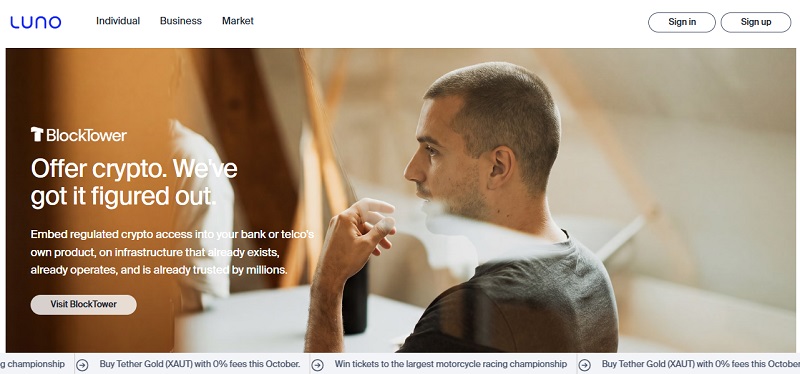
Luno Trading Conditions, Fee Schedules, and Infrastructure
Trading expenses on the Luno exchange depend on whether transactions are processed through the professional exchange terminal or via instant brokerage options. Advanced order-book traders benefit from maker/taker volume tiers, whereas instant buy/sell orders incur additional processing fees.
Published fee parameters:
Luno Exchange Spot Maker Fees: Ranging from 0.00% to 0.10% on baseline tiers;
Taker Fees: Ranging from 0.10% to 0.60% depending on trading pair and volume;
Instant Retail Transactions: Approximately 1.50% to 3.90% surcharge depending on card or instant payment rail;
Fiat Deposit & Withdrawal Fees: Free standard bank transfers; express clearing and card charges vary by country.
Technical scans indicate the primary domain luno.com runs on cloud distribution services managed by Cloudflare Inc. in San Jose, California, utilizing Web Application Firewall (WAF) filtering and active SSL certificates.
Onboarding and Verifying a Luno Personal Account
Accessing financial services requires opening a Luno personal account via the official app or web platform luno.com. Strict KYC guidelines apply globally, preventing anonymous trading.
The identity verification framework inside a client portal includes:
Initial sign-up using an email address or mobile phone number;
Submission of valid government-issued ID and personal identity details;
Proof of residence verification to unlock higher transaction tiers;
Account management inside the Luno personal account dashboard;
Enabling security options, including two-factor authentication (2FA) and device authorization.
Depositing Capital and Withdrawing Money from Luno
Funding options on the exchange encompass regional fiat banking channels alongside direct on-chain crypto deposits.
| Payment Channel | Deposit Cost | Withdrawal Parameters |
|---|
| Bank Transfer (EFT / SEPA) | Free | Free to low fixed admin fee (e.g., €0.30 / free normal EFT) |
| Express Bank Clearing | Fast processing fee applies | Fixed express fee (e.g., R20 - R80 depending on RTC status) |
| Credit / Debit Cards | 2.50% – 3.90% processing surcharge | Card payouts not supported |
| On-Chain Crypto Transfer | Free | Network mining fee displayed prior to execution |
When withdrawing money from Luno, users are shown exact network mining charges or local bank clearing fees prior to approving the transfer. The specific process for withdrawals remains transparent within the wallet interface, though processing speeds rely on regional banking clearing windows.
Domain Infrastructure, Corporate Structure, and Background of Luno Exchange
Domain analytics reveal that the web domain luno.com was originally registered decades prior to the crypto platform's rebranding in 2017.
DomainTools technical record:
Official website: luno.com
Created on: January 24, 2001
Updated on: December 24, 2025
IP Location: San Jose, California — Cloudflare Inc.
WHOIS Organization: Luno Pte. Ltd.
The platform operates through global corporate subsidiaries:
Operating Entity: Luno Pte. Ltd. (Singapore) / Luno Money Limited (UK) / Luno (Pty) Ltd (South Africa);
Corporate Offices: 3rd Floor, 86-90 Paul Street, London, United Kingdom;
Regulatory Declarations: Authorised Financial Services Provider (FSP No. 53314) and registered credit provider (NCRCP22123) in South Africa.
Customer Reputation and Public Luno Reviews
The official Trustpilot page for luno.com provides verified consumer ratings and direct feedback from the platform's active retail user base.
The platform maintains an overall "Great" rating on Trustpilot, earning approximately 3.9 to 4.1 out of 5 stars across thousands of customer evaluations. A detailed analysis of public Luno reviews highlights both key platform strengths and recurring points of friction:
Positive feedback and user benefits:
Beginner-Friendly Experience: Users consistently commend the mobile application and web interface for their clean, intuitive design, making it straightforward for newcomers to buy, hold, and sell crypto.
Reliable Fiat Off-Ramps: Positive Luno reviews highlight seamless local currency bank deposits and fast withdrawal clearing times across supported regions like South Africa, the UK, and Malaysia.
Security & Regulatory Trust: Long-term clients express confidence in the platform's strict compliance posture and transparent asset custody.
Critical commentary and user concerns:
Compliance Lockouts & Verification Delays: The most frequent complaints center on sudden account restrictions or extended delays during routine AML identity checks and source-of-wealth reviews.
Higher Retail Convenience Fees: Traders point out that instant buy/sell brokerage transactions carry higher fees and wider spreads compared to the active exchange order book.
Support Escalation Times: While customer service is available, several critical Luno reviews note that resolving complex verification or transfer issues can take multiple days.
Risk Evaluation and Summary Verdict on Luno Crypto Exchange
As an analytical observation, the Luno exchange does not currently maintain a dedicated profile on BrokerChooser.
Several neutral explanations can account for this absence:
the venue may sit outside BrokerChooser's current tracking scope, it may not align with specific listing criteria,
its regional regulatory filings may differ from traditional exchange frameworks.
The absence of a profile should not by itself be interpreted as evidence for or against the legitimacy of the company.
| Assessment Category | Finding / Status |
|---|
| Launch / Rebrand Year | Founded 2013 (Rebranded to Luno 2017) |
| Parent Company | Digital Currency Group (DCG) |
| Headquarters Address | 86-90 Paul Street, London EC2A 4NE, UK |
| Key Licenses Disclosed | FSCA FSP No. 53314, NCRCP22123 (South Africa) |
| BrokerChooser Status | Absent (Neutral observation) |
| Overall Risk Rating | Low to Medium Risk |
Suitability Profile:
Suitable for: Beginner and conservative retail investors seeking a simple fiat-to-crypto gateway, regional users in South Africa, UK, and SEA, and investors prioritizing regulatory compliance.
Not suitable for: High-frequency altcoin traders seeking hundreds of speculative micro-caps, or traders requiring high-leverage derivatives execution.
Final Conclusion: The Luno exchange provides a secure, well-structured trading environment with strong regulatory backing in specific target markets. While its asset selection is restricted compared to major global venues and instant purchase fees can be higher, its legal foundation under Digital Currency Group makes it a reliable platform for standard crypto spot transactions.


