The digital exchange Bitget is a centralized cryptocurrency trading platform launched in 2018. Since its establishment, the company has expanded from a derivatives-focused venue into a broad digital asset ecosystem offering spot markets, futures, copy trading, Web3 services, staking, lending products, trading bots, and a non-custodial wallet. According to the project, the platform now serves more than 100 million users across over 200 countries and regions.
This review is based exclusively on publicly available information. Its objective is to evaluate the transparency of the Bitget crypto exchange, available regulatory disclosures, trading conditions, independently verifiable corporate information, and user protection mechanisms.
Key facts publicly associated with the project:
Founded in 2018
Supports hundreds of cryptocurrencies and numerous derivatives markets
Offers spot, margin, futures, copy trading, earn, launchpool, bots, Bitget Wallet, and Web3 products
Publishes regular Proof of Reserves reports
Maintains a publicly disclosed Protection Fund
Operates globally, although certain jurisdictions remain restricted
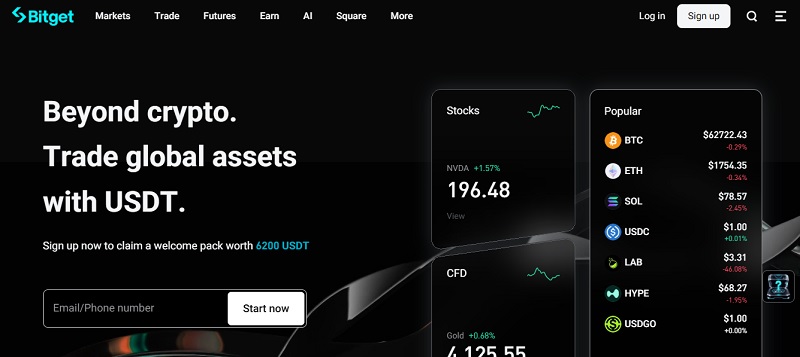
Cryptocurrency Selection on Bitget
The crypto exchange Bitget provides one of the broadest asset selections among global crypto platforms. Public documentation indicates support for 800+ cryptocurrencies together with numerous perpetual futures contracts, leveraged products, launchpad tokens and Web3 assets.
Examples of publicly listed markets:
BTC,
ETH,
SOL,
XRP,
BNB,
DOGE,
TRX,
LINK,
LTC,
AVAX,
DOT,
SUI,
XMR,
NEAR,
UNI,
ZEC,
ADA,
STX,
LEO,
XAUT
| Markets | Availability |
|---|
| Spot trading | Available |
| Perpetual futures | Available |
| Margin trading | Available |
| Copy trading | Available |
| Trading bots | Available |
| Launchpool & Earn | Available |
| Supported cryptocurrencies | 800+ (company information) |
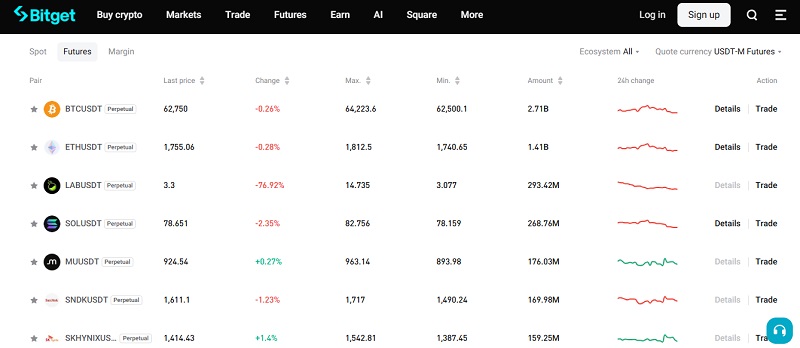
Registration on Website bitget.com
Creating a Bitget personal account begins on the official website or mobile application. Registration normally requires:
After signing up, users can activate additional security measures:
Certain services may require successful identity verification. Users from restricted jurisdictions cannot access all services.
Trading Conditions and Fees of Bitget
The crypto exchange Bitget offers spot, margin, futures, copy trading, trading bots, launchpool, earn products, and Bitget Wallet integration. The platform is primarily known for its derivatives market.
Standard fee schedule:
| Fee Structure | Published Rates |
|---|
| Spot Maker | 0.10% |
| Spot Taker | 0.10% |
| Futures Maker | 0.02% |
| Futures Taker | 0.06% |
| Deposit fees | Crypto deposits are generally free |
| VIP discounts | Available |
The platform also periodically launches promotional zero-fee campaigns.
Depositing Funds and Withdrawing Money from Bitget
The digital exchange Bitget supports both cryptocurrency transfers and fiat payment channels, depending on the user's country.
Publicly documented deposit methods:
Crypto deposits are generally processed without platform fees.
Supported withdrawal methods:
When withdrawing money from Bitget, fees vary according to the selected blockchain and digital asset. Users should verify the current blockchain fee before confirming a transaction.
| Deposits & Withdrawals | Public Information |
|---|
| Crypto deposits | Supported |
| Card purchases | Supported in eligible regions |
| Bank transfers | Available in selected jurisdictions |
| P2P marketplace | Available |
| Crypto deposit fee | Generally free (network fees may apply) |
| Withdrawal fee | Depends on cryptocurrency and blockchain network |
| KYC | Required for full access to certain services and limits |
Bitget Background and Domain Information
The Bitget exchange has operated since 2018 and has grown into one of the largest global digital asset trading platforms. The project has expanded its ecosystem through Bitget Wallet and strategic acquisitions.
| Background | Verified Information |
|---|
| Exchange launch | 2018 |
| Official domain | bitget.com |
| Domain registration | 3 February 2003 |
| Latest domain update | 24 September 2025 |
| Hosting infrastructure | Cloudflare |
| IP location | San Jose, California, United States |
| WHOIS registration | DNStination Inc. (privacy protected) |
Source: DomainTools
Client Feedback and Bitget Reviews
Available Bitget reviews on Trustpilot relate to the official bitget.com domain and provide a relevant source for evaluating customer experience.
Positive themes appearing repeatedly:
Broad selection of cryptocurrencies
Intuitive trading interface
Copy trading functionality
Competitive trading fees
Fast order execution
Negative reviews most commonly mention:
Delayed account verification
Temporary withdrawal restrictions after compliance checks
Frozen accounts during security investigations
Response times from customer support
Disputes regarding P2P transactions
Bitget actively responds to a high proportion of negative Trustpilot reviews of Bitget.
| Reputation | Independent Findings |
|---|
| Trustpilot profile | Available |
| Most common positive feedback | Copy trading, liquidity, interface, asset selection, fees |
| Most common complaints | KYC reviews, withdrawals, P2P disputes, customer support |
| Company replies | Actively responds to many negative reviews |
| Independent review volume | High |
Bitget Risk Assessment and Expert Conclusion
The crypto exchange Bitget provides a comparatively transparent trading environment. The company publishes Proof of Reserves, maintains a publicly disclosed Protection Fund, offers detailed fee schedules, and supports a broad ecosystem.
However, regulatory considerations remain important. Bitget is not considered a trusted service provider because it is not regulated by a top-tier financial authority. This assessment reflects the level of available investor protection rather than constituting proof of misconduct.
However, regulatory considerations remain important. BrokerChooser concludes that Bitget is not considered a trusted service provider because, based on publicly available regulatory information, it is not regulated by a top-tier financial authority. This assessment reflects the level of available regulatory protection rather than constituting proof of misconduct by the service.
Overall Assessment:
May be suitable for:
Experienced cryptocurrency traders
Derivatives and copy trading users
Investors seeking access to hundreds of cryptocurrencies
Users comfortable with offshore exchanges
May not be suitable for:
Beginners seeking maximum regulatory protection
Conservative investors
Users who prefer exchanges supervised by top-tier regulators
Investors requiring traditional investor compensation schemes
Overall, the Bitget digital exchange offers one of the broadest cryptocurrency ecosystems currently available, combining extensive trading functionality with publicly disclosed transparency initiatives. Prospective users should carefully consider the platform's legal profile and understand that operating without oversight from a top-tier financial regulator may result in a different level of legal protection compared with platforms licensed in stricter jurisdictions.


