The digital broker Vexa Trade and presents itself as an international online trading platform focused on speculative financial markets. Public website materials indicate access to forex, indices, options, futures, commodities, shares, and cryptocurrency trading products.
The company operates through the following domains:
vexatrade.org
office.vexatrade.org
At the same time, the official website currently appears incomplete in several sections:
duplicated text blocks are visible;
some pages contain placeholder-style content;
trading specifications are missing;
platform infrastructure details are absent.
The VexaTrade broker lists the following address:
C/O Silver Arc Limited, 1 Quality Court, Chancery Lane, London, United Kingdom
For communication, the project currently provides:
email support;
internal contact forms.
The Vexa Trade broker references a UK company registration page connected to VEXA TECH LTD through the UK Companies House database. However, a Companies House entry alone does not constitute authorization to provide brokerage or investment services.
No evidence of the following regulatory authorities was identified on the public website vexatrade.org during review:
This creates an important distinction between:
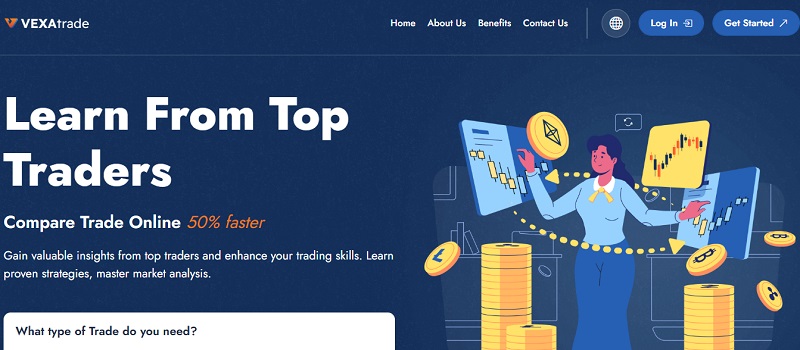
Vexa Trade Markets and Product Presentation
The VexaTrade broker advertises access to multiple asset categories:
Forex;
indices;
options;
futures;
commodities;
stocks;
cryptocurrencies.
However, the website vexatrade.org does not provide detailed trading specifications such as:
spreads;
commissions;
swap rates;
leverage parameters;
execution model;
contract sizes;
margin requirements.
The absence of transparent trading conditions makes independent evaluation difficult.
The Vexa Trade personal account infrastructure is also only partially described publicly. The broker promotes:
Still, there is no technical breakdown of:
| Feature | Available Information |
|---|
| Markets | Forex, crypto, stocks, futures, options, commodities |
| Trading Platform | Not disclosed |
| Spread Information | Not published |
| Leverage Information | Not disclosed |
| Regulatory Status | Unclear / unverifiable |
Opening a Vexa Trade Personal Account
The onboarding process on the website vexatrade.org follows a simplified registration structure.
To create a VexaTrade personal account, users are instructed to:
However, the broker does not publicly explain:
This lack of transparency is unusual compared to regulated brokerages that normally publish:
The Vexa Trade personal account area also appears to be connected to internal promotional services involving:
copy trading;
expert signals;
profit-sharing language.
Such terminology requires careful review because investment-return marketing may carry elevated regulatory risk in many jurisdictions.
Funding and Withdrawing Money from Vexa Trade
The broker does not provide publicly available information regarding:
As a result, evaluating withdrawing money from Vexa Trade becomes difficult from a due diligence perspective.
Reliable trading providers typically disclose:
The absence of these disclosures increases operational uncertainty.
Independent review sources additionally classify the VexaTrade broker as high-risk due to limited regulatory transparency and missing licensing evidence.
VexaTrade Domain and Infrastructure Analysis
According to DomainTools information:
domain registration date: August 6, 2025;
last update: August 11, 2025;
hosting infrastructure: Cloudflare Inc., United States.
The relatively recent registration date suggests that the Vexa Trade broker is a newly launched project rather than a long-established trading institution.
The short operational history is important because many short-lifecycle offshore intermediaries disappear within the first years of operation.
Vexa Trade Reviews and External Reputation Signals
Available Vexa Trade reviews remain extremely limited due to the broker’s recent appearance online.
Several independent monitoring resources classify the project as:
Some review platforms specifically highlight:
missing regulatory licenses;
suspicious operational structure;
incomplete transparency disclosures.
The VexaTrade broker is also absent from BrokerChooser listings.
This absence may indicate several possibilities:
The company is too new for institutional review coverage and does not meet BrokerChooser evaluation standards;
The project may not yet have passed broader industry credibility screening.
While absence alone does not automatically prove fraudulent activity, it significantly limits third-party verification opportunities.
When analyzing VexaTrade reviews, traders should consider:
missing legal transparency;
incomplete platform information;
lack of independently verified regulation;
undeveloped corporate disclosures.
Final Assessment of Vexa Trade Broker
The Vexa Trade broker currently presents multiple operational red flags:
newly registered domain;
incomplete website infrastructure;
missing trading specifications;
absence of verified financial regulation;
lack of payment transparency;
unclear platform architecture.
The company markets broad access to speculative products, but much of the operational framework remains undocumented.
Project classification
Risk Level: High
Suitable for: highly speculative traders willing to accept elevated operational risk.
Not suitable for:
From an analytical perspective, the VexaTrade broker currently resembles a very early-stage offshore project with limited public accountability rather than a fully transparent regulated brokerage structure.


