The global broker TradeXN operates as an offshore CFD trading platform focused on leveraged forex, crypto, commodities, and index trading. The company promotes DMA/NDD execution technology, zero commissions, and swap-free conditions while maintaining a relatively lightweight regulatory structure based in Saint Vincent and the Grenadines.
Collected company information:
Official website: tradexn.com
Declared corporate entity: XN Technologies Limited
Registration details: 2777 LLC 2022, Suite 305, Griffith Corporate Centre, Beachmont, Kingstown, St. Vincent and the Grenadines
Regulatory status: the TradeXN broker openly states that it is not required to hold a financial services license in SVG
Contact methods: Email support, contact form
DomainTools infrastructure:
The TradeXN broker does not publish:
regulatory certificates,
audited financial reports,
investor compensation details,
or Tier-1 licensing information.
The company is also absent from BrokerChooser and other major regulated brokerage comparison platforms. From an analytical standpoint, this may suggest:
the project remains outside mainstream regulatory monitoring,
it does not meet stricter transparency standards,
or the company has not yet established sufficient institutional credibility for inclusion among lower-risk providers.
That alone does not automatically classify the TradeXN broker as fraudulent, but it materially increases operational and counterparty risk compared to trading providers supervised by stronger regulators.
TradeXN Legal Structure and Regulatory Position
The TradeXN broker uses an offshore corporate model centered around Saint Vincent and the Grenadines.
The company specifically discloses that it does not require a financial services license in SVG to provide trading products.
This detail is extremely important because Saint Vincent registration itself is not considered a forex brokerage license in the traditional regulatory sense.
Unlike FCA, ASIC, CySEC, or FINRA regulated firms, the TradeXN broker does not appear to operate under:
segregated investor protection frameworks,
compensation schemes,
public capital adequacy reporting,
or top-tier supervisory audits.
The CFD provider also does not provide:
named liquidity providers,
banking partners,
proof of fund segregation,
or detailed compliance documentation.
| Criteria | Assessment |
|---|
| Primary jurisdiction | Saint Vincent and the Grenadines |
| Tier-1 regulation | Not disclosed |
| Published licenses | Not available |
| Corporate transparency | Low to moderate |
| Regulatory reliability | Offshore / high-risk structure |
TradeXN Markets and Trading Environment
The TradeXN broker provides access to several leveraged CFD categories:
Forex
Indices
Commodities
Cryptocurrencies
The company claims access to:
more than 50 forex instruments,
over 20 indices,
commodity sectors including metals and agriculture,
and 15+ crypto markets.
The TradeXN broker markets itself aggressively around:
The company also claims:
However, no independently verified execution reports are publicly available.
Platform Infrastructure and Execution Model of TradeXN
The TradeXN broker promotes a proprietary multi-device trading platform compatible with:
Windows,
macOS,
iOS,
Android.
The company references:
Public descriptions mention:
At the same time, the broker does not disclose:
liquidity venue partners,
execution audit providers,
slippage statistics,
or trade reconciliation mechanisms.
The TradeXN personal account appears to include:
deposit management,
withdrawal processing,
verification controls,
and platform access.
A demo environment is also publicly promoted.
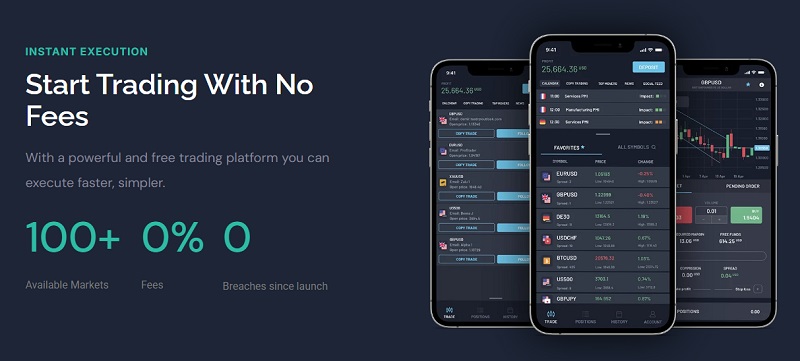
TradeXN Broker Trading Conditions and Fee Structure
The TradeXN broker uses a simplified pricing structure built around spread-based trading rather than commissions.
Publicly disclosed conditions include:
The TradeXN broker also states:
margin call level: 100%,
stop-out level: 1%.
The extremely low stop-out threshold substantially increases liquidation risk during volatile market conditions.
The TradeXN personal account additionally supports:
| Trading Parameter | Published Conditions |
|---|
| Minimum deposit | From $1 |
| Maximum leverage | Up to 1:500 |
| Spreads | From 1.6 pips |
| Commission model | Zero commission |
| Swap-free accounts | Available on all accounts |
Deposits and Withdrawing Money from TradeXN
The TradeXN broker claims fast internal payment processing.
According to company materials:
withdrawal requests are processed within one business day,
most requests are reviewed within 24 hours,
and deposits support multiple payment systems including crypto and bank cards.
However, the brokerage does not clearly publish:
complete payment provider lists,
banking institutions,
regional withdrawal restrictions,
or compliance escalation procedures.
The company charges:
When evaluating withdrawing money from TradeXN, traders should pay particular attention to:
offshore legal jurisdiction,
absence of investor compensation mechanisms,
and limited public reporting regarding dispute resolution.
TradeXN Reviews and Reputation Analysis
Public TradeXN reviews remain relatively limited compared to globally established brokers.
Positive mentions commonly reference:
Critical observations focus on:
offshore registration,
lack of stronger regulation,
aggressive leverage exposure,
and insufficient institutional transparency.
The TradeXN broker also publishes unusually optimistic marketing claims regarding:
In real-world leveraged CFD trading, such claims are difficult to guarantee consistently during periods of extreme volatility.
The absence of the TradeXN broker from BrokerChooser further reinforces the idea that the project currently sits outside the stricter institutional brokerage ecosystem.
TradeXN Infrastructure and Operational Profile
The TradeXN broker benefits from an older domain creation date dating back to 2006.
However, operational activity, branding structure, and corporate materials appear significantly newer than the domain itself.
The project demonstrates:
Still, several important institutional indicators remain missing:
audited financial statements,
public executive disclosures,
banking partnerships,
and independent compliance verification.
| Criteria | Assessment |
|---|
| Business transparency | Limited |
| Platform ecosystem | Proprietary multi-device platform |
| Execution model disclosure | DMA/NDD claims published |
| Investor safeguards | Weak compared to Tier-1 brokers |
| Overall operational risk | High |
Final Assessment of TradeXN Broker
The TradeXN broker positions itself as a high-leverage offshore CFD platform offering DMA/NDD-style execution, swap-free accounts, and access to forex, crypto, commodities, and indices.
Key observations:
offshore SVG registration,
no confirmed Tier-1 regulatory oversight,
no publicly available licenses,
aggressive leverage up to 1:500,
simplified fee structure,
and limited institutional transparency.
The TradeXN broker may appeal to speculative traders seeking:
low entry requirements,
high leverage,
and flexible CFD access.
However, the lack of stronger supervision materially increases counterparty and operational risk.
Project characterization
Risk level: High
Suitable for: experienced high-risk CFD traders comfortable with offshore brokerages
Not suitable for: conservative investors, beginners, or users seeking strong regulatory protection
From a due diligence perspective, the TradeXN broker should be viewed as an offshore speculative trading platform rather than a fully institutional-grade regulated brokerage.


