The digital broker FinFusion positions itself as a multi-asset trading and investment platform combining speculative trading with HYIP-style plans. The project actively promotes offshore registration structures connected to Seychelles, Cyprus, and the United Kingdom, while simultaneously advertising instant withdrawals, leveraged trading, and fixed-profit plans that resemble HYIP-style investment mechanics rather than traditional brokerage services.
Collected company information:
Official website: finfusion.live
Declared UK registration number: #08683932
Claimed Seychelles registration number: 709718501
Claimed Cyprus entity: HE 19818009
Declared office address: 11 Grace Avenue, Ste 108, Great Neck, New York, USA
Contact methods: email, contact form, online chat, phone (840) 2061-747
Domain registration date: May 29, 2025
The Fin Fusion broker references both Seychelles FSA supervision and CySEC regulation through various legal statements published on the website. However, the platform does not provide:
This lack of documentary transparency significantly complicates independent due diligence.
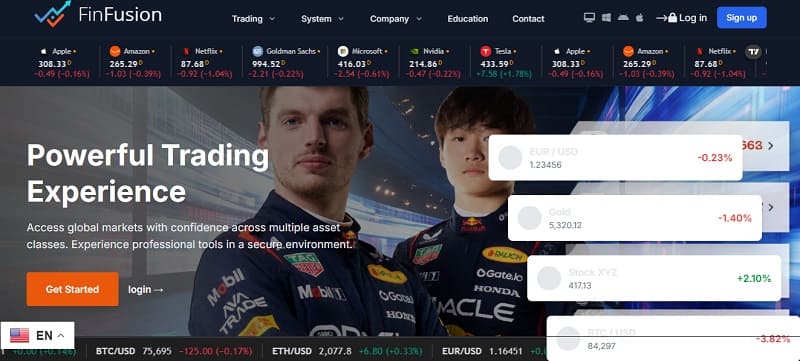
FinFusion Regulatory Claims and Corporate Transparency
The FinFusion broker presents a layered corporate structure involving:
The platform specifically references:
CySEC itself is one of Europe’s recognized financial regulators operating under MiFID II standards.
At the same time, Seychelles regulation is generally classified as offshore supervision with materially weaker investor protection mechanisms compared to FCA, ASIC, or fully verified EU-regulated CFD providers.
One of the key concerns surrounding the FinFusion broker is the absence of:
downloadable regulatory certificates,
segregated account audit disclosures,
compensation fund references,
or verifiable legal documentation directly tied to finfusion.live.
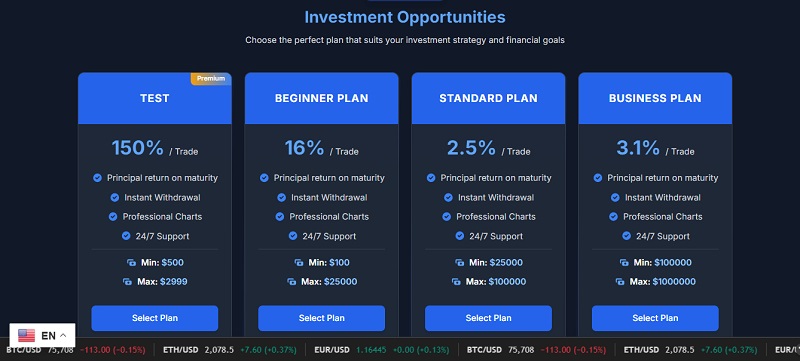
The company also combines brokerage language with investment-plan terminology promising “150% per trade,” and fixed-return structures.
Such models are rarely associated with traditionally regulated CFD providers and are more commonly found in speculative offshore investment platforms.
The FinFusion broker is currently absent from BrokerChooser coverage databases. Analytically, this may indicate:
a relatively new operational footprint,
insufficient public transparency,
or failure to meet the monitoring standards typically required for inclusion among established regulated brokerages.
FinFusion Markets and Trading Products
The FinFusion broker advertises access to:
cryptocurrencies
forex
shares
indices
Only partial trading specifications are publicly disclosed.
The platform additionally markets:
However, the FinFusion broker does not publicly disclose:
| Feature | Available Information |
|---|
| Markets | Crypto, forex, shares, indices |
| Forex commission | $2.5 per $100k volume |
| Leverage | Up to 1:400 |
| Minimum forex lot | 0.01 lots |
| Trading terminal | cTrader-based infrastructure claimed |
Investment Plans and Account Structure Offered by FinFusion
A particularly unusual aspect of the FinFusion broker is the structure of its investment plans.
The platform combines conventional trading terminology with aggressive fixed-return offerings:
150%,
25%,
16%,
3.1%,
and 2.5% per trade.
The FinFusion broker publishes several account tiers:
Test
Premium
Standard
Business
Basic
Demo
The minimum deposits range:
These returns are marketed together with:
From a risk-analysis perspective, such profitability claims substantially exceed what is normally associated with regulated brokerage activity.
The FinFusion personal account is used for:
FinFusion Trading Platform and Infrastructure
The FinFusion broker promotes:
Unlike many institutional brokerages, the platform does not provide:
detailed terminal specifications,
execution infrastructure explanations,
bridge technology disclosures,
or VPS information.
The FinFusion broker therefore offers limited transparency regarding:
Still, the cTrader reference suggests an attempt to position the platform closer to professional CFD trading environments rather than simple web-based investment dashboards.
Deposits and Withdrawing Money from FinFusion
The FinFusion broker operates exclusively through cryptocurrency and digital payment systems.
Supported funding methods:
PerfectMoney
Bitcoin
Ethereum
Litecoin
Dogecoin
TRON
Tether TRC20 / ERC20
Minimum deposits begin from:
Maximum deposits are advertised up to:
$75,000,
1.5 BTC,
750,000 TRX.
The FinFusion broker claims:
Withdrawal minimums include:
0.1 USD,
10 USDT TRC20,
150 USDT ERC20.
The platform states that there are:
When evaluating withdrawing money from FinFusion, investors should carefully consider the operational risks associated with:
The support line (840) 2061-747 is promoted as part of the brokerage customer communication system alongside live chat and ticket support.
FinFusion Reviews and Reputation Analysis
Available FinFusion reviews remain extremely limited due to the relatively new domain registration date and apparent recent launch cycle.
Several analytical concerns emerge immediately:
unusually high fixed-return promises,
incomplete regulatory documentation,
hybrid HYIP/brokerage structure,
and offshore licensing references without visible certificates.
The FinFusion broker also lacks:
meaningful third-party institutional coverage,
established brokerage rankings,
and large-scale verified community feedback.
At the same time, the platform attempts to increase perceived legitimacy through:
Because the FinFusion broker appears to blend leveraged trading, staking-style returns, and investment-plan marketing, the project occupies a higher-risk category compared to conventional regulated CFD providers.
FinFusion Broker Domain and Infrastructure Overview
DomainTools data for the FinFusion broker:
Registered on: May 29, 2025
Updated on: April 2, 2026
Hosting location: Strasbourg, France
Infrastructure provider: OVH SAS
The recently registered domain is important from a due diligence perspective because:
many short-lifecycle offshore investment projects use newly registered domains,
and long-term operational history has not yet been established.
Unlike projects operating for a decade or longer, the FinFusion broker currently lacks:
historical infrastructure consistency,
long-term public reputation patterns,
and established institutional trust signals.
| Criteria | Assessment |
|---|
| Regulatory transparency | Low to moderate |
| Corporate verification | Partially verifiable claims only |
| Investment model | Hybrid broker/HYIP-style structure |
| Withdrawal transparency | Crypto-only ecosystem |
| Overall risk | High |
Final Assessment of FinFusion Broker
The FinFusion broker presents itself as a sophisticated multi-asset trading and crypto-investment platform operating through offshore international structures.
The project combines:
Positive observations include:
However, several substantial concerns remain:
lack of verifiable regulatory documentation,
hybrid investment-plan mechanics,
recently registered domain,
offshore structure complexity,
and aggressive profitability claims uncommon among regulated brokers.
Project characterization
Risk level: High
Suitable for: speculative high-risk traders comfortable with offshore crypto environments
Not suitable for: conservative investors, long-term portfolio management, or users seeking strong investor protection and transparent regulation
From a due diligence standpoint, the FinFusion broker currently demonstrates more characteristics of a high-risk offshore investment platform than a fully transparent institutional brokerage environment.


