
When Your Crypto Gets Locked: The Hidden Risks of Using Freewallet
- Real Case: €120,000 Locked Without Clear Resolution
- What Freewallet Actually Is
- A Pattern, Not an Isolated Incident
- How Funds Get Locked: The Mechanism Explained
- Step 1 — Normal Operation
- Step 2 — Risk Trigger
- Step 3 — Escalating Verification Requirements
- Step 4 — Extended Verification Loop
- Step 5 — Prolonged Restriction of Funds
- Red Flags That Go Beyond Standard Compliance
- Is Freewallet a Scam — or a Structural Risk?
- Why Custodial Platforms Sometimes Restrict Access to Funds
- Strict Automated Compliance and AML Monitoring
- Platforms Prioritize Risk Containment Over Speed
- Support and Operational Bottlenecks
- Structural Imbalance in Custodial Systems
- Risk Assessment
- Conclusion
- FAQ
- Sources
- Need Help?
For many users, a crypto wallet is associated with one key idea: control. The expectation is simple: you hold your assets, control access and decide when and how to move funds.
However, this assumption does not always hold true — especially when using custodial services such as Freewallet. In such systems, the user interface may resemble a personal wallet, but the underlying control structure is fundamentally different.
Instead of direct ownership, users rely on the platform’s internal systems to approve, process, and authorize access to their funds. This distinction becomes critical in situations where access is restricted.
Real Case: €120,000 Locked Without Clear Resolution
One widely discussed case illustrates how this risk manifests in practice.
A long-term user accumulated over €120,000 in their account. Without prior warning:
- access to the account was restricted
- withdrawal functionality was disabled
- communication from support became vague and inconsistent
Over time, the platform requested increasing levels of verification:
- transaction history documentation
- identity verification (passport, selfies)
- proof of residence
- in some cases, requests reportedly extended to remote access tools
Even after submitting all requested information, the user did not receive a clear resolution timeline or a definitive outcome.
This type of situation highlights a critical issue: the user no longer has operational control of their own funds.
What Freewallet Actually Is
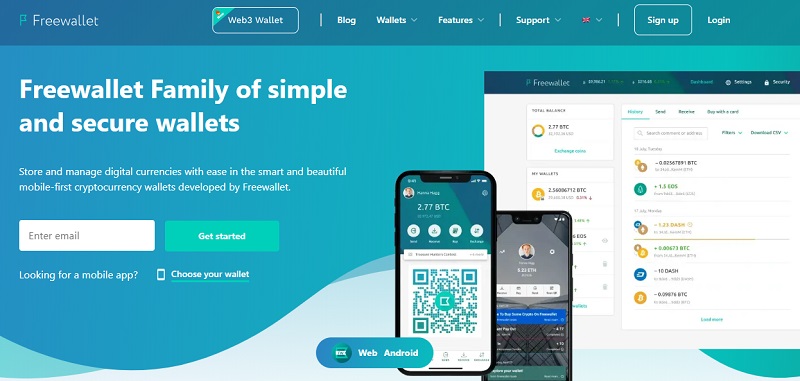
Freewallet operates as a custodial wallet.
This means:
- private keys are controlled by the platform, not the user
- transactions are executed on behalf of the user
- access to funds depends on internal approval systems
In custodial systems, the user interface creates the impression of ownership, but technically:
- the platform holds the assets
- the user holds a claim on those assets
This model is comparable to traditional banking systems, where access is mediated by the institution.
However, unlike banks, custodial crypto services often operate with:
- less regulatory clarity
- fewer protections
- limited formal dispute mechanisms
Freewallet itself acknowledges the distinction between custodial and non-custodial systems, where only the holder of private keys has direct control over funds.
A Pattern, Not an Isolated Incident
User feedback across platforms shows consistent patterns.
On review platforms such as Trustpilot:
- users report accounts being blocked
- withdrawals delayed or disabled
- customer support failing to provide resolution
In many cases, users state that even after submitting all requested documentation, access remains restricted and funds remain inaccessible.
Additional reports describe:
- repeated identity verification requests
- unexplained deductions or fees
- prolonged periods without meaningful support responses
The consistency of these reports is more significant than any single case. It indicates systemic behavior rather than isolated technical issues.
Also Read: Crypto Wallet Trap Scams: Why Scammers Give You Access to Funds
How Funds Get Locked: The Mechanism Explained
To understand why users feel trapped, it is necessary to break down the process structurally.
Step 1 — Normal Operation
Initially, the platform functions as expected:
- deposits are processed successfully
- balances update correctly
- transfers and internal transactions work normally
This phase establishes trust in the system.
Step 2 — Risk Trigger
At a certain point, the system flags the account. Triggers may include:
- large balances
- withdrawal attempts
- automated compliance or risk scoring systems
These triggers are often not disclosed to the user.

Step 3 — Escalating Verification Requirements
Once flagged, the platform initiates additional verification procedures.
Users may be asked to provide:
- identity documents
- proof of funds origin
- transaction history
These requests are typically justified as compliance measures. However, the scope and repetition of these requests can expand over time.
Step 4 — Extended Verification Loop
In many reported cases:
- users submit requested documents
- additional requirements are introduced
- previously submitted information is deemed insufficient
There is often no defined endpoint or timeline for completing verification. This creates a situation where compliance does not guarantee resolution.
Step 5 — Prolonged Restriction of Funds
As the process continues:
- withdrawal functionality remains disabled
- access to funds is restricted
- communication becomes less frequent or non-specific
From a practical standpoint, the user is unable to retrieve their assets despite ongoing cooperation. At this stage, the distinction between temporary restriction and permanent loss becomes unclear.
Red Flags That Go Beyond Standard Compliance
Some reported behaviors extend beyond typical financial verification practices.
Remote Access Requests
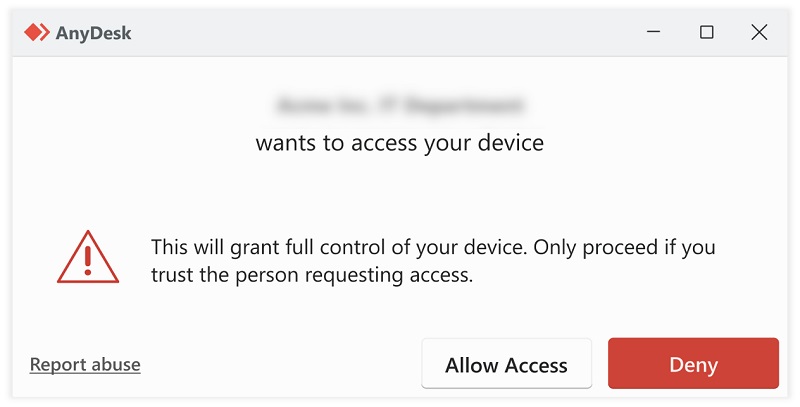
Requests to install remote access software (e.g., AnyDesk) are highly unusual.
Legitimate financial platforms:
- do not require direct control over user devices
- do not need remote access to verify identity or transactions
Such requests introduce additional security risks.
Expanding Documentation Requirements
While identity verification is standard in regulated environments, repeated and escalating requests may indicate:
- lack of clear internal processes
- indefinite compliance thresholds
- structural barriers to withdrawal
Also Read: KYC Verification or Trap? How Scammers Exploit Crypto Exchange Users in 2026
Lack of Resolution After Compliance
One of the most concerning patterns is that:
- users fully comply with all requests
- access is not restored
- communication becomes inconsistent
This creates a dependency where the user continues to provide information without receiving a definitive outcome.
Regulatory Warning Signals
Regulatory bodies have issued warnings related to certain Freewallet-associated entities. For example, the Financial Conduct Authority has flagged:
- unauthorised activity
- lack of regulatory approval
- absence of consumer protection mechanisms
This has important implications:
- users may not have access to formal dispute resolution
- compensation schemes may not apply
- legal recovery options may be limited
Custodial Risk: The Structural Issue
The challenges described are not unique to a single platform. They reflect a broader principle: custody defines control.
In custodial systems:
- the platform determines access and enforces restrictions
- the user depends entirely on internal decisions
Unlike decentralized systems there is no:
- independent execution layer
- guaranteed access to funds
- fallback mechanism if access is denied
Is Freewallet a Scam — or a Structural Risk?
This distinction requires precision.
What Freewallet is not:
- not a fake interface
- not a phishing clone
- not a typical “rug pull”
It is a real service with functioning infrastructure.
What the behavior indicates
However, recurring patterns such as prolonged account restrictions, indefinite verification processes, and limited or ineffective support create outcomes where users lose access to their own funds without clear resolution.
From a user perspective, the practical effect may resemble fraud — even if the underlying cause is structural or operational.

Why Custodial Platforms Sometimes Restrict Access to Funds
Several operational and structural factors can lead to delayed withdrawals, prolonged reviews, or frozen accounts on custodial crypto platforms.
Strict Automated Compliance and AML Monitoring
Many custodial platforms use automated compliance systems that aggressively flag potentially risky activity to meet growing AML and regulatory requirements.
Accounts may be reviewed after:
- large withdrawals
- sudden balance increases
- transfers from external wallets
- unusual transaction patterns
Because these systems are designed to minimize regulatory risk, reviews can remain active for extended periods even when no fraud is ultimately confirmed.
Platforms Prioritize Risk Containment Over Speed
In custodial systems, the platform controls transaction approval and access to private keys.
As a result, companies may temporarily restrict withdrawals whenever internal risk systems detect uncertainty or potential compliance exposure. From the platform’s perspective, delaying access is often considered safer than approving a transaction that could later trigger legal or financial consequences.
This creates a situation where users depend entirely on the platform’s internal decision-making process.
Support and Operational Bottlenecks
Many crypto services grow faster than their support and compliance infrastructure can handle.
Users frequently report:
- repeated requests for documents
- automated or generic replies
- unclear escalation procedures
- no defined resolution timeline
In some cases, support teams may not have authority to resolve compliance holds directly, which can lead to long periods of unresolved communication.
Structural Imbalance in Custodial Systems
The core issue is structural: in custodial wallets, users do not directly control their assets.
The platform can:
- freeze withdrawals
- impose additional verification
- delay account access
while the user has limited ability to independently recover funds.
Unlike self-custody wallets, where transactions are controlled directly by private keys, custodial systems require ongoing trust in the platform’s infrastructure, policies, and operational integrity.
Also Read: Trust Wallet Scams: How Users Lose Funds and How to Protect Yourself

Risk Assessment
| Factor | Assessment |
|---|---|
| Custody model | Platform-controlled |
| Transparency | Low |
| Complaint consistency | High |
| Resolution clarity | Low |
| Regulatory protection | Limited |
| Overall risk | High |
Conclusion
Freewallet highlights a fundamental misunderstanding in crypto usage. Many users believe they are interacting with a personal wallet. In reality, they are using a custodial service where control is conditional.
This distinction becomes critical at the moment it matters most: when you attempt to access your funds.
Control in crypto is not defined by interface — it is defined by who holds the private keys.
FAQ
Is Freewallet safe?
It is a functioning custodial service, but it carries significant counterparty risk.
Why do accounts get locked?
Typically due to internal compliance checks or risk scoring systems.
Can funds be recovered?
In some cases, yes — but resolution may take extended periods and is not guaranteed.
Is this common with custodial wallets?
Yes. Any platform controlling private keys can restrict access under certain conditions.
Sources
- Freewallet — custodial vs non-custodial explanation
- Capterra — confirmation that Freewallet is a custodial service
- G2 Reviews — reports of account freezing and unresolved verification loops
Need Help?
If your funds are locked in a custodial wallet, you can request a transaction and access analysis. Stock View specialists can review your case, assess the chances of fund recovery, and recommend the most appropriate next steps based on the transaction flow and wallet activity.
Get professional help with your case.