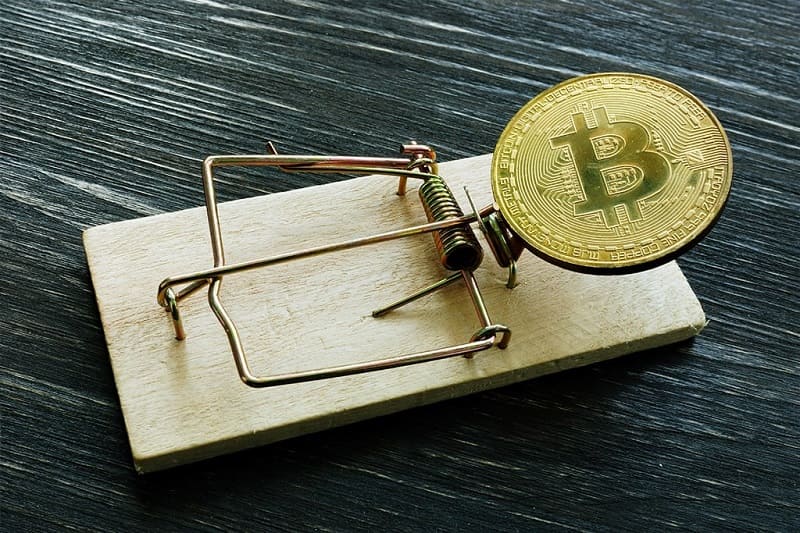
Crypto Wallet Trap Scams: Why Scammers Give You Access to Funds
- Why This Scam Feels So Real
- How the Wallet Trap Actually Works
- Step 1: The wallet is accessible — but monitored
- Step 2: The funds are intentionally “locked”
- Step 3: You try to “unlock” the funds
- Step 4: The moment you send funds — they’re gone
- Why You Can’t Beat the System
- The Psychology Behind the Trap
- Real-World Trends (2025–2026)
- Common Variations of Wallet Trap Scams
- Gas Fee Trap
- Approval Scam
- Honeypot Token
- Shared Seed Phrase Scam
- Multi-Chain Trap
- What Happens If You Try Anyway
- How to Recognize a Wallet Trap Instantly
- Conclusion
- FAQ
- Sources
At first glance, it looks like a mistake — or even luck. A stranger contacts you, often through TikTok, Telegram, or Discord. They tell a dramatic story: illness, regret, urgency. Then they give you something completely unexpected — full access to a crypto wallet. You log in, and there it is: a real balance, often in USDT or another stablecoin. Not a fake interface. Not a demo. Actual funds visible on the blockchain.
And here’s the part that breaks logic: you can try to withdraw it. If this feels confusing, that’s exactly the point.
This is a growing type of fraud known as a crypto wallet trap scam — and it’s specifically designed to trick people who don’t usually fall for scams.
Why This Scam Feels So Real
Unlike typical scams that ask for money upfront, this one flips the script.
-
The balance is real. You can verify the wallet through blockchain explorers. The funds exist. This immediately builds trust because it removes the “fake website” red flag.
-
No immediate demand. There’s no “send $100 to unlock $1,000.” Instead, you’re given access first — which lowers your defenses.
-
Emotional manipulation. The backstory matters:
- “I’m dying”
- “I regret not spending life with you”
- “I need help transferring my funds”
This isn’t random. It reduces skepticism and creates urgency.
- Illusion of control. You have login credentials and possibly a private key or seed phrase. It feels like you are in control of the situation — not the scammer. That illusion is what makes the trap effective.

How the Wallet Trap Actually Works
Under the surface, this is not generosity. It’s a carefully engineered system.
Step 1: The wallet is accessible — but monitored
Scammers share real credentials, but the wallet is:
- tracked by automated bots,
- connected to scripts that react instantly.
You are not the only one with access.
Step 2: The funds are intentionally “locked”
Most commonly:
- Wallet contains USDT (or another token),
- But no native coin for gas fees (ETH, TRX, BNB).
Without gas, you cannot complete a transaction.
Step 3: You try to “unlock” the funds
At this point, many users think: “I just need to send a small amount to withdraw a much larger balance.”
So they deposit ETH, TRX or BNB.
Step 4: The moment you send funds — they’re gone
As soon as your deposit hits the wallet:
- an automated bot triggers instantly,
- it transfers funds out to another address,
- often within seconds.
You lose your deposit. The original “balance” remains — continuing to bait the next victim.
Why You Can’t Beat the System
Many users think they can outsmart the scam:
- “I’ll send more gas to be faster”
- “I’ll withdraw everything in one go”
- “I’ll use a script”
This doesn’t work. Here’s why:
- Bots operate faster than humans. They monitor the mempool and react in milliseconds.
- Attackers control transaction priority. They can outbid your gas fees.
- Automation guarantees execution. You’re not competing with a person — but a system.
In some advanced cases:
- smart contracts block withdrawals,
- tokens are non-transferable (honeypots),
- approvals trigger hidden drains.
The Psychology Behind the Trap
This scam is effective not because of technical complexity — but because of behavioral manipulation.
It combines several psychological triggers:
- Greed: “Free money” activates reward anticipation,
- Curiosity: “How is this possible?”,
- Urgency: emotional stories reduce rational thinking,
- Cognitive dissonance: it doesn’t look like a scam.
This combination leads people to take risks they normally wouldn’t.
Real-World Trends (2025–2026)
Crypto scams continue to evolve rapidly. According to Chainalysis, scam tactics increasingly involve:
- social engineering,
- DeFi tools,
- automated laundering mechanisms.
Meanwhile, the Federal Trade Commission reports that crypto-related fraud losses remain in the billions annually, with a large share driven by deceptive schemes rather than technical exploits.
Data from the FBI Internet Crime Complaint Center also shows a steady increase in complaints involving:
- wallet compromise,
- fake investment opportunities,
- social manipulation tactics.
Wallet trap scams sit exactly at the intersection of these trends.
Also Read: Top Resources for Checking Crypto Projects
Common Variations of Wallet Trap Scams
While the core mechanism remains the same — luring victims with “accessible funds” — execution varies. Each version targets specific gaps in user knowledge or behavior.
Gas Fee Trap
This is the most widespread variation, exploiting the need for native tokens (ETH, BNB, TRX) to pay gas fees.
Victims receive access to a wallet holding valuable assets (e.g., USDT) but no gas. When attempting a transfer, they realize a deposit is required. At that point, the trap is triggered.
Once the victim deposits native tokens, an automated bot immediately drains the funds in real time.
More advanced versions may:
- Instantly drain any new deposits,
- Simulate failed transactions,
- Suggest adding “just a bit more gas”.
The manipulation relies on making the victim feel they are one step away from a large reward.
Approval Scam
This variation exploits smart contract approval mechanisms instead of direct deposits.
Victims are guided to interact with a dApp and approve a contract, supposedly to enable a transaction. In reality, this grants permission to access their funds.
After approval, the contract can:
- Transfer tokens without user input,
- Drain multiple assets,
- Execute delayed withdrawals.
In advanced cases:
- Interfaces mimic legitimate DeFi platforms,
- Approvals are set to “unlimited”,
- Draining occurs after additional funds are added.
The key risk is that the wallet becomes compromised immediately after approval.
Honeypot Token
Honeypot scams involve tokens that appear valuable but cannot be used.
Victims see a wallet with a large token balance and apparent market data, creating the illusion of real value. However, the smart contract includes hidden restrictions that prevent selling or transferring.
These may:
- Block outgoing transactions
- Restrict transfers to specific addresses
- Apply extreme fees
To “unlock” funds, victims are told to connect to a platform, pay activation fees or swap via a specific contract. Each step leads to further losses. The deception works because everything looks legitimate on the surface.

Shared Seed Phrase Scam
This scam exploits the misconception that access equals ownership.
Victims are given a seed phrase to a wallet with visible funds, often with a story creating urgency. However, the wallet is actively monitored by the scammer. When the victim deposits gas to move funds, the assets are instantly drained.
Key traits include:
- Real-time monitoring,
- Immediate fund extraction,
- No intention to give up control.
Sometimes multiple victims receive access simultaneously. The core misconception is believing a seed phrase guarantees exclusive control.
Multi-Chain Trap
This is a more advanced version designed to maximize losses over time.
Victims see a wallet with assets across multiple networks (Ethereum, BNB Chain, Tron), each requiring activation.
They are guided to:
- Deposit ETH for Ethereum,
- Deposit BNB for BNB Chain,
- Deposit TRX for Tron.
Each step creates a sense of progress while draining funds.
Advanced setups may:
- Show fake dashboards with “unlocked” balances,
- Simulate successful steps,
- Add extra fees (bridging, validation, liquidity).
This approach exploits the sunk cost fallacy — after initial deposits, victims are more likely to continue.
What Happens If You Try Anyway
Best-case scenario — you lose a small amount of gas fees.
Worst-case:
- larger deposits drained,
- wallet exposure increases,
- follow-up scams target you again.
In some cases, interacting with malicious contracts can grant permissions to attackers and compromise your own wallet.
Also Read: What to Do If Your Crypto Wallet Was Hacked: A Step-by-Step Guide
How to Recognize a Wallet Trap Instantly
Use this quick filter:
- Someone gives you wallet access,
- Emotional or dramatic story,
- Funds visible but not withdrawable,
- Requires small deposit first.
If you see even two of these signs, assume it’s a scam. If you encounter this situation:
- Do not send any funds,
- Do not interact with smart contracts,
- Do not reuse the wallet or credentials,
- Report the incident to relevant platforms,
- Warn others (especially on forums like Reddit).
The safest action is always non-interaction.
Conclusion
A crypto wallet trap scam works because it creates a powerful illusion: it looks like you’ve been given an opportunity — when in reality, you’ve been selected as a target.
The wallet is real. The funds may even be real. But the situation is engineered so that the only transferable money will be yours.
Understanding this mechanism is critical. Because in crypto, there is no safety net — only awareness.
FAQ
Why would a scammer give me access to a wallet?
To trick you into depositing funds (usually for gas fees) that they can instantly steal.
Is the money in the wallet real?
Often yes — it’s used as bait to build credibility.
Can I safely withdraw it?
No. The system is designed to prevent you from succeeding.
What happens if I send gas fees?
They are typically drained immediately by automated bots.
Can scammers access the wallet at the same time?
Yes — and they often monitor it continuously.
Are these scams automated?
In most cases, yes — bots handle detection and fund extraction.
Is this a new type of scam?
It’s evolved significantly and became more widespread around 2024–2026.
Can I report this somewhere?
Yes — to platforms, cybercrime units, or organizations tracking crypto fraud.
Sources
Get professional help with your case.