KYC Verification or Trap? How Scammers Exploit Crypto Exchange Users in 2026
- What KYC Is — and Why Exchanges Require It
- The Paradox: Protection That Creates Vulnerability
- How KYC Scams Actually Work
- A Realistic Attack Scenario
- The Rise of Synthetic Identity Fraud
- Why KYC Data Is So Valuable
- Red Flags of KYC Scams
- Can Legitimate Platforms Still Pose Risk?
- Can You Recover Funds After a KYC Scam?
- How to Protect Yourself
- Conclusion
- Sources
- Need Help?
“Your account is temporarily restricted. Please complete KYC to restore access and enable withdrawals.”
At first glance, this message looks routine. In crypto, identity verification has become part of the normal user journey. Most people have already gone through it at least once — uploading documents, confirming identity, waiting for approval.
And that familiarity is exactly what scammers exploit. In 2025–2026, KYC is no longer just a compliance step. It has quietly become one of the most effective social engineering tools in crypto fraud. Because when users expect verification, they stop questioning the process itself — and focus only on completing it.
What KYC Is — and Why Exchanges Require It
KYC (Know Your Customer) is a regulatory requirement designed to verify the identity of users interacting with financial platforms. In crypto, it has become standard for most centralized exchanges.
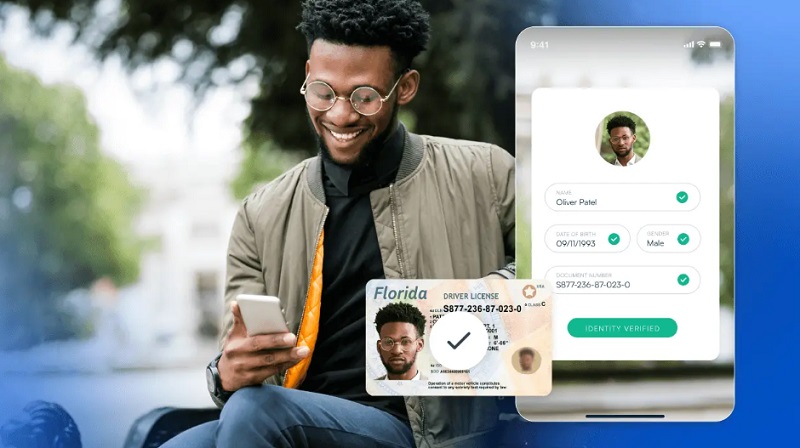
Typically, users are asked to provide:
- a government-issued ID
- proof of address
- a selfie or video verification
The purpose behind this system is clear. Regulators such as the Financial Conduct Authority and the Federal Trade Commission promote identity verification as a way to reduce fraud, prevent money laundering, and increase accountability in financial systems.
From a structural perspective, KYC introduces friction — but also trust.
However, the trade-off is often underestimated. By centralizing identity data, exchanges effectively create large repositories of sensitive personal information. These repositories, whether compromised directly or exploited indirectly, become high-value targets.

The Paradox: Protection That Creates Vulnerability
KYC exists to reduce fraud — but it also introduces a new category of risk: identity exposure.
This creates a fundamental paradox: the more secure a system tries to become, the more valuable the data it collects becomes to attackers.
Once identity data is submitted, it can be used in ways that go far beyond a single platform. Unlike passwords, identity documents cannot be easily changed or reset.
This is why modern crypto fraud is shifting. According to TRM Labs, there is a growing trend toward identity-driven attacks, where the goal is not immediate theft — but long-term control and reuse of user credentials.
In practical terms, this means:
- attackers don’t need to hack your wallet
- they need access to your identity
And KYC provides exactly that — if misused.
How KYC Scams Actually Work
KYC scams are rarely technical. They are psychological. They rely on one key assumption: users trust verification processes more than they trust transactions.
Fake exchange platforms
Scammers build convincing replicas of real exchanges. The onboarding flow feels legitimate, including deposit functionality and trading interfaces.
Only when users attempt to withdraw funds are they asked to complete KYC. At that point, the platform shifts from service to trap.
Also Read: A Practical Guide to Detecting Clone Crypto Exchange Websites
Phishing-based verification
Phishing victims receive messages that mimic official communication. These often include subtle details:
- correct logos
- realistic formatting
- familiar language
The goal is not to scare — but to normalize the request.
Support impersonation
Attackers pose as support agents and guide users step-by-step through “manual verification.” This is particularly effective because it removes uncertainty. Users feel assisted, not targeted.
Urgency as a trigger
Most scams introduce time pressure:
- “verification expires in 2 hours”
- “account will be locked permanently”
This reduces analytical thinking and increases compliance.
A Realistic Attack Scenario
A user registers on what appears to be a legitimate crypto platform. The interface is polished, trading functions work, and even small withdrawals may succeed initially.
At some point, a restriction appears: “To continue using full features, please complete identity verification.”
The user complies. They upload:
- passport
- selfie
- proof of address
What follows is subtle, not immediate. First, delays. Then additional requests. Then conditional requirements — such as fees or deposits.
Eventually:
- access becomes limited
- communication slows
- funds are no longer accessible
At that point, the realization comes too late.
The user has not only lost funds — but has also provided a full identity package to an unknown entity.
The Rise of Synthetic Identity Fraud
One of the most significant developments in recent years is the use of synthetic identities.
These are artificially created identities that combine:
- real data fragments
- AI-generated elements
- manipulated documents
Modern tools can produce:
- realistic passports
- deepfake video verifications
- consistent identity profiles
This creates a dual threat:
- scammers can pass KYC checks themselves
- stolen identities can be reused at scale
In other words, identity verification systems are now being tested not just by humans — but by algorithms.
Why KYC Data Is So Valuable
The value of KYC data lies in its permanence. Once compromised, it can be used for:
- creating new exchange accounts
- bypassing compliance checks
- accessing financial services under someone else’s name
It can also be traded. Unlike passwords, identity datasets are often:
- bundled
- resold
- reused across multiple fraud operations
This turns a single KYC submission into a long-term risk.
Red Flags of KYC Scams
While tactics vary, certain signals appear repeatedly:
- requests coming from unofficial or slightly altered domains
- instructions to send documents via chat or email
- pressure to act quickly or risk losing access
- platforms that require deposits before verification
- inconsistent or unprofessional communication
The key is not any single signal — but the combination.
Also Read: What Makes a Crypto Exchange “Trustworthy”? A Beginner’s Checklist

Can Legitimate Platforms Still Pose Risk?
Even legitimate exchanges are not risk-free environments. Potential vulnerabilities include:
- third-party KYC providers
- internal access misuse
- data leaks
While major platforms invest heavily in security, the scale of data they manage creates inherent exposure.
This does not mean KYC should be avoided — but it does mean: trust should be placed in systems carefully, not automatically.
Can You Recover Funds After a KYC Scam?
Recovery depends on timing and structure. If action is taken quickly:
- exchanges may freeze accounts
- transactions may be traced
However, delays significantly reduce options.
In most cases:
- funds are moved across wallets
- identities are reused
- recovery becomes unlikely
This makes prevention far more effective than response.
How to Protect Yourself
Protection starts with awareness. Before submitting any documents, consider:
- is the platform verified and well-established?
- is the request coming from an official domain?
- is there urgency or pressure involved?
Practical steps include:
- bookmarking official exchange URLs
- avoiding document sharing outside secure platforms
- verifying support channels independently
- using platforms with strong reputational history
The goal is not to avoid KYC — but to control where and how it happens.
Conclusion
KYC was introduced to make crypto safer. And in many ways, it has. But in today’s landscape, it has also become something else:
A trusted process that can be imitated, manipulated, and weaponized. The real risk is not verification itself — but misplaced trust in who is asking for it.
Understanding that difference is what separates routine compliance from irreversible loss.
Sources
Need Help?
If you lost funds after submitting KYC data or interacting with a suspicious platform, recovery may still be possible in some cases — especially if action is taken quickly.
If you’ve been affected, you can request a free consultation with the Stock View team to evaluate your situation and possible next steps.
Get professional help with your case.