The NovaTech Collapse: Inside the Alleged $650 Million Crypto Fraud
- What NovaTech Claimed to Offer
- The Central Regulatory Allegation
- Why the MLM Structure Mattered
- Affinity Fraud and the Use of Community Trust
- Warning Signs Appeared Before the Collapse
- How the Collapse Exposed the Structure
- The Regulatory Timeline
- Why NovaTech Still Draws Attention in 2026
- Why Victims Need to Be Careful After a Collapse
- What Investors Can Learn From NovaTech
- Risk Assessment
- FAQ
- Sources
- Need Help?
NovaTech presented itself as a route into cryptocurrency and foreign-exchange markets for ordinary investors. Participants were told that pooled funds would be managed through trading, while referral commissions and regular updates created the image of a fast-growing international investment community. By the time the programme collapsed in May 2023, many users reported that they could no longer access their balances.
In August 2024, the U.S. Securities and Exchange Commission accused NovaTech Ltd., founders Cynthia and Eddy Petion, and several promoters of operating a fraudulent investment programme that raised more than $650 million in crypto assets from over 200,000 investors worldwide.
The New York Attorney General had already filed a separate lawsuit in June 2024, alleging losses exceeding $1 billion. These are separate regulatory cases with different legal claims and calculations, not interchangeable figures.
What NovaTech Claimed to Offer
NovaTech operated as a crypto and forex investment programme from 2019 until its 2023 collapse, according to the SEC complaint. Investors deposited digital assets into accounts promoted as professionally managed trading pools. The company’s marketing suggested that market activity, rather than recruitment alone, would generate recurring gains.
The public proposition was easy to understand. A participant could deposit funds, follow account performance, receive periodic returns, and earn additional compensation by introducing new members. This combined two powerful narratives: the promise of specialist trading expertise and the social proof created by a referral network.
The problem, according to regulators, was that the trading story did not match the movement of investor money.

The Central Regulatory Allegation
The SEC alleged that NovaTech used only a fraction of customer deposits for actual crypto-asset and forex trading. The majority, according to the complaint, was used to make payments to earlier participants and pay commissions to promoters. The regulator also alleged that the Petions diverted millions of dollars in investor assets for personal use.
That distinction is central to the case. A legitimate trading strategy can perform badly, and even regulated firms can incur losses. But a business that relies mainly on incoming deposits to satisfy prior payment obligations becomes vulnerable when recruitment slows or many people attempt to withdraw at once. The SEC described NovaTech as an alleged Ponzi and multi-level marketing structure rather than a conventional investment manager.
| Publicly Promoted Model | What the SEC Alleged | Why It Was Important |
|---|---|---|
| Deposits would be used for crypto and forex trading | Only a fraction of investor assets was used for trading | Reported returns may not have depended mainly on market performance |
| Participants could earn recurring profits from managed accounts | New deposits were allegedly used to pay earlier investors | The model became dependent on continued inflows |
| Referral activity helped build a global community | Promoters allegedly received commissions linked to recruitment | Recruitment could become a core funding mechanism |
| Investor funds were presented as secure | The founders allegedly diverted millions for personal use | Investors lacked independent proof of custody and controls |
The right-hand column summarises allegations from the SEC’s August 2024 complaint. It should not be read as a final judicial finding of liability.
Why the MLM Structure Mattered
Multi-level marketing does not automatically establish fraud. However, it can create serious conflicts when investment returns, recruitment rewards, and personal trust networks become intertwined.
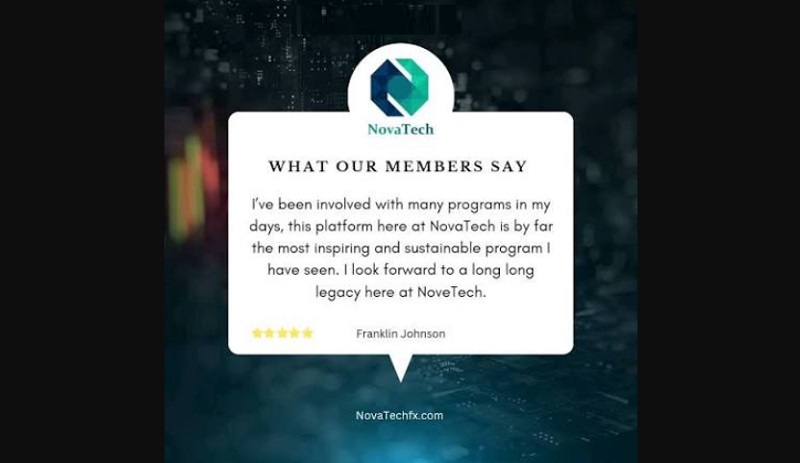
NovaTech’s alleged model relied on promoters who introduced friends, relatives, colleagues, and members of their wider communities. In a traditional financial product, an investor may deal directly with a licensed adviser or a regulated platform. In a recruitment-based structure, the first point of contact is often someone personally trusted by the new participant.
That difference changes the psychology of risk. A recommendation from a family member can feel more persuasive than a disclaimer on a website. Early payouts may appear to confirm that the strategy works. Group chats, webinars, and success stories can create a sense that scepticism is unnecessary or disloyal.
The SEC charged six promoters in addition to the company and its founders. It alleged that some continued recruiting even after signs emerged that should have raised questions, including withdrawal delays and regulatory action in the United States and Canada. One promoter, Martin Zizi, agreed to a partial settlement without admitting or denying the allegations, including a proposed $100,000 civil penalty subject to court approval.
Also Read: From Fake Profits to Recovery Scams: The SW Alliance Investment Scheme Explained
Affinity Fraud and the Use of Community Trust
The NovaTech case is also notable because regulators said the operation targeted many Haitian-American investors. The SEC said the programme reached people worldwide, including members of that community. Reuters reported that the marketing used social media, Telegram, WhatsApp, and Haitian Creole content, while Cynthia Petion used the title “Reverend CEO.”
This is often described as affinity fraud: a scheme that exploits trust within a shared community, whether that connection is based on language, culture, religion, profession, or migration experience.
The term should not be used to blame victims. On the contrary, affinity fraud works because ordinary social trust is turned into a financial distribution channel. People may believe that an opportunity has been checked because it is recommended by someone they know, see others receiving early payments, or hear it framed as a collective path to financial stability.
| Trust Signal | How It Can Affect a Decision | Independent Verification Step |
|---|---|---|
| Recommendation from a friend or community figure | Creates a feeling that the offer has already been vetted | Search regulator registers independently |
| Testimonials about successful payouts | Makes a new programme appear tested and profitable | Ask for audited performance and custody evidence |
| Faith-based or mission-led messaging | Can make financial caution feel like a lack of trust | Separate personal belief from financial documentation |
| Private WhatsApp or Telegram groups | Can narrow the information environment and speed up recruitment | Look beyond the group for official warnings and court filings |
| Referral rewards | Give participants a direct financial reason to recruit others | Determine whether returns depend on trading or fresh deposits |
Warning Signs Appeared Before the Collapse
No single warning sign proves that an investment operation will fail. Still, several signals should lead investors to slow down and verify claims independently.
- Canadian regulators issued public notices before NovaTech’s collapse.
- The British Columbia Securities Commission stated in October 2022 that NovaTech was not registered to trade in or advise on securities or derivatives in the province.
- The Canadian Securities Administrators later warned that NovaTech was not registered with a securities regulator in any Canadian province or territory.
- The Ontario Capital Markets Tribunal’s statement of allegations also referred to regulatory action in California, British Columbia, and Ontario.
These notices did not by themselves decide every allegation later made by U.S. authorities, but they were material information that potential participants could have reviewed before sending funds.
Common risk indicators in cases of this type include:
- regular returns presented without independently audited records;
- vague explanations of where assets are held;
- referral compensation tied to new deposits;
- unclear legal entities or licensing status;
- pressure to keep funds inside the programme;
- delayed withdrawals;
- public warnings from financial regulators;
- claims that a strategy can generate reliable profit regardless of market conditions.
How the Collapse Exposed the Structure
According to the SEC, NovaTech collapsed in May 2023 and most investors were unable to withdraw their investments afterward. Once a programme cannot meet redemption requests, the difference between a real liquid investment operation and a structure dependent on new money becomes visible very quickly.
The complaint does not mean every individual promoter had the same knowledge or role. It does, however, describe a model in which the apparent success of the platform depended on continuing confidence and continued recruitment.
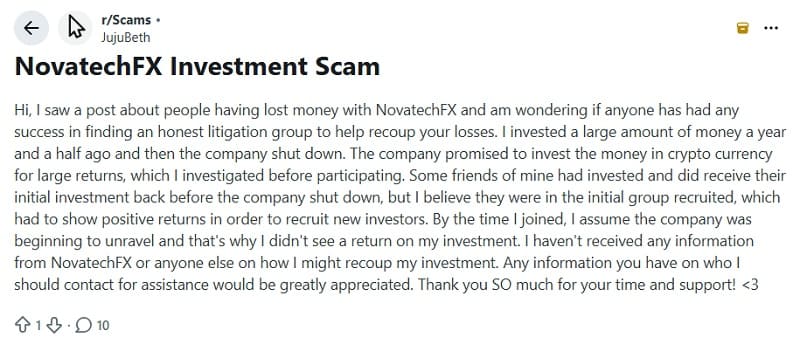
A Reddit post from an investor seeking help after the shutdown illustrates the human side of such failures. The user wrote that they had invested a large amount, the company had shut down, and they were trying to identify legitimate recovery options. This is anecdotal evidence, not a substitute for the official record, but it reflects a recurring risk after large investment collapses: victims can become targets for recovery scams.
Anyone affected by a failed investment platform should be cautious of people promising to recover crypto for an upfront payment, requesting wallet seed phrases, or claiming they can “hack” stolen assets back. Those offers often create a second loss.
Also Read: How Scammers Exploit the Reputation of Fidelity Investments to Steal Money
The Regulatory Timeline
| Date | Development | Why It Matters |
|---|---|---|
| 2019 | NovaTech began operating, according to the SEC complaint | Marks the alleged start of the programme examined in the federal case |
| October 2022 | BCSC placed NovaTech on its Investment Caution List | The regulator said the company was not registered in British Columbia |
| March 2023 | Canadian securities regulators issued a public warning | They said NovaTech was not registered in any Canadian province or territory |
| May 2023 | NovaTech collapsed, according to the SEC | Many investors reportedly lost access to withdrawals |
| June 2024 | New York Attorney General filed a separate lawsuit | The state alleged more than $1 billion in losses across its case |
| August 2024 | SEC filed its civil enforcement action | The federal complaint alleged more than $650 million was raised from over 200,000 investors |
Why NovaTech Still Draws Attention in 2026
NovaTech remains relevant because the collapse left many investors with unresolved questions about lost deposits, ongoing legal proceedings, and potential recovery. The SEC’s civil case concerns an alleged scheme that raised more than $650 million from over 200,000 investors worldwide, while the New York Attorney General brought a separate action with its own alleged loss figure.
Interest in the case is also sustained by the fact that similar investment offers continue to appear under new names. Their presentation may differ, but the warning signs are often familiar:
- managed-trading or AI-signal promises;
- recurring profit projections;
- referral bonuses and rank-based rewards;
- private WhatsApp, Telegram, or Discord groups;
- screenshots of balances instead of audited performance records;
- withdrawal delays followed by demands for extra payments.
NovaTech is therefore more than a historical case. It is a useful reference point for people assessing new crypto programmes that combine trading claims with recruitment incentives. The SEC alleged that the operation relied on an MLM structure, paid commissions to promoters, and used most investor assets for payments to earlier participants and promoters rather than trading.
Why Victims Need to Be Careful After a Collapse
Large investment failures can create a second risk: recovery scams. People may be contacted by supposed investigators, lawyers, blockchain specialists, or “recovery agents” who promise to unlock funds for a deposit, tax payment, gas fee, or wallet-access request.
A legitimate recovery process should be independently verifiable through a court, regulator, or authorised legal representative. No genuine investigator needs a victim’s seed phrase, remote access to a wallet, or an upfront crypto transfer to “release” funds.
Before responding to anyone claiming to help, investors should:
- Check whether the person or firm appears in an official court or regulator notice.
- Preserve transaction IDs, wallet addresses, screenshots, and chat records.
- Avoid sending additional funds to unlock an existing balance.
- Treat unsolicited recovery offers as high-risk until independently verified.
The SEC alleged that NovaTech collapsed after withdrawal delays and regulatory actions, leaving most investors unable to access their investments. That history explains why searches for the platform still matter: people are not only examining the past, but trying to recognise the same structure before it appears again under a different brand.

What Investors Can Learn From NovaTech
The most important lesson is that polished branding, active communities, and early payouts do not verify an investment strategy. A legitimate operator should be able to answer basic questions about licensing, custody, legal responsibility, risk, and performance evidence.
Before sending funds to a managed crypto programme, investors should:
- Search the company and its principals in regulator databases.
- Confirm whether the firm is authorised for the service it claims to provide.
- Ask who controls the assets and where they are held.
- Look for independent audits rather than screenshots or testimonials.
- Treat recruitment-heavy compensation plans as a conflict-of-interest warning.
- Review public enforcement notices before relying on a promoter’s explanation.
- Avoid sending additional money to “unlock” an account.
- Save wallet addresses, transaction IDs, account statements, and communications if access becomes restricted.
The NovaTech case shows why financial due diligence cannot be delegated to a friend, a group administrator, or a charismatic promoter. Trust may be a reason to investigate an opportunity, but it is never proof that the underlying operation is safe.
Risk Assessment
NovaTech is a collapsed investment programme facing major civil enforcement allegations from U.S. federal and state authorities. The SEC’s case alleges a large-scale crypto fraud involving more than $650 million in investor assets, while New York’s Attorney General alleges a separate figure exceeding $1 billion. Historical regulatory warnings in Canada further increased the risk profile before the collapse.
Risk level: Extremely high.
The programme is not suitable for investors seeking a regulated trading service, transparent custody, independently audited performance, or reliable access to withdrawals. Its case should instead be studied as an example of how trading claims, referral incentives, and community trust can combine to create a high-risk investment environment.
FAQ
What was NovaTech?
NovaTech was a crypto and forex investment programme that operated from 2019 until its 2023 collapse, according to the SEC complaint.
Why is $650 million associated with NovaTech?
The SEC alleged that NovaTech raised more than $650 million in crypto assets from over 200,000 investors worldwide.
Did the SEC accuse NovaTech of operating a Ponzi scheme?
Yes. The SEC alleged that the programme used most investor funds to pay earlier investors and promoter commissions, while only a fraction was used for trading.
Why is another figure of more than $1 billion sometimes mentioned?
That figure comes from a separate lawsuit filed by the New York Attorney General, which made its own allegations and calculation.
How many investors were allegedly affected?
The SEC alleged that more than 200,000 investors worldwide participated in the programme.
What role did promoters allegedly play?
The SEC alleged that promoters recruited investors and received commissions. It charged six promoters alongside NovaTech and its founders.
What happened when NovaTech collapsed?
According to the SEC, the programme collapsed in May 2023 and most investors could no longer withdraw their investments.
What should victims of a similar scheme do?
Preserve all records, report the matter to the relevant financial regulator and law-enforcement body, and avoid recovery services that request upfront payments, wallet seed phrases, or remote access. U.S.-based victims can file reports with the FBI Internet Crime Complaint Center and the FTC ReportFraud portal.
Sources
- U.S. Securities and Exchange Commission — NovaTech Enforcement Action
- SEC Complaint: SEC v. Nova Tech Ltd. et al.
- New York Attorney General — NovaTechFX and AWS Mining Lawsuit
- British Columbia Securities Commission — NovaTech Caution List
- Canadian Securities Administrators — NovaTech Warning
- Ontario Capital Markets Tribunal — Statement of Allegations
- Reuters — SEC Lawsuit Against NovaTech
Need Help?
If you invested in NovaTech — whether through its trading packages, referral programs, or staking products — and are now unable to access your funds following the platform's collapse, you can request a free consultation with StockView specialists.
An expert review can help determine whether your case fits the broader pattern of the alleged $650 million fraud and realistically assess your chances of recovering lost funds through chargebacks, payment network disputes, or legal claims as regulatory investigations into NovaTech continue to unfold.
Get professional help with your case.