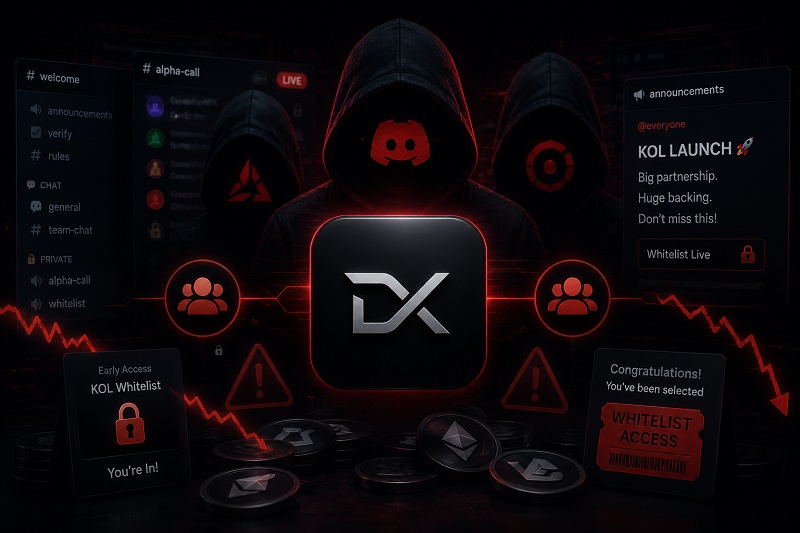
Novara, Dexor, Onyx: Inside the Fake Discord Communities Running the “KOL Launch” Rug Pull Scam
- The KOL Launch Narrative
- When the Profits Became Unreal
- The Wallet That Didn't Match Reality
- Why Discord Has Become a Favorite Tool
- The Bigger Trend
- Conclusion
- FAQ
- Sources
For years, cryptocurrency scams relied on fake exchanges, fraudulent investment platforms, or worthless tokens. A newer trend is emerging inside Discord communities, where scammers no longer need to build a convincing trading platform. Instead, they create entire social ecosystems designed to manufacture trust.
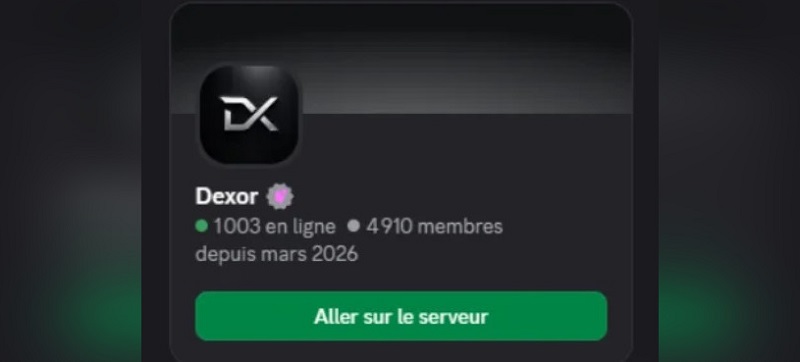
One recent example involves a Discord server that reportedly operated under several different names, including Novara, Dexor, and Onyx. According to victim accounts, the community attracted users through Instagram, promised access to profitable token launches, paid small returns initially, and eventually convinced members to send increasingly larger amounts of SOL. The final stage involved fabricated profits, blocked withdrawals, and demands for additional payments before funds could supposedly be released.
While the branding may change, the underlying mechanics reveal a sophisticated fraud model that combines elements of rug pulls, investment scams, and social engineering.
Stage Reported Outcome
This structure is particularly effective because skepticism decreases after every successful transaction.
Most people expect scams to fail immediately. A scam that deliberately pays early participants appears much more trustworthy.
 >
>
The larger deposit no longer felt speculative. It felt like scaling a strategy that had already proven itself.
The KOL Launch Narrative
One of the most interesting aspects of the reported scheme is the use of the term KOL.
In cryptocurrency markets, KOL stands for Key Opinion Leader and usually refers to influencers who promote projects to large audiences.
The Discord operators allegedly claimed that a special launch backed by a crypto influencer would produce far larger returns than normal opportunities. Participants were encouraged to treat the event as exclusive and time-sensitive.
This created two powerful psychological triggers:
- fear of missing out;
- perceived insider access.
Many crypto investors spend years searching for early opportunities. A promise of privileged access can be extremely persuasive, especially after previous deposits appeared successful.
Also Read: How Scammers Exploit the Reputation of Fidelity Investments to Steal Money
When the Profits Became Unreal
After participating in the launch, the victim reportedly received a message claiming that the investment had generated approximately 2,032 SOL, representing a return of roughly 183 times the original deposit.
At first glance, that should have triggered suspicion. In reality, many victims become emotionally attached to large profits once they appear on screen.
The focus shifts away from the original deposit and toward the much larger balance.
- The investor is no longer worried about losing 11 SOL.
- He is worried about accessing 2,032 SOL.
- That distinction is critical because it changes decision-making.
Scammers understand this dynamic extremely well.
The Wallet That Didn't Match Reality
A turning point occurred when the victim attempted to verify the wallet independently.
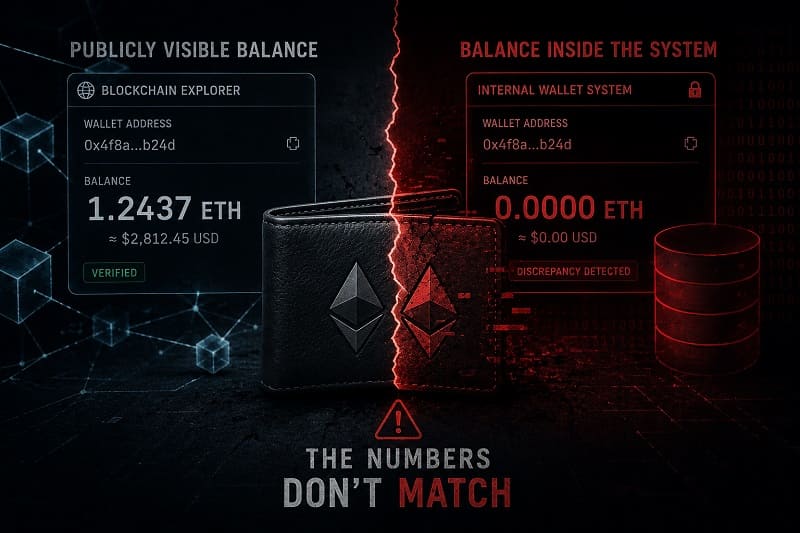
According to the report, the publicly visible balance did not match the balance displayed inside the system. The numbers shown by the operators were significantly larger than what appeared on-chain.
This detail is important. Legitimate blockchain balances can be independently verified. When internal dashboards display figures that cannot be reconciled with public blockchain data, investors should immediately investigate further.
The discrepancy suggests that at least part of the displayed profit may have existed only within a controlled interface rather than on the blockchain itself.
 crypto investment scams, the final obstacle reportedly appeared when the victim tried to withdraw funds.
Instead of receiving the proceeds, the investor was informed that additional gas fees were required before the transfer could be processed. The explanation was that the profits were too large and special handling was necessary.
This tactic appears frequently across crypto fraud cases.
Victims are told they must pay:
- gas fees;
- liquidity fees;
- withdrawal fees;
- tax obligations;
- verification charges;
- compliance costs.
The common characteristic is that these payments must be made separately before any funds are released.
In many reported scams, the promised payout never arrives regardless of how many additional fees are paid.
| Red Flag | Observed in Reports |
|---|---|
| Early successful payouts | Yes |
| Exclusive insider opportunities | Yes |
| Unrealistic profit claims | Yes |
| Balance discrepancies | Yes |
| Withdrawal restrictions | Yes |
| Gas fee demands | Yes |
| User bans after questions | Reported |
Why Discord Has Become a Favorite Tool
Discord provides an ideal environment for this type of operation. Unlike a simple website, a Discord server can simulate an entire community.
Victims may see:
- thousands of members;
- active discussions;
- success stories;
- launch announcements;
- support teams;
- moderators;
- educational content.
The presence of a large community often creates social proof. People assume that thousands of members would not remain if the operation were fraudulent.
The problem is that community size alone proves very little. Accounts can be purchased, automated, or controlled by the same operators.
Crypto security specialists have repeatedly warned that Discord and Telegram have become major distribution channels for investment fraud, fake insider groups, and manipulated trading communities.
Also Read: How Telegram Became the New Darknet for Scammers

Traditional Rug Pull Discord Community Scam Model
The Bigger Trend
The Novara story highlights an evolution in crypto fraud.
Researchers studying Solana-based scams have noted the enormous scale of rug-pull activity across the ecosystem, with thousands of suspicious projects appearing every year. Recent academic research also points to increasingly organized behavior among fraud operators and extremely short project lifecycles.
What makes the Discord model notable is that the token itself is no longer the primary product. Trust is.
Operators invest time into building communities, creating credibility, generating testimonials, and manufacturing social proof before requesting larger deposits.
The scam begins long before money changes hands.
Conclusion
The reported Novara, Dexor, and Onyx operation demonstrates how cryptocurrency scams continue to evolve beyond simple token launches and fake exchanges.
Rather than relying solely on technology, the alleged scheme relied on community building, gradual trust development, and carefully staged success stories. Small profits encouraged larger commitments. Exclusive launch opportunities created urgency. Extraordinary returns generated emotional investment. Withdrawal restrictions then transformed paper profits into real losses.
Whether future versions operate under the names Novara, Dexor, Onyx, or something entirely different, the warning signs remain remarkably consistent: early payouts, escalating deposits, unverifiable profits, blocked withdrawals, and demands for additional fees.
For investors, the most valuable lesson is simple. If a community controls both the money and the information about the money, independent verification becomes more important than any screenshot, testimonial, or promise of extraordinary returns.
FAQ
What was Novara?
Novara was the name of a Discord community that a victim accused of operating a fraudulent crypto launch scheme. Later versions reportedly appeared under other names.
What is a KOL launch?
KOL stands for Key Opinion Leader. In crypto, it usually refers to influencers who promote projects to their audiences.
Why did the first transactions appear profitable?
Many investment scams intentionally provide small early payouts to build credibility before requesting larger deposits.
What was the gas fee explanation?
Victims report being told that additional fees were required before large profits could be released.
Are Discord crypto communities always scams?
No. However, investors should independently verify any project and remain cautious when communities request direct transfers to private wallets.
Why do scam communities change names?
Rebranding helps operators distance themselves from previous complaints and warning posts.
Sources
- Reddit discussions
- Coinbase Consumer Protection: Discord and Telegram crypto scam tactics
- Chainabuse: Rug pull scam reporting and analysis
- Hacken: Rug pull trends and crypto fraud analysis
- SolRPDS: Academic analysis of rug pulls in the Solana ecosystem
- SolRugDetector: Research on organized rug-pull behavior on Solana
Get professional help with your case.