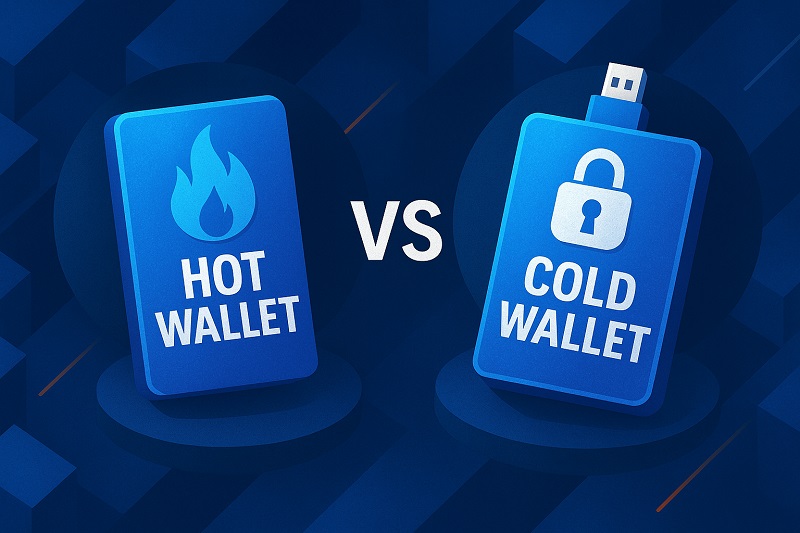
Hot Wallets vs. Cold Wallets: Risks and Benefits in 2025–2026
- What Hot and Cold Wallets Really Are
- Hot Wallets: Convenience vs. Security Risks
- Cold Wallets: Offline Security and Its Limitations
- 2025–2026 Threat Landscape and Why This Matters
- Designing a Smarter Custody Strategy
- Practical Decision Checklist
- Common Mistakes and How to Avoid Them
- FAQ
- Sources
Choosing where to store cryptocurrency is one of the most important decisions a crypto user makes. In 2025–2026, as the landscape of cybercrime continues to shift and the volume of digital assets under management grows, understanding the trade‑offs between hot wallets and cold wallets is no longer optional — it’s essential.
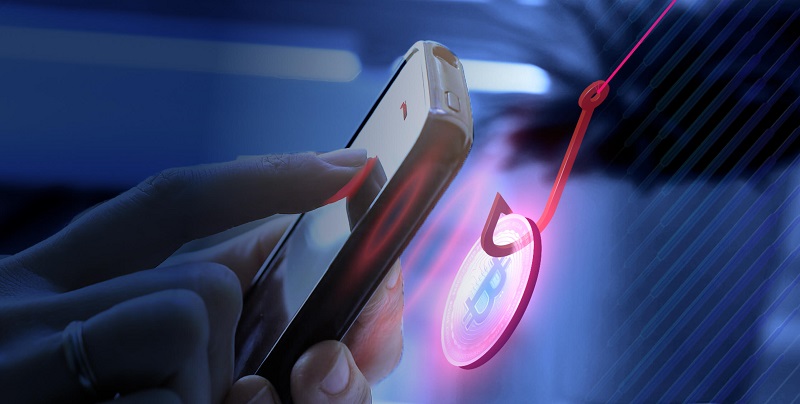
To see why, consider this scenario. Sarah kept most of her crypto holdings in a mobile wallet for convenience. After interacting with a phishing link, malware on her phone siphoned off a significant portion of her assets. In contrast, her long-term holdings stored in a hardware wallet remained untouched. This real‑world contrast highlights that convenience and security are not the same thing, and the right wallet strategy depends not only on technology but on user behavior and risk tolerance.
What Hot and Cold Wallets Really Are
At the most basic level, all wallets perform the same function: they store your private keys, which are the cryptographic credentials needed to authorize blockchain transactions. The crypto itself is not “in” the wallet — it lives on the blockchain. If someone gains access to your private key, they control your funds.
Hot wallets are services connected to the internet. They include:
- mobile apps (e.g., Trust Wallet, MetaMask Mobile),
- desktop applications,
- browser extension wallets,
- exchange wallets where custodians manage keys.
Their key advantage is accessibility. You can transfer funds, interact with decentralized apps (DeFi/NFT platforms), and trade quickly. However, their online nature makes them vulnerable to various threats.
Cold wallets are offline key‑storage solutions. The most common forms are:
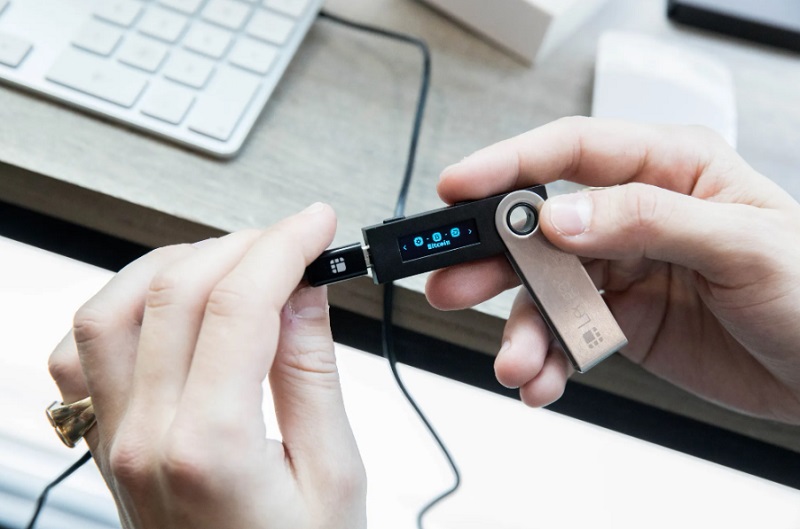
- hardware wallets (e.g., Ledger, Trezor),
- air‑gapped devices (sign transactions offline),
- paper wallets (printed seed phrases stored physically).
Their lack of direct internet connectivity removes a large portion of the attack surface, making remote attacks far less likely.
Hot Wallets: Convenience vs. Security Risks
Hot wallets dominate daily crypto use because they make transactions fast and easy. For many users, a hot wallet is the go‑to for:
- frequent trading,
- DeFi and yield farming,
- NFT minting,
- quick transfers between accounts.
However, this convenience comes with several security risks:
- Malware & Phishing. Hot wallets can be compromised through malware and fake wallet interfaces. For example, a malicious overlay can trick users into revealing their seed phrase. In 2025, phishing and malware attacks continued to be among the top causes of personal wallet compromise, according to crypto crime metrics.
- Device Compromise. Smartphones and PCs that host hot wallets are susceptible to keyloggers, remote access tools, and SIM swap attacks, especially if standard 2FA relies on SMS — which attackers can intercept.
- Exchange Custody Risks. Many hot wallets are technically custodial when held on an exchange. The exchange holds the keys; users hold access. This creates a counterparty risk: if the exchange is hacked, bankrupt, or freezes withdrawals, users can be locked out.
Given these vulnerabilities, hot wallets are best treated as operational tools — suitable for DeFi activity, trading, and daily transactions, but not for long-term storage of significant funds.
Cold Wallets: Offline Security and Its Limitations
Cold wallets minimize exposure to online threats by storing private keys in an offline environment. When a transaction is required, it is signed directly on the device, and only the finalized (signed) transaction is then broadcast to the network.
Key advantages of cold storage:
- Resistance to remote attacks: Because the device isn’t connected to the internet, malware and remote exploits can’t easily reach private keys.
- Strong isolation: Physical separation provides a strong security boundary.
- Ideal for long-term holdings: For users treating crypto as a long-term store of value, cold wallets are generally the recommended option.
However, they are not a complete solution:
- Physical Risks. Hardware wallets can be lost, stolen, or physically damaged. If the seed phrase (the backup phrase) is not securely stored, there is no way to recover funds. Permanent loss of assets due to mismanaged seed phrases remains a common cold wallet risk.
- User Error. Cold wallets demand more operational discipline. A misplaced seed phrase, an insecure backup, or a misunderstood recovery step can render a wallet unrecoverable.
- Phishing at Signing Time. Even cold wallets can be tricked by malicious signing prompts if users are not careful about where and how they connect their device.
Also Read: Best Practices for Using Multisig and Cold Storage
2025–2026 Threat Landscape and Why This Matters
According to mid‑2025 analytics from Chainalysis, over $2.17 billion in crypto was stolen from decentralized services and personal wallets in the first half of 2025 — a figure that already eclipsed total thefts in the full year 2024. The same report noted 158,000 wallet compromise incidents affecting 80,000 unique victims, underscoring that both custodial and self‑custodied wallets face real threats.
These figures highlight that wallet selection is not academic. It’s a practical defense decision in a high‑threat environment where scams, exploits, social engineering, and breaches continue to rise.
Designing a Smarter Custody Strategy
Smart users rarely rely on one wallet type alone. Instead, seasoned investors and institutions recommend a layered custody model:
Tier 1 — Hot Wallet (Small Balances):
- Small funds for regular use
- Everyday transactions
- Active trading or DeFi
Tier 2 — Cold Wallet (Core Holdings):
- Long-term storage of significant assets
- Offline seed management
- Minimal online activity
Tier 3 — Experimentation Wallets:
- Segregated wallets for new protocols or experimental projects
- Isolates risk to prevent contagion across holdings
This tiered approach balances accessibility and security without exposing all holdings to the same attack surface.
Practical Decision Checklist
Before you choose a wallet type, ask yourself:
- How often will I access these funds? Frequent use typically requires a hot wallet, while long-term storage is better suited for a cold wallet.
- What’s the value at stake? Larger amounts should lean toward cold storage.
- Am I prepared for seed phrase management? If not, take time to learn secure offline backups.
- Do I understand device security? Both hot and cold wallets require strong endpoint hygiene.
Common Mistakes and How to Avoid Them
Mistake: Storing all crypto in a single hot wallet. Solution: Use hot wallets for convenience and cold wallets for long-term holdings.
Mistake: Storing seed phrases in cloud notes or screenshots. Solution: Store backups offline in secure physical locations.
Mistake: Assuming cold wallets are “set and forget.” Solution: Periodically test recovery and verify backups.
Mistake: Using exchange wallets for all storage. Solution: Understand custody models and keep only working balances on exchanges.
Also Read: What to Do If Your Crypto Wallet Was Hacked: A Step-by-Step Guide
FAQ
- Are cold wallets immune to theft?
No. While they guard against online attacks, they can still be lost, stolen, or compromised if the seed phrase is not handled securely.
- Can a hot wallet be made safer?
Yes — use app‑based 2FA, strong passwords, anti‑phishing tools, and limit balance size.
- What if I lose my cold wallet’s recovery phrase?
Without the seed phrase or backup, access to a cold wallet is essentially impossible.
- Should all crypto users use cold wallets?
For large, long-term holdings, yes; but for frequent transactions, a small hot wallet is practical.
- Is exchange custody safer than self‑custody?
It depends on the exchange’s security posture; exchanges can be hacked, so avoid storing large balances there.
- How often should I check my cold wallet?
Access should be limited to periodic integrity checks and backup validation, since online interaction raises security risks.
- What is the biggest risk for hot wallets?
Remote attacks like phishing, malware, and credential theft.
- What is the biggest risk for cold wallets?
Physical loss or mismanagement of the seed phrase.
- Can hardware wallets be hacked?
While rare, they can be compromised via physical access or supply‑chain attacks.
- How do I choose between hot and cold?
Evaluate how often you’ll use the funds, your risk tolerance, and your technical proficiency — a hybrid approach is often the most effective.
Sources
Get professional help with your case.