Is Quotex a Scam? A Data-Driven Risk Analysis of the Platform in 2025–2026
- What You’re Actually Using: Platform vs Investment
- Regulation Status: The Core Structural Risk
- Why Some Users Call Quotex a Scam
- Withdrawal Issues
- Account Restrictions and Freezes
- Price Manipulation Allegations
- Negative User Sentiment
- Counterpoint: Why Some Users Say Quotex Works
- The Real Risk: The Binary Options Model Itself
- Regulatory Context and Industry Warnings
- Can You Get Your Money Back from Quotex?
- Scenario 1: Trading Losses
- Scenario 2: Suspected Unfair Practices
- How to Evaluate Platforms Like Quotex
- Myth vs Reality
- Conclusion
- FAQ
- Need Help Reviewing a Trading Loss?
The question “Is Quotex a scam?” is more complex than it appears at first glance. Many users approach it expecting a binary answer — either the platform is fraudulent or completely legitimate. In reality, the situation lies somewhere in between, and misunderstanding this nuance is exactly what leads to poor decisions.
Quotex operates as an active trading platform with real users, live markets, and functioning withdrawal mechanisms in some cases. However, it exists in a segment of the financial ecosystem that regulators consistently classify as high-risk, controversial, and prone to abuse. This means the real issue is not only whether the platform works, but how safe it is structurally for the average user.
What You’re Actually Using: Platform vs Investment
One of the biggest misconceptions about Quotex is that users believe they are “investing.” In reality, they are engaging in binary options trading, which is fundamentally different from traditional financial markets.
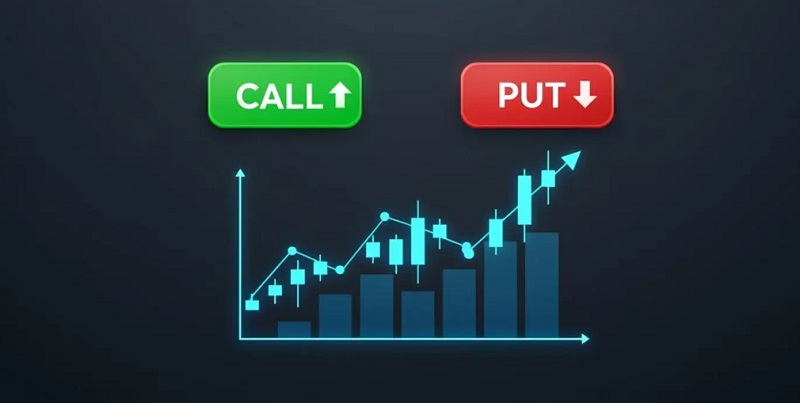
Here’s how it works in practice:
- You choose an asset (currency, crypto, etc.),
- You predict whether the price will go up or down,
- You select a short time frame (often seconds or minutes).
The outcome is fixed:
- If correct, you receive a predefined return (e.g., 70–90%).
- If incorrect, you lose 100% of your stake.
There is no asset ownership, no long-term growth strategy and no ability to “hold through volatility”.
This structure eliminates many tools that investors rely on, such as diversification, risk management over time, or fundamental analysis.
In essence, you are participating in a probability-based system with constrained upside and full downside exposure — a model that significantly increases the likelihood of loss over time.
Regulation Status: The Core Structural Risk
The most critical factor in evaluating Quotex is not user reviews or interface quality — it is regulation.
As of 2025–2026:
- Quotex operates through offshore jurisdictions,
- It is not licensed by top-tier regulators such as FCA (UK), ASIC (Australia) or CySEC (European Union),
- The platform references IFMRRC, but this entity is not a governmental regulator, does not enforce financial laws and does not provide investor compensation.
On regulated platforms:
- Client funds are often segregated,
- There are strict audit requirements,
- Disputes can be escalated to authorities,
- Compensation schemes may exist.
On unregulated platforms:
- Rules are defined internally,
- Enforcement depends on the company itself,
- Legal recourse is limited or impractical.
This doesn’t automatically mean misconduct — but it creates an environment where the user bears nearly all the risk.
Why Some Users Call Quotex a Scam
User complaints tend to cluster around several recurring issues. These patterns don’t prove systemic fraud, but they highlight friction points where trust breaks down.
Withdrawal Issues
Some users report:
- Delayed payouts,
- Repeated verification requests,
- Withdrawals stuck in “processing”.
In practice, this often happens when accounts trigger internal risk checks, documentation is incomplete or activity is flagged as “suspicious”.
The problem is not just delays — it’s the lack of transparency about why they occur.
Account Restrictions and Freezes
Cases include:
- Accounts blocked after profitable trades,
- Sudden KYC (Know Your Customer) enforcement,
- Temporary suspension during withdrawal requests.
Without a regulator, users cannot easily challenge:
- Whether restrictions are justified,
- Whether policies are applied consistently.
This creates a perception of asymmetric control — where the platform can act unilaterally.
Also Read: Problems With Withdrawing Funds From a Broker: Causes and Solutions

Price Manipulation Allegations
Some traders claim:
- Price discrepancies vs external charts,
- Sudden spikes affecting outcomes,
- Trades closing differently than expected.
Important nuance:
- Binary options pricing can differ slightly from spot markets,
- However, lack of transparency makes verification difficult.
This ambiguity alone is enough to generate distrust.
Negative User Sentiment
Across forums and review platforms:
- Complaints often focus on withdrawals,
- Some users accuse the platform of unfair conditions,
- Ratings tend to be mixed or low.
However:
- Negative reviews are more common in high-risk trading environments
- Emotional responses to losses can distort perception
This means sentiment should be considered — but not treated as standalone evidence.
Counterpoint: Why Some Users Say Quotex Works
A balanced analysis requires acknowledging that not all experiences are negative.
Some users report:
- Successful withdrawals, including crypto payouts,
- Smooth trading interface,
- No issues with account access.
What this suggests:
- The platform is operational,
- It is not a “disappear overnight” scheme,
- It processes at least some withdrawals consistently.
But here’s the key insight: a platform can function technically, process payments, have real users and still be high-risk due to structural factors. Functionality is not the same as reliability or protection.
The Real Risk: The Binary Options Model Itself
Even if we remove all concerns about regulation, the core risk lies in the trading model.
Binary options create a mathematical imbalance:
- Loss = 100% of stake,
- Win = less than 100% gain.
This means that over time, probability works against the trader, and even a 50%-win rate leads to losses.
Additional risk factors:
- Extremely short timeframes mean that random price movements tend to dominate.
- Emotional decision-making often leads to impulsive trades.
- The lack of recovery strategies leaves no opportunity to average down.
Industry observations consistently show: the majority of retail users lose money and losses happen quickly due to trade frequency.
This is critical. Many users interpret these losses as “scam behavior,” when in reality they are a natural outcome of the system design.
Also Read: Gembell Limited: The Parent Company of Binary Options Scam Brokers
Regulatory Context and Industry Warnings
Binary options have been widely criticized by regulators globally.
Key concerns include:
- Conflict of interest (platform profits from user losses),
- Lack of pricing transparency,
- High loss rates among retail traders.
As a result, many jurisdictions restrict or ban retail access and authorities issue warnings about offshore platforms.
This broader context matters more than any single platform review. Quotex is operating within an already controversial industry category, not a neutral financial environment.
Can You Get Your Money Back from Quotex?
This depends entirely on how the loss occurred.
Scenario 1: Trading Losses
- These are considered normal outcomes,
- No recovery mechanism exists.
Scenario 2: Suspected Unfair Practices
Possible actions:
- Contact platform support,
- Submit complaints,
- Consider initiating a chargeback or using another recovery method that best suits your situation.
Practical limitations:
- Offshore structure complicates legal action
- No regulator to enforce decisions
- Crypto transactions are irreversible
Recovery is theoretically possible; however, in practice it is a complex and challenging process that rarely leads to successful outcomes.
It typically requires timely action, strong supporting evidence, and the use of appropriate recovery channels, which makes the overall likelihood of success relatively low.
How to Evaluate Platforms Like Quotex
To avoid emotional or biased decisions, use a structured evaluation model.
- Regulation. Is the platform licensed by a recognized authority?
- Business Model. Does the platform profit from your losses?
- Transparency. Are pricing, terms, and risks clearly explained?
- Withdrawal Logic. Are rules predictable and consistent?
- Legal Accountability. Can disputes realistically be resolved?
This framework helps shift thinking from: “Is this a scam?” to “What level of risk am I accepting?”.
Myth vs Reality
Myth 1: “Quotex is a scam because I lost money”
Reality: Losses are statistically expected in binary options
Myth 2: “If withdrawals work, everything is fine”
Reality: Operational functionality does not guarantee fairness or long-term reliability
Myth 3: “Regulation is just a formality”
Reality: It is the primary protection mechanism for users
Myth 4: “Binary options are a fast way to earn”
Reality: They are a fast way to lose capital without strict discipline
Myth 5: “Experienced traders can beat the system”
Reality: Even professionals struggle against unfavorable probability structures
Myth 6: “If something goes wrong, I can get my money back”
Reality: Recovery options are particularly challenging, especially in offshore cases, but not entirely impossible.
Myth 7: “Charts reflect the real market perfectly”
Reality: Pricing mechanisms may differ and are not always transparent
Myth 8: “High returns mean high opportunity”
Reality: High returns usually indicate high embedded risk
Conclusion
Quotex is not definitively classified as a scam in a strict legal sense. It is a functioning platform that allows users to trade and, in some cases, withdraw funds.
However, it combines several critical risk factors:
- Lack of strong regulation,
- Offshore operational structure,
- High-risk binary options model.
This does not automatically mean fraud — but it creates an environment where losses are common, protections are minimal and disputes are difficult to resolve.
For most users, the real question is not whether Quotex is a scam — but whether they fully understand the risk profile they are entering.
FAQ
1. Is Quotex legal?
Depends on jurisdiction. Many countries restrict binary options.
2. Can I withdraw money from Quotex?
Some users can, but others report delays or issues.
3. Is Quotex regulated?
No, not by major financial authorities.
4. Why is Quotex controversial?
Due to its business model and lack of oversight.
5. Can beginners use it safely?
Not recommended due to high risk.
6. Are binary options gambling?
They share similarities due to outcome structure.
7. Can I recover lost funds?
Usually not if losses came from trading.
8. What is the main risk?
The combination of probability structure and lack of regulation.
Need Help Reviewing a Trading Loss?
If you’ve lost money on a platform like Quotex and are unsure whether it was due to normal trading risk or potentially unfair conditions, you can request a free consultation. A detailed case review can help clarify what happened and whether any realistic recovery paths may still exist.
Get professional help with your case.