Is OKX Safer Than Binance in 2026?
- Why Exchange Safety Became a Bigger Issue After FTX
- Binance Remains the Largest — But Also the Most Scrutinized
- Why Some Users Increasingly Prefer OKX
- Withdrawal Reliability: What Users Actually Complain About
- AML Reviews and “Source of Funds” Checks
- Is OKX Actually Better for Withdrawals?
- Binance vs OKX vs Bybit: Operational Comparison
- The “Safer Exchange” Question Is More Complicated Than People Think
- The Biggest Risk Is Still Custodial Dependency
- So, Is OKX Safer Than Binance?
- Conclusion
- FAQ
- Sources
After the collapse of FTX, crypto users stopped evaluating exchanges purely by trading fees and token listings.
In 2026, the conversation looks very different. Today, traders increasingly ask:
- Which platform handles withdrawals more reliably?
- Which exchange is less likely to trigger unexpected AML reviews?
- Which company appears more transparent about reserves?
- Which support team actually responds during account restrictions?
That shift explains why comparisons between Binance, OKX, and Bybit have become one of the hottest topics across Reddit and crypto communities.
But the core question — “Is OKX safer than Binance?” — is far more complicated than most comparison threads suggest.
Why Exchange Safety Became a Bigger Issue After FTX
Before 2022, many retail traders treated centralized exchanges almost like ordinary fintech apps. The FTX collapse fundamentally changed that psychology.
Users suddenly realized:
- holding assets on an exchange means accepting custodial risk;
- “large platform” does not automatically mean financially secure;
- withdrawal freezes can happen extremely quickly during stress events;
- opaque balance-sheet structures create systemic danger.
That shock triggered a broader industry push toward:
- Proof-of-Reserves systems;
- reserve transparency;
- on-chain verification;
- stronger compliance frameworks.
Academic and industry research after FTX increasingly focused on structural weaknesses inside centralized custody models. As a result, the exchange reputation in 2026 depends less on marketing — and more on operational trust.
Binance Remains the Largest — But Also the Most Scrutinized
Binance still dominates much of the global crypto market. Its advantages remain enormous:
- extremely deep liquidity;
- broad token support;
- large derivatives ecosystem;
- strong infrastructure;
- global brand recognition.
For many traders, Binance remains the default venue simply because execution and liquidity are difficult to match. At the same time, Binance also attracts the highest level of scrutiny.
Partly, this is a consequence of scale. The world’s largest exchange naturally generates:
- more user complaints;
- more regulatory attention;
- more public controversy;
- more AML-related disputes.
Over the past several years, Binance has repeatedly faced:
- regional restrictions;
- banking limitations;
- licensing challenges;
- compliance investigations.
This does not automatically mean Binance is unsafe. But it does contribute to user anxiety — especially among people worried about withdrawal access or enhanced verification reviews.
Community discussions frequently reflect this tension.
Some users still describe Binance as the most operationally reliable large exchange because of its infrastructure depth. Others complain about:
- aggressive “risk control” systems;
- delayed withdrawals;
- difficult support escalation;
- source-of-funds requests.
Binance publicly states that withdrawal restrictions may be triggered by security or compliance reviews.
Why Some Users Increasingly Prefer OKX
OKX has spent the post-FTX period positioning itself very differently.
Its branding increasingly emphasizes:
- transparency;
- reserve verification;
- institutional infrastructure;
- Web3 ecosystem integration;
- regulatory positioning.
The company has heavily promoted its Proof-of-Reserves framework, including zk-STARK verification systems and downloadable reserve data.
OKX also increasingly benefits from perception.
Some users now describe it as:
- more modern operationally;
- smoother from a UX perspective;
- less politically exposed than Binance;
- increasingly aligned with regulated markets like the UAE.
The platform’s regulatory positioning in jurisdictions such as Dubai became particularly important after global exchanges started competing more aggressively around licensing credibility.
At the same time, OKX is not immune to criticism.
Reddit and community forums still contain:
- frozen-account complaints;
- support frustrations;
- withdrawal-review disputes;
- delayed verification cases.
In other words: the perception gap between Binance and OKX is real — but neither platform escapes centralized-exchange risk.
Withdrawal Reliability: What Users Actually Complain About
Most exchange complaints in 2026 are no longer about hacking incidents.
Instead, users increasingly complain about:
- delayed withdrawals;
- compliance reviews;
- enhanced KYC;
- source-of-funds requests;
- regional banking restrictions.
This is especially common after:
- large transfers;
- rapid account activity;
- cross-chain fund movement;
- interaction with mixers or flagged wallets;
- high-risk jurisdictions.
Many users interpret these situations as “exchange scams”. But in reality, a large percentage of freezes are connected to AML obligations and transaction-monitoring systems.
That distinction matters.
A temporary compliance hold is not necessarily evidence of insolvency or malicious behavior — even if the user experience feels extremely frustrating.
This trend accelerated globally after:
- FATF Travel Rule implementation;
- MiCA compliance pressure;
- stricter anti-money-laundering enforcement;
- cross-border monitoring requirements.
Reddit discussions increasingly show confusion around this issue, especially among long-term crypto holders struggling to prove historical transaction origins.
Also Read: A Practical Guide to Detecting Clone Crypto Exchange Websites
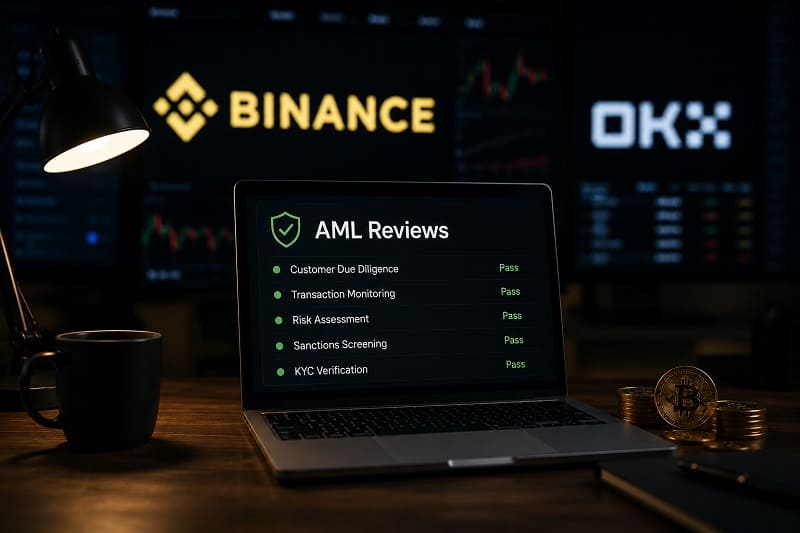
AML Reviews and “Source of Funds” Checks
One of the most misunderstood parts of centralized exchanges today is source-of-funds verification.
Large platforms increasingly request:
- tax declarations;
- bank statements;
- trading history;
- mining documentation;
- wallet-ownership evidence;
- explanations for historical transfers.
This happens because exchanges themselves face increasing regulatory exposure.
In practice, compliance systems now analyze:
- wallet behavior;
- transaction clusters;
- counterparty risk;
- sanctions exposure;
- mixer interactions;
- darknet exposure scores.
The problem is that many crypto-native users built portfolios during earlier periods where:
- formal recordkeeping was inconsistent;
- self-custody movement was poorly documented;
- DeFi interactions were fragmented across wallets.
As a result, proving historical ownership can become surprisingly difficult. Community discussions increasingly reflect this frustration.
Importantly, these reviews now happen across virtually all major exchanges — including Binance, OKX, and Bybit.
Is OKX Actually Better for Withdrawals?
There is no universal answer. Some users report smoother withdrawal experiences on OKX, especially in regions where:
- local banking integrations are stronger;
- Binance services became restricted;
- regional compliance infrastructure improved.
Others report the exact opposite:
- additional verification requests;
- support delays;
- temporary withdrawal holds.
The reality is that withdrawal experience often depends on:
- jurisdiction;
- banking partner;
- account history;
- transaction size;
- activity pattern;
- counterparty exposure.
A low-volume retail user withdrawing small amounts may never encounter serious friction on either exchange.
A high-volume trader moving funds across self-custody wallets, bridges, and DeFi protocols may experience aggressive monitoring on both.
That is why online discussions about “safe exchanges” often contradict each other so heavily.
Binance vs OKX vs Bybit: Operational Comparison
| Factor | Binance | OKX | Bybit |
|---|---|---|---|
| Liquidity | Very high | High | High |
| Regulatory pressure | High | Moderate/High | Moderate |
| Proof of Reserves | Yes | Yes | Yes |
| Fiat integrations | Strong but fragmented | Expanding | Regional |
| AML strictness | High | High | High |
| User complaints about freezes | Frequent online | Frequent online | Frequent online |
| Web3 ecosystem focus | Strong | Very strong | Growing |
The most important takeaway: all major centralized exchanges now operate under increasingly strict compliance pressure.
The “Safer Exchange” Question Is More Complicated Than People Think
Users often reduce exchange safety to one emotional question: “Will I be able to withdraw my money?”
But operational safety actually includes many different factors:
- solvency;
- reserve transparency;
- banking relationships;
- regulatory positioning;
- cybersecurity;
- internal controls;
- compliance systems;
- liquidity depth.
An exchange may be financially solvent, while simultaneously freezing accounts during investigations.
Another platform may offer smoother UX, but weaker legal protections in certain jurisdictions.
This is why “safe” and “convenient” are not always the same thing.
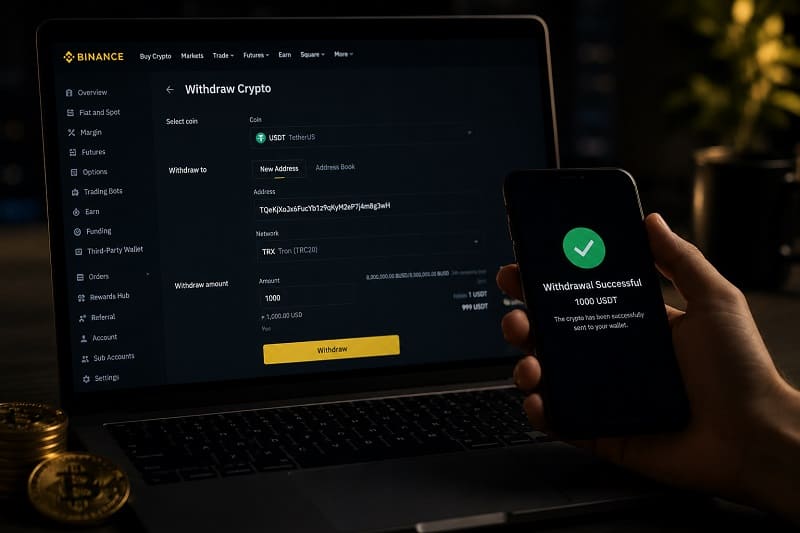
The Biggest Risk Is Still Custodial Dependency
Even after Proof-of-Reserves improvements, centralized custody still creates structural dependency. Users do not control private keys on exchanges.
That means access ultimately depends on:
- platform operations;
- internal policies;
- compliance decisions;
- jurisdictional enforcement.
This is why many experienced crypto users increasingly separate trading custody from long-term storage.
A common strategy in 2026 looks like this:
- trade on centralized exchanges;
- withdraw long-term holdings to self-custody.
The old phrase “not your keys, not your coins” remains relevant — even if many traders still prefer centralized platforms for liquidity and convenience.
So, Is OKX Safer Than Binance?
The honest answer is: there is no definitive universal winner.
Why some users increasingly prefer OKX:
- strong transparency branding;
- aggressive Proof-of-Reserves positioning;
- modern UX perception;
- expanding regulatory footprint;
- smoother experience in some regions.
Why others still trust Binance more:
- unmatched liquidity;
- longer operating history;
- enormous infrastructure scale;
- deeper ecosystem integration;
- strong security tooling.
In practice, actual risk depends heavily on:
- user behavior;
- transaction history;
- region;
- banking exposure;
- compliance profile.
The difference between a smooth experience and a frozen account may depend more on transaction patterns than exchange branding alone.
Conclusion
The post-FTX era fundamentally changed how crypto users evaluate centralized exchanges. The conversation is no longer only about:
- leverage;
- fees;
- token listings;
- referral programs.
Today, users increasingly prioritize:
- withdrawal reliability;
- compliance stability;
- reserve transparency;
- operational trust.
OKX has clearly gained momentum as users diversify away from relying entirely on Binance.
But the broader reality remains unchanged: no centralized exchange completely eliminates custodial risk.
In 2026, the safest approach is not blind trust in a single platform — but understanding how modern crypto infrastructure actually works.
FAQ
Is OKX safer than Binance?
Neither platform can be considered universally safer. Risk depends on jurisdiction, usage patterns, compliance exposure, and custody practices.
Which exchange freezes accounts more often?
Large exchanges receive many online complaints because of scale. Binance, OKX, and Bybit all perform AML-related reviews.
Why do exchanges request source of funds?
Regulations increasingly require platforms to verify where assets originated, especially during large or unusual transfers.
Can Binance freeze withdrawals?
Yes. Withdrawals may be temporarily restricted during security or compliance reviews.
Does OKX have Proof of Reserves?
Yes. OKX publishes regular Proof-of-Reserves reports using zk-STARK verification systems.
Is Bybit safer than Binance?
Safety depends on the user’s jurisdiction, account activity, and risk profile rather than branding alone.
Why do AML reviews happen on crypto exchanges?
Exchanges monitor transactions for sanctions exposure, suspicious activity, money-laundering risks, and regulatory compliance obligations.
Are centralized exchanges safe for long-term storage?
Many experienced users avoid storing large long-term holdings entirely on custodial platforms.
What causes crypto withdrawal delays?
Common causes include compliance reviews, enhanced verification, banking restrictions, blockchain congestion, and security checks.
Should traders keep all funds on one exchange?
Many security professionals recommend diversifying storage and reducing custodial concentration risk.
Sources
Get professional help with your case.