Fake Google Calls, Real Losses: How One Code Can Cost You Your Entire Crypto Portfolio
- This Is Not an Isolated Incident
- How the Scam Actually Works
- Step 1 — Voice Phishing (Vishing)
- Step 2 — Email Legitimacy Simulation
- Step 3 — Psychological Trigger
- Step 4 — The Critical Action: Sharing the Code
- Step 5 — Account Takeover
- Step 6 — Crypto Asset Extraction
- Why Gmail Access Is So Dangerous
- The Hidden Risk: When 2FA Stops Being Independent
- Why Even Experienced Users Get Caught
- Why Crypto Users Are Primary Targets
- Structural Analysis: What Type of Attack Is This?
- The Core Insight
- How to Protect Yourself
- Conclusion
- FAQ
- Sources
- Need Help?
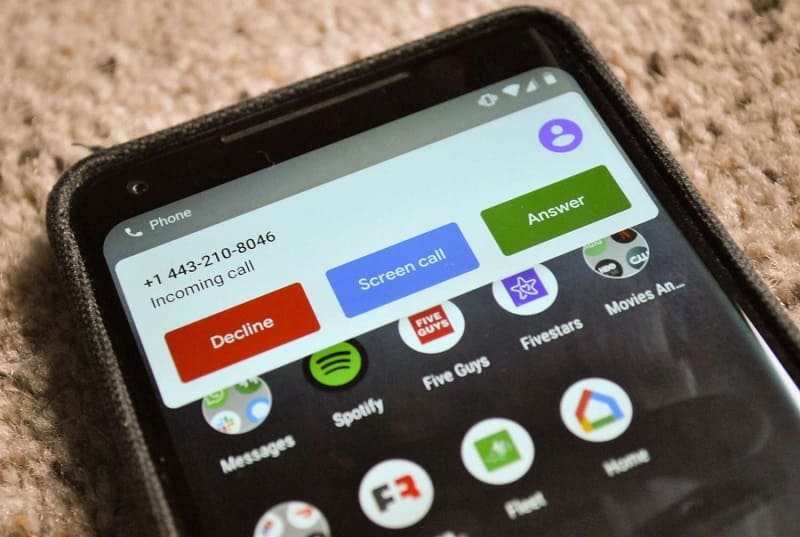
At first glance, this type of attack does not resemble a traditional hack. There is no malware installation. No suspicious links. No visible breach of the system. Instead, the entire compromise begins with a seemingly legitimate interaction — a phone call.
A calm, professional voice claims to represent Google support. The explanation may sound unusual, but not impossible: suspicious activity, account compromise, or even identity misuse. Shortly after, the victim receives an email that appears authentic, often sent through infrastructure that closely mimics legitimate Google communication.
Within minutes, the victim is asked to confirm a verification code. Once that code is shared, the attacker gains access.
In one documented case, this sequence resulted in the loss of more than $130,000 in crypto assets.
This Is Not an Isolated Incident
What feels like a rare scenario is part of a rapidly expanding threat category.
- Crypto scams reached $17 billion in losses in 2025
- Impersonation-based scams increased by 1400% year-over-year
- Account takeover attacks became one of the most common fraud types (~19%)
- Over $1.9 billion was stolen via phishing and wallet drainers in just half a year
The pattern is consistent:
- it begins with impersonation
- followed by unauthorized access
- ends with rapid asset extraction
How the Scam Actually Works
This attack is not improvised. It follows a structured and repeatable model.
Step 1 — Voice Phishing (Vishing)
The attacker initiates contact by phone while impersonating a trusted entity such as Google. Unlike older scams, the communication is:
- calm
- structured
- technically plausible
This is intentional. The goal is not to create fear immediately, but to establish credibility.
Modern fraud operations increasingly use multi-channel attacks, combining phone calls and email to reinforce trust.
Step 2 — Email Legitimacy Simulation
The victim receives an email that appears authentic. This works because modern phishing techniques:
- replicate real branding and formatting
- exploit trusted domains or infrastructure
- mimic legitimate system notifications
In many cases, phishing emails are now difficult to distinguish from real ones, especially when AI-generated content is used.
Step 3 — Psychological Trigger
The attacker introduces urgency. Typical narratives include:
- “Your account is compromised”
- “Someone is trying to take control”
- “Immediate verification is required”
The objective is not perfect logic. It is time pressure. When urgency is introduced, users are more likely to act without verification.
Step 4 — The Critical Action: Sharing the Code
- At this point, the attacker requests a one-time verification code (OTP).
- The victim provides it.
- This action is often misunderstood. The system itself is functioning correctly — the code is valid and secure. However, by sharing it, the user unintentionally authorizes the attacker.
The security system is not bypassed. It is used exactly as designed — by the wrong person.
Step 5 — Account Takeover
Once access is obtained, attackers can:
- reset passwords
- disable notifications
- change recovery settings
- access linked services
Google itself warns that account takeover attacks are becoming increasingly sophisticated and can expose not only email accounts but all connected services.
Step 6 — Crypto Asset Extraction
If the compromised account is linked to crypto platforms:
- attackers reset exchange credentials
- bypass email-based security checks
- initiate withdrawals
- convert assets into crypto
Because blockchain transactions are irreversible, recovery becomes extremely difficult once funds are moved.
Also Read: Chargeback, Crypto Tracing, Courts, or Negotiations: Which Recovery Method Is Right for You?
Why Gmail Access Is So Dangerous
A compromised Google account is not just an email breach. It can function as a central identity hub, controlling:
- password resets across services
- authentication flows
- stored credentials
- cloud-stored data
Additionally, large datasets of exposed credentials — including tens of millions of Gmail logins — continue to circulate, increasing the risk of targeted attacks .
Access to one account can cascade into access to many others.
The Hidden Risk: When 2FA Stops Being Independent
Many users rely on tools like Google Authenticator for additional security. However, the effectiveness of two-factor authentication depends on separation of control.
If:
- your authenticator or recovery system is tied to your Google account
- and that account is compromised
then the attacker may gain access to both authentication layers.
In that scenario, what appears to be “two-factor security” becomes a single point of failure.

Why Even Experienced Users Get Caught
This type of attack does not depend on technical vulnerability. It depends on behavioral manipulation.
Even technically experienced users may fall victim because:
- the attacker uses trusted brand identity
- communication appears legitimate
- urgency reduces critical thinking
- interaction happens in real time
Research shows that phishing and social engineering remain the primary entry point for most breaches, often involving stolen credentials rather than technical exploits.
Why Crypto Users Are Primary Targets
Cryptocurrency significantly increases the impact of these attacks.
Unlike traditional banking systems:
- transactions are irreversible
- there is no centralized authority to reverse transfers
- funds can be moved instantly across jurisdictions
This makes crypto an ideal endpoint for attackers.
Structural Analysis: What Type of Attack Is This?
This is a multi-layer social engineering attack, not a technical breach.
| Component | Present |
|---|---|
| Impersonation (Google) | YES |
| Social engineering | YES |
| OTP/MFA exploitation | YES |
| Account takeover | YES |
| Crypto theft | YES |
The Core Insight
This attack did not defeat security systems. It relied on user cooperation within those systems.
The authentication process worked exactly as intended — but the attacker positioned themselves as the trusted recipient.
How to Protect Yourself
To reduce risk:
Never:
- share verification codes with anyone
- trust unsolicited calls claiming urgency
- act immediately without independent verification
Always:
- verify requests through official channels
- use passkeys or hardware keys when possible
- separate authentication methods from primary accounts
Google itself emphasizes that scams are evolving rapidly and require active user awareness and verification habits.

Conclusion
The most dangerous scams today do not look like attacks. They resemble normal interactions.
They do not break your security systems. They temporarily integrate into them — just long enough to transfer control.
And in crypto, that moment is all it takes.
FAQ
Can emails from Google be faked?
Yes. Attackers can closely replicate legitimate communication or abuse trusted infrastructure.
Is 2FA still safe?
Yes — but only if authentication is independent from your main account.
Why are crypto users targeted?
Because transactions are fast, irreversible, and difficult to recover.
Can stolen funds be recovered?
While recovery is often complex, it is not entirely out of reach. When funds can be traced — especially if they interact with regulated exchanges — there remains a potential for partial or full restitution, particularly with prompt action and professional assistance.
Sources
- Chainalysis — Crypto Crime Report 2026
- Google — Scam and fraud advisory
- Account takeover fraud trends
Need Help?
If you have already lost funds after sharing a verification code or experiencing an account takeover, it’s important to act quickly — but also carefully. Many so-called recovery services are scams themselves, often asking for upfront payments and providing no real results. At the same time, legitimate specialists can help analyze what happened, trace transactions, and assess whether any recovery path still exists.
You can request a consultation with Stock View, where specialists will review your case, analyze blockchain movements, and explain realistically whether recovery is possible in your situation. Even when full recovery isn’t guaranteed, timely analysis can help protect remaining assets and prevent further losses.
Get professional help with your case.