Fake AI Investment Platforms Exposed: How Wencoin STX, Warrior Coin AI and Nevo Coin Used Reddit and Cloned Media Brands
- The Reddit Advertising Campaign
- Why Cloned News Brands Became the New Trust Layer
- Different Names, Same Playbook
- How Fake Articles Worked
- Psychological Manipulation Through AI Narratives
- Registration Funnel and First Deposit
- Infrastructure and Domain Rotation
- Practical Verification Checklist
- Conclusion
- FAQ
- Sources
- Need Help?
During 2026, cybersecurity researchers uncovered one of the most sophisticated investment fraud campaigns seen on mainstream social media. Unlike earlier cryptocurrency scams, this operation purchased sponsored Reddit advertisements and disguised them as breaking news from recognizable media organizations.
Rather than promoting a single website, the campaign revolved around several brands — including Wencoin STX, Warrior Coin AI, and Nevo Coin — that appeared under different stories but followed nearly identical recruitment patterns.
Advertisements redirected users to cloned versions of major news outlets before leading them to registration forms for AI-themed investment platforms. The objective was to manufacture credibility before asking visitors to invest.

The Reddit Advertising Campaign
The campaign used paid advertising inside Reddit instead of spam or unsolicited messages.
Bitdefender Labs documented numerous promoted posts targeting users in North America and Europe. At first glance, many looked like ordinary news stories rather than advertisements. Headlines referenced politics, artificial intelligence or major technology companies — topics already dominating public discussion.
Researchers observed recurring narratives. Some advertisements claimed that NVIDIA and OpenAI were secretly building a revolutionary investment system, governments were attempting to suppress a breakthrough AI platform, or large sums had been linked to hidden AI investment technology. None represented legitimate journalism. They functioned as the opening stage of a recruitment funnel designed to generate curiosity.
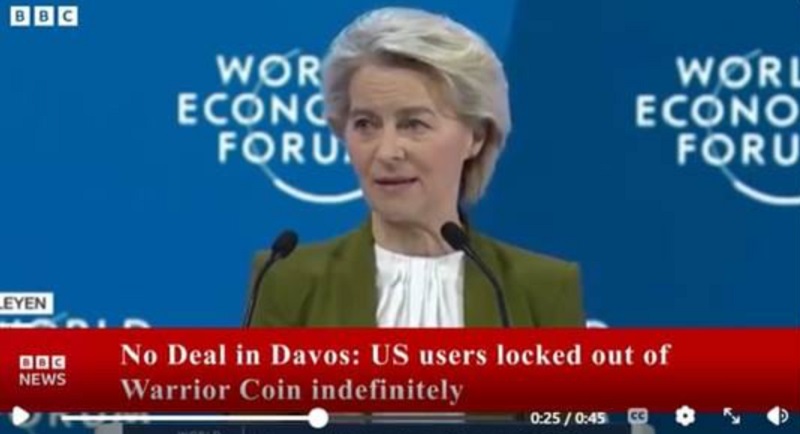
Another characteristic was the use of video. Some posts included what appeared to be television news broadcasts featuring professional presenters. Investigators concluded these were fabricated using synthetic media.
Unlike many phishing campaigns, there was little emphasis on urgency initially. Instead of saying "Invest now," the advertisements encouraged users to discover a supposedly hidden story. That subtle difference reduced suspicion.
Why Cloned News Brands Became the New Trust Layer
The success depended less on technology than on psychology. Instead of asking victims to trust an unfamiliar cryptocurrency project, operators first encouraged them to trust institutions they already recognised.
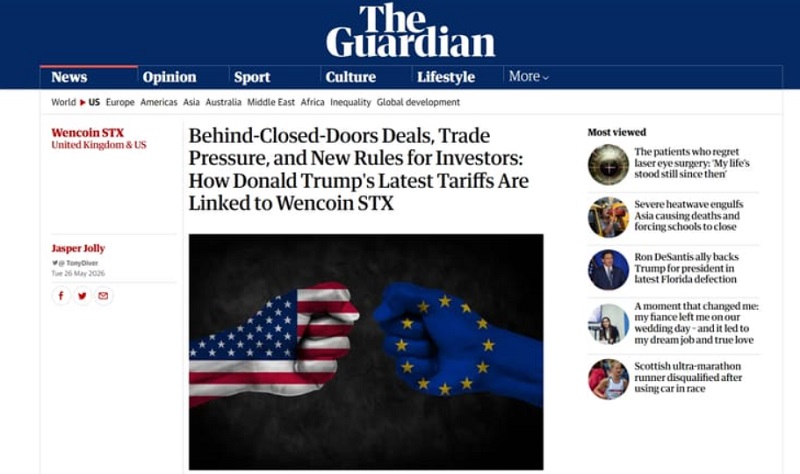
Researchers documented cloned pages imitating BBC, Financial Times and The Guardian. The copied websites reproduced familiar layouts, typography and editorial style. Some introduced fictional journalists and fabricated interviews.
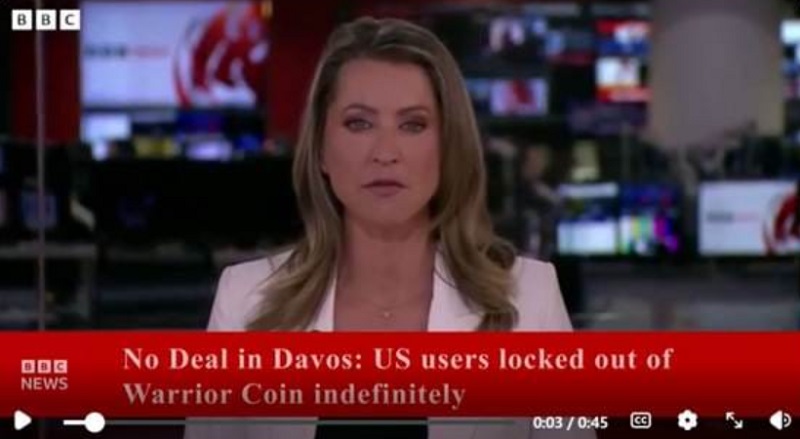
Only after readers accepted the article as genuine did the investment offer appear. The story promoted Wencoin STX, Warrior Coin AI or Nevo Coin, presenting each as a revolutionary AI opportunity that powerful institutions allegedly wanted to keep hidden.
Several articles reinforced this through conspiracy themes. Readers were told that banks feared the technology or governments were preventing ordinary people from accessing extraordinary returns. These messages served two purposes: they explained why the opportunity remained unknown, and they discouraged scepticism by portraying criticism as institutional resistance.
Rather than hosting registration forms on separate websites, some versions embedded sign-up directly inside the cloned news page. This created the false impression that the publisher had endorsed the service.
| Campaign Element | Purpose Within the Scam |
|---|---|
| Sponsored Reddit advertisement | Reach users through a trusted mainstream platform |
| Political or technology headline | Generate curiosity before introducing any investment offer |
| Cloned BBC, FT or Guardian page | Transfer media credibility to the promoted service |
| Fabricated news article | Create a believable narrative around AI investing |
| Embedded registration form | Move readers from information to lead generation |
| Multiple platform names | Reuse infrastructure while rotating branding |
Different Names, Same Playbook
Wencoin STX, Warrior Coin AI and Nevo Coin were not competing products. They appeared to be different brands built on the same operational model.
Depending on which advertisement a user clicked, the destination page promoted a different project name and backstory. Yet the recruitment process remained consistent. Researchers identified common characteristics: AI-powered cryptocurrency investing, exclusive access to "hidden" technology, fabricated testimonials, and registration forms requesting personal details before any meaningful information about the business itself.
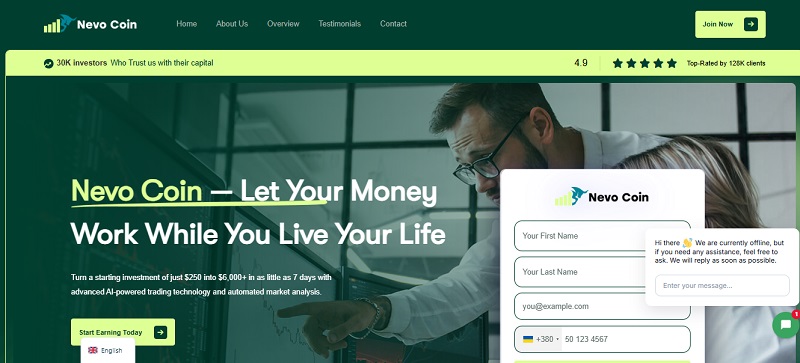
This approach offers operational advantages. If one project attracts negative publicity, another can replace it without changing the surrounding infrastructure. In cybersecurity, this is described as brand rotation.
Researchers also observed rapidly changing domains hosted on obscure extensions such as .top, .life and .info — addresses unlikely to be associated with established financial institutions.
Also Read: Vault Wealthholm Review: Inside the AI Deepfake Investment Scheme Using Fake Political Endorsements

How Fake Articles Worked
The most sophisticated element was transforming advertising into what appeared to be investigative journalism. Rather than displaying promotional pages immediately, users first encountered long-form articles designed to imitate respected publishers.
Each version followed a similar structure. The opening paragraphs described a dramatic event. The middle section introduced an AI investment platform. The conclusion encouraged readers to register before access supposedly became restricted.
Recurring themes included hidden artificial intelligence capable of outperforming markets, confidential government discussions, and attempts by regulators to prevent public participation. These narratives were constructed to resemble investigative reporting.
The visual presentation reinforced that illusion with authentic-looking typography, familiar page layouts, fabricated journalist profiles and manipulated banking documents.
Several versions embedded registration forms directly inside the cloned news page. From the reader's perspective, there was little visible transition between journalism and financial promotion.
Psychological Manipulation Through AI Narratives
Technology was only part of the deception. The real objective was to reshape how readers interpreted the investment opportunity.
Traditional investment scams promise unusually high returns. This campaign first attempted to explain why those returns supposedly existed. Artificial intelligence became the central narrative. Instead of claiming exceptional trading skills, the articles suggested that advanced machine learning had solved problems conventional finance could not.
The campaign implied that powerful institutions feared the technology, governments wanted to keep it hidden, and only a limited number could benefit before the opportunity disappeared.
These messages reduced scepticism by framing criticism as institutional resistance and transformed ordinary due diligence into something that appeared unnecessary.
| Observed Technique | Primary Objective |
|---|---|
| Rotating project names | Keep campaign operating after brands attract scrutiny |
| Cloned international news outlets | Borrow institutional credibility |
| AI investment narrative | Provide a rational explanation for extraordinary returns |
| Conspiracy-based storytelling | Reframe criticism as evidence the opportunity is genuine |
| Embedded registration forms | Reduce friction between reading and submitting information |
| Rapid domain rotation | Limit effectiveness of takedowns |
Registration Funnel and First Deposit
The fake articles were never the final destination. Their purpose was to move readers into a controlled sales process.
- Clicking links within cloned news pages redirected users to registration forms. The branding changed, but the workflow remained almost identical.
- The registration page requested basic information: name, email and phone number. No proof of identity was required because the objective was lead generation.
- Immediately after registration, visitors were informed their application had been accepted and a personal adviser would contact them shortly. Some versions displayed countdown timers claiming limited places remained.
This funnel follows a pattern documented in investment fraud. Rather than requesting a large transfer immediately, operators first establish direct communication. Advisers explain the AI system and encourage an initial deposit that appears small enough to minimise perceived risk.
Also Read: Aurum Foundation Review: AI Wealth Platform or Global MLM Ponzi?
Infrastructure and Domain Rotation
Instead of relying on one permanent website, operators continuously rotated domains and project names.
Bitdefender identified numerous addresses hosted on domains such as .top, .life and .info. Most existed only briefly before being replaced.
This provides advantages. If one domain is blocked, another can replace it without rebuilding the broader campaign. Researchers observed extensive reuse of campaign assets across multiple domains.
The infrastructure shared characteristics with earlier investment-malvertising operations on Meta platforms.

Practical Verification Checklist
Campaigns like this demonstrate that visual quality is no longer a reliable indicator of legitimacy.
| Verification Step | Why It Matters |
|---|---|
| Inspect the domain name | Major publishers don't use .top or .life domains |
| Open the publisher's real website | If a story cannot be found there, it's fake |
| Research the investment independently | Search for licensing instead of promotional claims |
| Question AI performance claims | Extraordinary accuracy needs verifiable evidence |
| Treat urgency as a warning | Countdown timers are social-engineering techniques |
One habit prevents many attacks: instead of following links from ads, manually open the official website of the news organisation. If the article does not exist there, it has been fabricated.
Conclusion
The investigation reveals a broader transformation in online investment fraud. Rather than building credibility around a single company, modern operators create entire ecosystems of trust. Sponsored advertisements, cloned journalism and rotating project names guide users through a carefully planned recruitment funnel.
The cryptocurrency brands were largely interchangeable. The real asset was the infrastructure. By continuously replacing domains and project names, operators created a campaign capable of surviving takedowns.
FAQ
Were Wencoin STX, Warrior Coin AI and Nevo Coin separate projects?
They were promoted through the same infrastructure rather than representing independent ecosystems.
Why were BBC, Financial Times and The Guardian impersonated?
Recognisable news brands provide instant credibility and reduce suspicion.
How did victims typically enter the scheme?
Through a sponsored Reddit ad, followed by a cloned news article, registration form and contact from a personal adviser.
Why did the campaign use multiple domains?
Rapid rotation makes blocking difficult and allows the campaign to continue.
Are AI investment platforms always fraudulent?
No. AI is used by legitimate institutions. Investment decisions should be based on transparent regulation and verifiable information.
What should I do if I already registered?
If you haven't deposited funds, avoid further communication. If you transferred money, preserve records and report to financial or cybercrime authorities.
Sources
- Bitdefender Labs – Reddit Ads Impersonate BBC and The Guardian to Push Fake AI Investment Schemes
- AI Incident Database – Reddit Scam Ads Using Cloned Media Sites
- Yahoo Tech – Reddit Ads Pose as News Stories to Promote AI Investment Scams
- ScamSweeper: Detecting Illegal Accounts in Web3 Scams via Transactions Analysis (research paper)
Need Help?
If you invested in Wencoin STX, Warrior Coin AI, Nevo Coin, or any similar platform promoted through seemingly authentic Reddit discussions or news articles published on cloned media websites — only to discover that the endorsements, user reviews, and even the media outlets themselves were part of an elaborate deception — you can request a free consultation with StockView specialists.
An expert review can help assess whether your case fits the pattern of this coordinated AI-crypto fraud network and evaluate realistic options for recovering lost funds, including crypto tracing, exchange interventions, payment disputes, and legal follow-up against the operators behind these cloned brand campaigns.
Get professional help with your case.