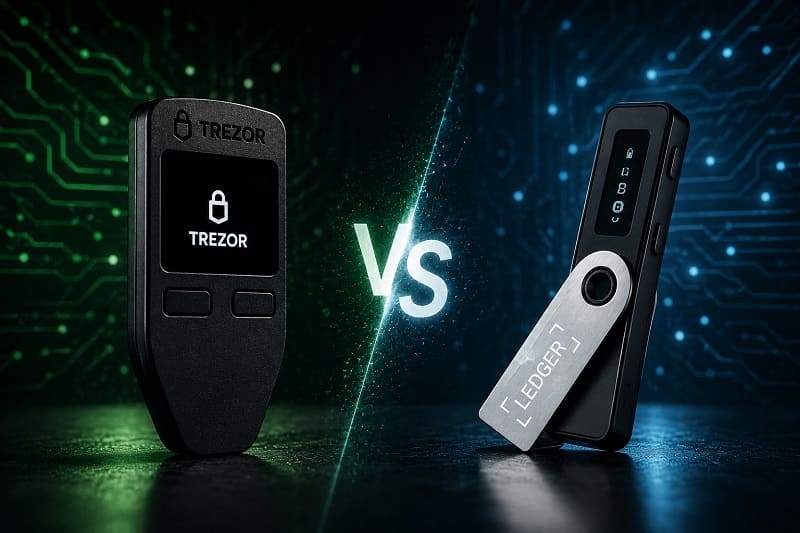
Trezor vs Ledger: Why the Debate Is Getting More Aggressive in 2026
- How the Trezor vs Ledger Debate Changed
- The Ledger Recover Controversy That Changed Everything
- Open Source vs Closed Source: The Real Battle
- Why Transparency Appeals to So Many Bitcoin Holders
- Why Ledger Still Has Strong Supporters
- The Real Issue Is Trust, Not Technology
- What Reddit Discussions Reveal About Community Sentiment
- Security Reality: Which Device Is Actually Safer?
- Security Philosophy Comparison
- What Users Are Really Debating
- Why This Debate Will Not End Anytime Soon
- Conclusion
- FAQ
- Sources
- Need Help?
A few years ago, choosing a hardware wallet was relatively straightforward. Most discussions focused on practical considerations such as supported cryptocurrencies, mobile connectivity, price, and ease of use.
In 2026, the conversation looks very different.
Today, debates surrounding Trezor and Ledger regularly dominate Reddit, Bitcoin communities, and self-custody forums. What appears to be a simple product comparison often turns into a heated argument about transparency, corporate trust, firmware design, and even the philosophy of decentralization itself.
The controversy surrounding Ledger Recover accelerated this shift, turning what was once a technical discussion into a broader debate about how much trust users should place in any company that helps secure digital assets.
The result is one of the most polarized discussions in crypto security today.
How the Trezor vs Ledger Debate Changed
Historically, users compared hardware wallets much like they compared smartphones.
Questions typically included:
- Which device supports more coins?
- Which application is easier to use?
- Which model offers better value?
Those questions still matter, but they are no longer the primary focus.
Since 2023, the conversation has increasingly revolved around trust assumptions. Instead of discussing features, users often debate whether transparency or hardware isolation provides stronger protection. The discussion is no longer centered on what these devices can do, but on what users believe manufacturers should be capable of doing.
That distinction may sound subtle, but it fundamentally changed the nature of the debate.
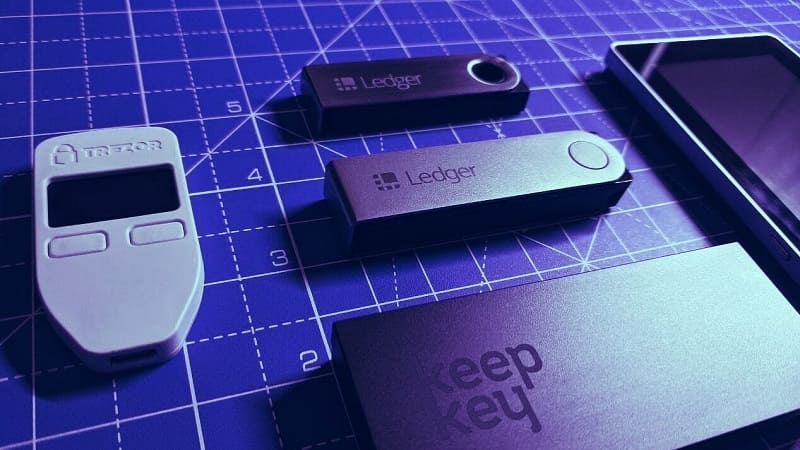
The Ledger Recover Controversy That Changed Everything
No single event influenced community sentiment more than the introduction of Ledger Recover.
The service was designed as an optional recovery mechanism intended to help users regain access to their assets if they lost their seed phrase. The concept itself was not necessarily controversial. What alarmed many users was what the announcement appeared to reveal about the device architecture.
For years, many customers assumed private keys could never leave the hardware device under any circumstances. The introduction of an optional recovery service led some users to realize that firmware updates could theoretically enable functionality that had not previously existed. While Ledger maintained that participation required user consent and that the service was optional, the announcement triggered a crisis of confidence among part of the crypto community.
The backlash was immediate.
Reddit discussions became filled with questions about hidden capabilities, firmware authority, and the limits of user control. Even individuals who never intended to use the service began reevaluating their assumptions about self-custody.
Importantly, the controversy was not about evidence of theft or compromise. It was about trust.
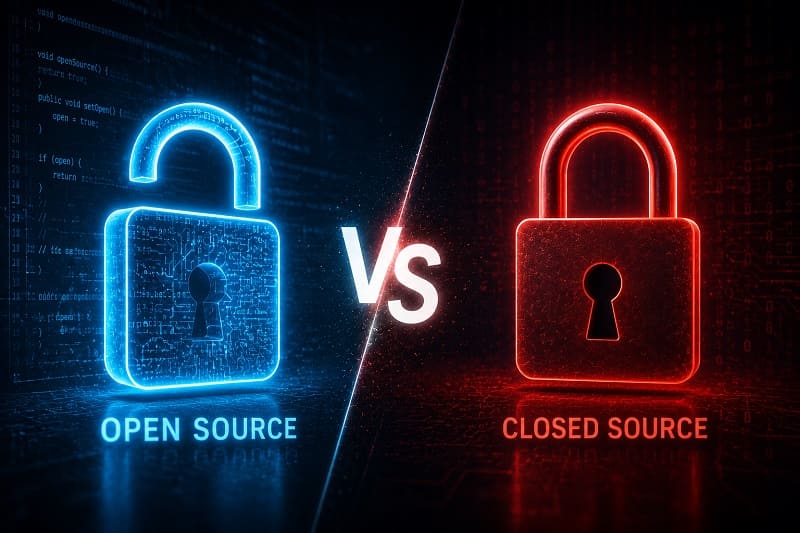
Open Source vs Closed Source: The Real Battle
At the center of the debate lies a philosophical divide.
Trezor has long promoted an open-source approach. Much of its firmware and design can be independently inspected, audited, and reviewed by the community. Supporters argue this aligns closely with the crypto principle of "Don't trust, verify."
Ledger follows a different path.
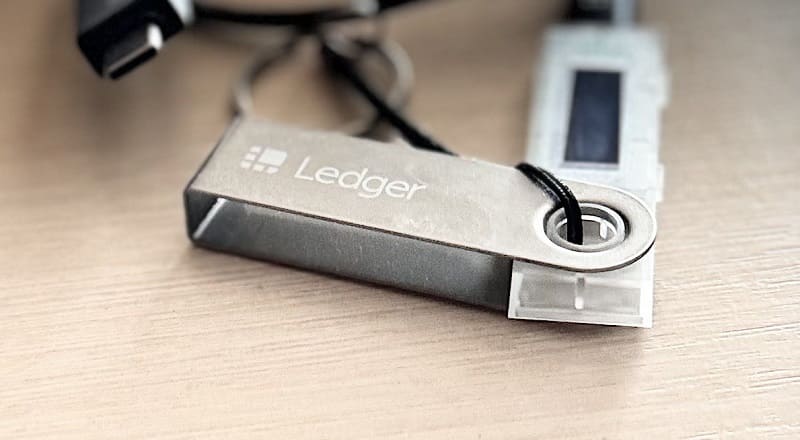
Its architecture relies heavily on secure-element chips, which are designed to resist physical extraction attacks. Portions of the system remain proprietary, meaning users cannot inspect every component directly. The company argues that keeping critical elements isolated creates stronger protection against hardware attacks and sophisticated theft attempts.
The disagreement is not simply technical. It reflects two different views of how security should be achieved. One side prioritizes transparency. The other prioritizes controlled isolation.
Also Read: Best Practices for Using Multisig and Cold Storage
Why Transparency Appeals to So Many Bitcoin Holders
Among Bitcoin-focused communities, open-source development carries almost ideological importance.
Many users believe security should be verifiable rather than assumed. If code can be inspected by independent researchers, vulnerabilities may be discovered more quickly and hidden functionality becomes harder to conceal.
This perspective explains why Trezor continues to attract users who value auditability above all else. Reddit discussions frequently cite publicly reviewable firmware as one of the primary reasons for switching from competing devices.
However, transparency is not a magic solution.
Most users never personally review source code. In practice, they still rely on researchers, auditors, and developers to identify issues. Open source reduces blind trust, but it does not eliminate trust entirely.
Why Ledger Still Has Strong Supporters
Despite years of controversy, Ledger remains one of the most widely used cold-storage providers in the industry.
There are several reasons for this.
- The company's secure-element architecture has long been regarded as highly resistant to physical extraction attempts. Many security professionals consider hardware isolation an essential defense against sophisticated attackers who gain direct access to a device.
- Ledger also maintains broad cryptocurrency support and a mature software ecosystem. For many traders involved with multiple blockchains, convenience remains a major factor.
Interestingly, numerous Reddit discussions reveal that even critics of the company continue using its products because they appreciate the user experience and ecosystem integration.
This highlights an important reality: trust is rarely binary.
The Real Issue Is Trust, Not Technology
One misconception dominates many online arguments. People often present the debate as if one side has objectively solved security while the other has failed.
Reality is far more nuanced. Most users cannot:
- independently audit firmware.
- verify the design of secure-element chips.
- personally inspect hardware manufacturing processes.
Ultimately, both approaches require trust. The difference lies in where that trust is placed.
- Trezor users tend to trust public verification.
- Ledger users tend to trust specialized hardware design.
Neither model completely removes reliance on external parties. They simply distribute it differently.
What Reddit Discussions Reveal About Community Sentiment
One reason this topic remains so active is that it taps into broader anxieties within the crypto space.
Many users entered crypto specifically to reduce dependence on centralized institutions. When a hardware-wallet manufacturer appears to possess more influence than expected, concerns emerge quickly.
Community discussions reveal several recurring themes:
- concerns about firmware authority;
- skepticism toward proprietary systems;
- fear of future policy changes;
- questions about long-term corporate incentives;
- concerns about privacy and data protection.
At the same time, many users argue that critics often exaggerate risks while ignoring practical benefits such as secure-element protection and mature infrastructure.
This explains why debates often become emotional. Participants are not simply discussing devices. They are discussing competing visions of trust.
Security Reality: Which Device Is Actually Safer?
The answer depends heavily on the threat model:
- Someone worried about hidden functionality may prefer an open-source environment where independent review is possible.
- Someone worried about sophisticated physical attacks may prioritize secure-element protection.
In recent years, the distinction has become less clear-cut. Newer Trezor models introduced secure-element components, reducing one of the historical advantages often cited by competitors. Meanwhile, Ledger continues emphasizing hardware isolation as a core part of its architecture.
As a result, the security gap between the two approaches is arguably smaller than many online debates suggest.
Security Philosophy Comparison
| Factor | Trezor | Ledger |
|---|---|---|
| Firmware transparency | High | Partial |
| Open-source approach | Extensive | Limited |
| Secure element focus | Newer models | Core architecture |
| Community auditability | Strong | Moderate |
| Asset support | Broad | Very broad |
| Ledger Recover concerns | Not applicable | Ongoing discussion |
| Primary trust model | Public verification | Hardware isolation |
What Users Are Really Debating
| Topic | Trezor Supporters | Ledger Supporters |
|---|---|---|
| Core priority | Transparency | Hardware protection |
| Main concern | Hidden functionality | Physical compromise |
| Security philosophy | Verify independently | Trust specialized hardware |
| Preferred approach | Open review | Secure-element isolation |
| Typical argument | Visibility matters | Attack resistance matters |
Why This Debate Will Not End Anytime Soon
Most technology debates eventually fade as evidence accumulates. This one is different. Neither side can fully prove its philosophy is superior because the disagreement is rooted in values rather than measurable benchmarks.
One group prioritizes transparency. Another prioritizes specialized protection. Both positions contain valid arguments.
As long as self-custody remains central to cryptocurrency ownership, disagreements about trust models will continue.
Conclusion
The Trezor versus Ledger debate has evolved far beyond a comparison of hardware features. The real argument concerns how users define trust in a decentralized world.
Ledger represents a model built around secure hardware and controlled architecture. Trezor represents a model built around transparency and independent verification. Both approaches seek the same goal: protecting private keys. They simply take different paths to get there.
That is why the discussion has become more intense in 2026 rather than less. The industry is no longer arguing about devices. It is arguing about principles.
FAQ
Is Trezor safer than Ledger?
There is no universal answer. The better choice depends on whether you prioritize transparency or secure-element architecture.
What is Ledger Recover?
Ledger Recover is an optional recovery service designed to help users regain access to assets if they lose their recovery phrase.
Why was Ledger Recover controversial?
Many users believed it challenged assumptions about how firmware could interact with recovery data, leading to concerns about trust and transparency.
Is Trezor fully open source?
Most of the platform's firmware and development model are publicly available for independent review.
Does Ledger have a backdoor?
There is no evidence of a backdoor. However, discussions around proprietary components continue to generate debate within the community.
Which option is better for Bitcoin users?
Many Bitcoin-focused users prefer Trezor because of its transparency and Bitcoin-centric features, though preferences vary.
Which manufacturer supports more cryptocurrencies?
Ledger generally supports a larger number of assets and blockchain integrations.
Can hardware wallets be hacked?
No solution is completely immune to attack. Security depends on device architecture, operational practices, and user behavior.
Why do many Reddit users prefer Trezor?
Common reasons include open-source firmware, transparency, and concerns that emerged after the Ledger Recover announcement.
Which hardware wallet is best in 2026?
The answer depends on individual priorities, threat models, and preferences regarding transparency versus hardware isolation.
Sources
- Ledger Academy — Ledger vs Trezor 2026 Comparison
- Trezor Learn Security Resources
- Reddit discussions on Ledger Recover controversy
- Reddit discussions on migration from Ledger to Trezor
- Coinstancy Hardware Wallet Comparison
- Independent hardware-wallet security comparisons
Need Help?
If assets were lost after interacting with a fake firmware update, phishing campaign, fraudulent recovery service, or a compromised self-custody setup, understanding what happened is often the first step toward assessing potential recovery options.
StockView specialists can assist with:
- blockchain transaction analysis;
- phishing-incident investigations;
- wallet-compromise assessments;
- recovery-scam identification;
- tracing of suspicious asset movements.
A professional review can help determine whether funds were stolen through social engineering, malicious software, address replacement attacks, or unauthorized access to recovery credentials.
Get professional help with your case.