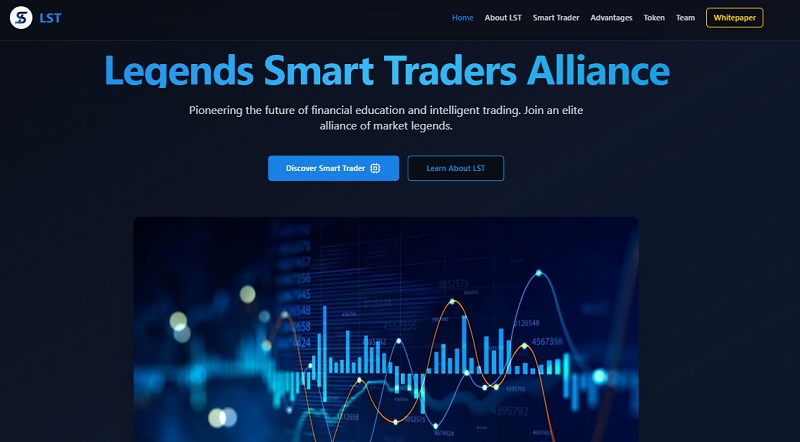
Legends Smart Traders Alliance (LST): Why the Same Withdrawal Complaints Keep Appearing
- Learning Comes First, Deposits Come Later
- Daily Signals Create the Illusion of Professional Management
- A Proprietary Trading Platform Raises Additional Questions
- Small Withdrawals Build Confidence Before Larger Requests Appear
- The Focus Gradually Shifts Toward Larger Commitments
- Withdrawal Problems Follow a Predictable Pattern
- Why a Closed Ecosystem Matters
- Why This Model Can Be So Convincing
- Regulatory Warnings and Key Red Flags
- Summary Assessment
- Frequently Asked Questions
- Sources & Official References
During the past year, the name Legends Smart Traders Alliance (LST) has surfaced with increasing frequency across online consumer protection reports and regulatory alerts.
Although individual accounts differ in detail, many describe an almost identical sequence of events rather than isolated incidents.
Instead of promising extraordinary returns from the outset, the organizers present themselves as an educational community. New participants are invited to join discussion groups where experienced "professors" supposedly explain market analysis, share strategies, and help members build financial literacy.
This educational angle is critical: people generally approach the scheme expecting to learn, rather than to transfer substantial sums immediately.
Several recent reports submitted to the Better Business Bureau (BBB) highlight the exact same framework: initial invitations into WhatsApp groups, daily market guidance, practice operations, and gradually escalating capital commitments — right before payout obstacles begin.
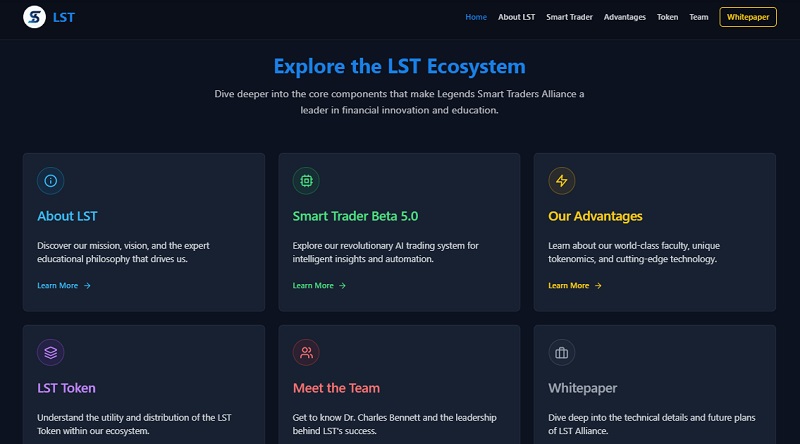
Learning Comes First, Deposits Come Later
Unlike conventional fraudulent operations that demand immediate capital, this model focuses on building trust over several weeks.
Members are introduced to instructors backed by polished biographies, photographs, and structured presentations. Daily market commentary reinforces the perception that the group leaders possess genuine expertise.
Some participants report receiving accurate stock suggestions during the initial phase. Later, however, the focus subtly shifts toward digital assets and futures trading.
This transition appears repeatedly in public filings:
- Initial Phase: Focus on traditional equities and basic educational webinars.
- Shift Phase: Introduction of cryptocurrency opportunities executed through a custom trading interface.
- Escalation Phase: Transition from demo balances to live capital allocations.
Rather than encouraging large transfers immediately, newcomers may first receive demonstration balances or promotional trading credits. Small successful trades build confidence in the strategy. From a behavioral perspective, this gradual approach proves significantly more persuasive than making aggressive promises on day one.
Daily Signals Create the Illusion of Professional Management
Another recurring feature involves regular trade execution instructions. Members receive buy and sell signals accompanied by market commentary explaining price movements. Because these recommendations arrive daily, the experience mirrors working with an institutional trading desk rather than participating in an informal chat group.
For many newcomers, this consistency functions as proof of credibility. If profitable positions continue for several weeks, participants rarely suspect that the underlying environment could be compromised.
One Reddit discussion detailing the LST Alliance outlines this exact pattern:
- legitimate-looking equity calls were followed by crypto operations on an IPX-branded portal, where early activity appeared successful until withdrawal requests were submitted.

A Proprietary Trading Platform Raises Additional Questions
Public complaints frequently mention custom trading environments associated with the IPX family of domains. Instead of directing members to established, regulated exchanges, organizers encourage activity within their internal ecosystem.
Historically, one domain connected to these accounts was www.lstgroup.site, though the address is no longer consistently operational. Other reports reference IPXCoin-branded services and related URLs operating alongside the same educational setup:
- Joining a WhatsApp group or mentorship program.
- Receiving educational signals and demo trading opportunities.
- Making a deposit through the custom IPX platform, where internal account balances are displayed.
- Submitting a withdrawal request.
- Encountering advance fee demands or blocked accounts instead of receiving the requested payout.
Using a closed environment gives dishonest operators total control. Displayed balances, transaction logs, and reported gains exist solely within their proprietary interface, making independent validation via a public blockchain explorer or external exchange impossible.
Academic research into fraudulent crypto exchanges shows that scam operators routinely deploy interconnected domain clusters and custom applications to manipulate what users see while preventing external auditability.
| Claimed Feature | What Public Reports Commonly Describe |
|---|---|
| Investment education | Training sessions gradually transition into requests to trade through a specific ecosystem. |
| Daily market signals | Regular recommendations help establish credibility before larger deposits are encouraged. |
| Experienced mentors | Complaints frequently mention instructors using names such as "Professor Charles" or similar personas. |
| Dedicated trading environment | Balances and transactions are primarily visible within the operator's own interface. |
| Early positive results | Some users report successful small withdrawals before attempting to move larger amounts. |
At this stage, many participants still believe they have joined a legitimate academy with integrated brokerage features. Only later do filing records begin describing delayed payouts, unexpected fee demands, and altered terms that were never disclosed during onboarding.
Small Withdrawals Build Confidence Before Larger Requests Appear
One of the most consistent patterns in consumer complaints is that the system does not always block withdrawals at the start. Several participants report receiving small payouts during their early interaction.
From the user's standpoint, a successful transaction serves as concrete proof of legitimacy. Once money arrives safely in a personal bank account or external wallet, safety concerns naturally decline, often encouraging larger capital commitments.
According to multiple BBB submissions, some participants withdrew a few hundred dollars without issue before attempting to move significantly larger sums. Severe friction reportedly emerged only after account balances grew substantially.
Also Read: Fake Investor Scams: How “Test Transactions” Drain Startup Funds
The Focus Gradually Shifts Toward Larger Commitments
Public reports indicate that rising account values are frequently accompanied by invitations to join exclusive investment tiers. Instead of routine market signals, organizers begin introducing private products available only within their closed framework.
Examples highlighted in consumer filings include:
- private token pre-sales;
- proprietary AI trading tools;
- exclusive ICO allocations;
- leveraged futures strategies;
- premium membership tiers.
Each option is framed as the logical next step following previous trading success. Participants feel they are expanding a proven strategy rather than taking on unverified risk.
Several BBB entries describe invitations to purchase LST tokens or participate in ICO-style offerings after earlier trading had generated apparent gains. Complainants noted that these internal assets could not be verified on public block explorers.

Withdrawal Problems Follow a Predictable Pattern
The most striking similarity across independent filings is the uniform sequence of explanations provided once a participant attempts to cash out. Rather than receiving a direct refusal, clients describe a revolving door of financial demands:
- administrative verification checks;
- mandatory commission transfers;
- local or international tax obligations;
- margin balance top-ups;
- account security freezes.
When one condition is satisfied, another instantly takes its place. This structure aligns directly with classic advance-fee fraud: instead of resolving the initial request, each payment generates a new pretext for requesting additional funds.
Complainants told the BBB that they were urged to pay external fees or taxes before account access would supposedly be restored. Even after transferring those additional sums, participants reported ongoing delays or complete communication breakdown.
Why a Closed Ecosystem Matters
Visibility remains a central issue across these cases. Trading activity, account metrics, and asset valuations are displayed exclusively inside the operator's custom portal.
For example, several complainants noted that specific digital tokens promoted within the platform could not be tracked on public block explorers, despite showing substantial price appreciation on the internal dashboard. Others noted that transaction histories lacked verifiable blockchain transaction hashes (TxIDs).
When asset balances exist solely inside an unverified database, participants are forced to rely entirely on information generated by the platform operators themselves.
| Stage | What Participants Commonly Report | Potential Purpose |
|---|---|---|
| Initial participation | Educational content and regular market commentary. | Establish credibility before requesting larger commitments. |
| Early trading | Small profits and, in some cases, limited successful withdrawals. | Increase confidence in the overall operation. |
| Exclusive opportunities | Private tokens, AI systems or ICO-style offerings. | Encourage larger deposits. |
| Withdrawal request | New verification steps, commissions or additional fees appear. | Delay or prevent funds from leaving the ecosystem. |
| Later communication | Support responses become inconsistent or stop entirely, according to some complainants. | Reduce opportunities for victims to challenge earlier explanations. |
Viewed in isolation, a single delay or fee request might seem like an administrative oversight. Taken together, however, these accounts reveal a systematic progression that extends far beyond normal market risk, pointing instead to a structured social-engineering process.
Why This Model Can Be So Convincing
Many fraudulent investment operations rely on unrealistic promises from the very beginning.
The reports associated with Legends Smart Traders Alliance describe something rather different:
- Instead of immediately requesting large deposits, the organisers appear to build credibility step by step. Education comes first, daily interaction follows.
- Only after trust has been established do larger financial commitments begin.
This gradual progression reflects a well-known social engineering principle.
People are generally more willing to continue investing after experiencing several apparently successful outcomes than after hearing a single extraordinary promise.
The California Department of Financial Protection and Innovation (DFPI) has also warned about WhatsApp groups operating under the Legends Smart Traders Alliance (LST) name. According to the agency, reports describe investment lessons, "Professor Bennett," AI-based trading strategies and crypto futures promoted through private messaging groups before participants encountered significant financial losses.
Also Read: Crypto Scams in 2026: What’s Getting People Trapped — and What to Do IfHappens

Regulatory Warnings and Key Red Flags
The California Department of Financial Protection and Innovation (DFPI) has issued an explicit warning regarding WhatsApp groups operating under the Legends Smart Traders Alliance (LST) name. According to the state regulator, consumer reports describe investment lessons, "Professor Bennett" personas, AI-driven strategies, and crypto futures marketed in private groups before investors suffered major financial losses.
Common Warning Signs Highlighted in Public Reports:
- Unregulated Recruitment: Onboarding taking place exclusively through WhatsApp or Telegram channels.
- Persona Authority: Instructors using formal titles ("Professor", "Chief Analyst") to establish trust.
- Opaque Software: Trading executed entirely within custom, unverified interfaces (such as IPX domains).
- Artificial Scarcity: Aggressive promotion of internal tokens or exclusive ICOs.
- Advance-Fee Demands: Requirements to pay extra taxes or commissions out-of-pocket before receiving payouts.
- Unverifiable Assets: Tokens or balances showing high returns internally without corresponding public smart contract addresses.
| Observed Pattern | Why It Deserves Attention |
|---|---|
| Private messaging groups | Conversations take place outside regulated investment channels. |
| "Professor" or mentor figures | Professional authority helps establish trust before deposits increase. |
| Internal trading interface | Displayed balances may be difficult to verify independently. |
| Exclusive investment opportunities | Scarcity encourages faster financial decisions. |
| New fees before withdrawals | Advance-fee requests frequently appear in investment fraud. |
| Changing explanations | New conditions replace previous ones instead of resolving the original request. |
Summary Assessment
Public filings regarding Legends Smart Traders Alliance do not paint the picture of a standard financial education group. Instead, numerous independent entries describe a remarkably consistent, multi-stage process where initial learning quickly gives way to proprietary trading, unverified balances, and severe payout obstacles.
Anyone evaluating an online trading academy with similar features should independently verify the entity's regulatory registration, ensure that all advertised digital assets exist on public blockchains, and treat any request for advance fees prior to a withdrawal as a major warning sign.
Frequently Asked Questions
What is Legends Smart Traders Alliance (LST)?
Promoted as an educational investment community focused on market signals, numerous consumer filings and state regulatory alerts associate the name with trading platforms where participants face severe payout restrictions.
Why do complaints link LST to IPX-related websites?
Filings indicate that participants were routinely directed to complete transactions on custom platforms within the IPX domain family, where balances and execution records existed solely within an unverified internal database.
Do early successful payouts prove a platform is legitimate?
No. Fraud investigators note that processing minor initial withdrawals is a common tactic used to build trust and encourage participants to transfer significantly larger sums later.
Why are upfront fee demands before a withdrawal considered a red flag?
Regulators and consumer agencies emphasize that legitimate financial institutions deduct valid fees or taxes directly from existing account balances, rather than requiring additional out-of-pocket payments before releasing funds.
How can investors verify digital assets independently?
Always confirm that a digital token possesses an active contract address on a public block explorer (e.g., Etherscan, BscScan), verifiable transaction hashes, and independent listings on established market tracking portals.
Sources & Official References
- California Department of Financial Protection and Innovation (DFPI) — Crypto Scam Tracker
- Better Business Bureau — BBB Scam Tracker Case Report #1098891 (LST / IPXCoin)
- Better Business Bureau — BBB Scam Tracker Case Report #1130871 (LST / IPXCoin)
- Better Business Bureau — BBB Scam Tracker Case Report #1133612 (LST / IPXCoin)
- Academic Research (arXiv) — Characterizing Cryptocurrency Exchange Scams
- Academic Research (arXiv) — Tracing Cryptocurrency Scams: Clustering Replicated Advance-Fee and Phishing Websites
Get professional help with your case.