HQI Exchange (HQIEX) Review: The Suspicious Platform Linked to the BG Wealth Collapse
- What Is HQI Exchange?
- The Timeline: From BG Wealth to HQIEX
- The Reported Connection Between HQI Exchange and BG Wealth
- What Victims Are Reporting
- Regulatory Warnings
- The HQI Exchange Domain Network
- Red Flags Identified During This Investigation
- Why the "Migration" Narrative Matters
- Conclusion
- FAQ
- Sources
- Need Help?
When large-scale investment programs collapse, the operators behind them rarely disappear immediately. In many cases, participants are encouraged to move to a new service where they are promised access to frozen balances or a path toward recovering previous losses.
This pattern has attracted attention in connection with HQI Exchange (HQIEX), a cryptocurrency trading service that emerged during the fallout surrounding BG Wealth Sharing and DSJ Exchange in 2026.
Although the project presents itself as a digital-asset marketplace, concerns have been raised by regulators, affected participants, and independent researchers. Among the most frequently discussed allegations are claims that former BG Wealth members were directed to HQIEX and asked to provide additional payments before regaining access to balances associated with earlier programs.
What Is HQI Exchange?
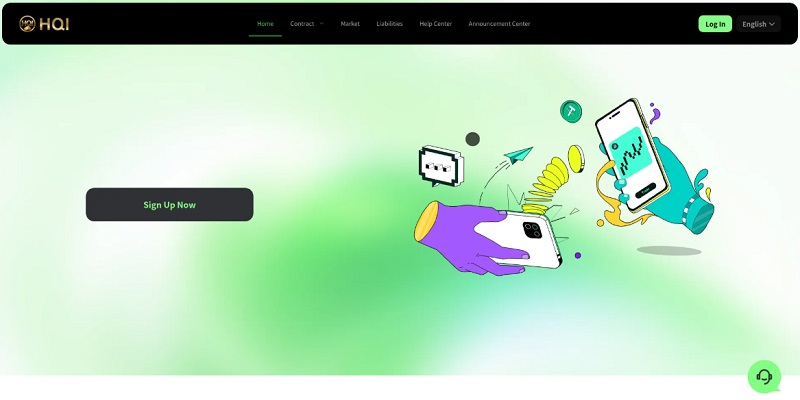
HQI Exchange became publicly visible during a period of growing uncertainty surrounding BG Wealth Sharing and DSJ Exchange.
The service advertises cryptocurrency trading, account-management functionality, and investment-related opportunities. Like many businesses operating in the digital-asset sector, it promotes itself as a modern environment for buying, selling, and managing cryptocurrencies.
However, publicly available information about the organization remains limited. Independent verification of ownership details, management personnel, licensing information, and corporate structure is difficult.
This lack of transparency has become one of the recurring concerns highlighted by observers examining HQIEX.
The Timeline: From BG Wealth to HQIEX
The situation becomes easier to understand when the events are viewed chronologically.
| Date | Key Event |
|---|---|
| 2025 | BG Wealth expands globally through referral-based recruitment |
| Early 2026 | DSJ Exchange begins experiencing withdrawal problems |
| April 2026 | Additional payments demanded before withdrawals are processed |
| May 2026 | Users reportedly directed toward HQI Exchange |
| May 2026 | Regulators issue warnings mentioning HQIEX |
| May–June 2026 | Victims report migration requests and activation fees |
According to information published by the Washington State Department of Financial Institutions (DFI), some participants reportedly received instructions to move away from DSJ Exchange and register on a different trading service.
Several reports suggested that additional deposits were required before previously inaccessible balances could be transferred into newly created accounts.
The Reported Connection Between HQI Exchange and BG Wealth
Much of the attention surrounding HQIEX stems from its alleged connection to the broader BG Wealth story.
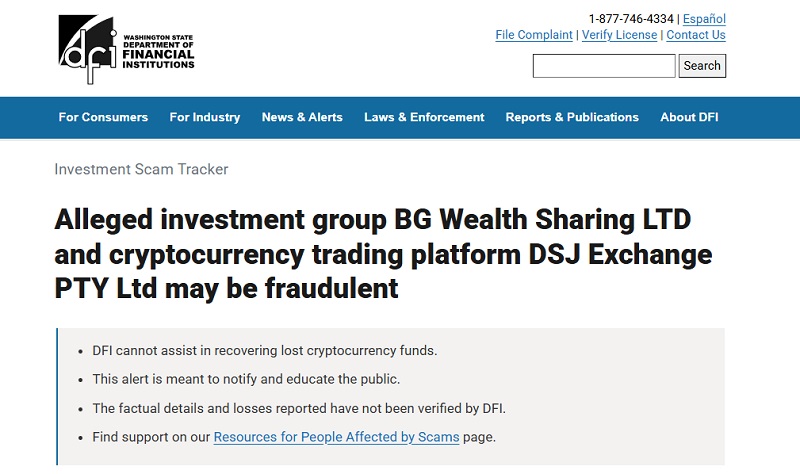
The Washington State DFI updated its investor alert after receiving reports that affected participants were being redirected following difficulties encountered elsewhere. According to those accounts, some individuals were allegedly instructed to deposit either $100 or $1,000 USDT before account activation could proceed.
Importantly, regulators have not publicly stated that the two operations share the same ownership or management.
Nevertheless, several recurring themes continue to attract attention:
- the timing of HQI Exchange's appearance;
- migration of existing BG Wealth members;
- requests for additional deposits;
- overlapping communication channels;
- references within the same online communities;
- similarities described in user reports.
Taken individually, none of these points establishes a direct relationship. Together, however, they have contributed to continuing scrutiny.
Also Read: “Elon Musk” Crypto Casino Scam: A Forensic Breakdown of the $2,500 Bonus Trap
What Victims Are Reporting
Public discussions involving HQIEX reveal a number of recurring complaints.
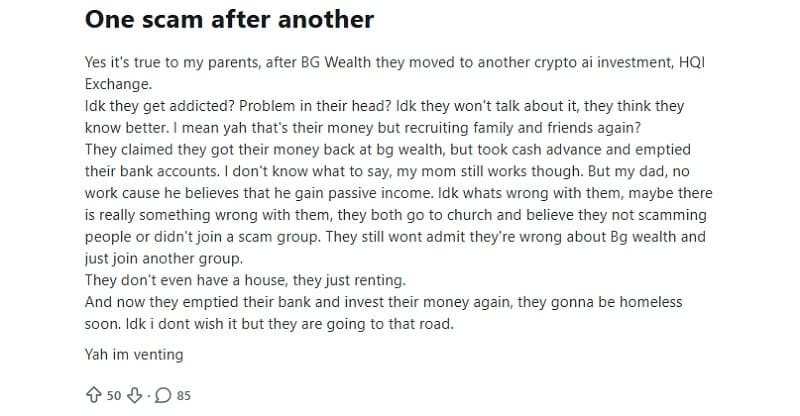
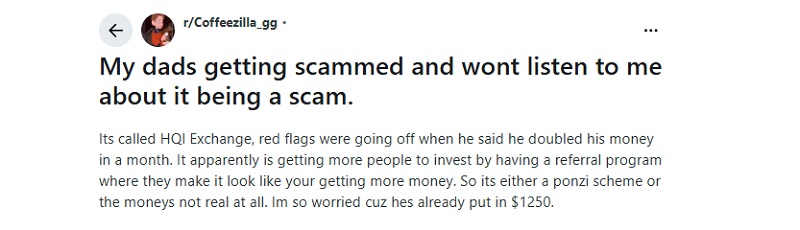
Across Reddit threads, scam-reporting communities, and discussion forums, affected individuals frequently describe similar experiences involving account transfers, activation payments, and restricted access to balances.
| Reported Issue | Frequency of Mentions |
|---|---|
| Account migration from BG Wealth | High |
| Activation fee requests | High |
| Withdrawal restrictions | High |
| Additional deposits required | High |
| Recruitment through existing members | Moderate |
- Several individuals reported being asked to create profiles on HQI Exchange and make activation payments before they could access balances linked to previous activities.
- Others claimed that access remained restricted even after those requirements had been fulfilled.
- One commonly discussed explanation involved minimum trading-volume requirements. Similar justifications have appeared in numerous historical cases where participants encountered difficulties recovering funds.
- Another report referenced communications suggesting that assets connected to DSJ Exchange would eventually be transferred under guarantees associated with BG Wealth.
Although every individual account should be considered carefully, the consistency of complaints has become a notable aspect of the case.
Regulatory Warnings
The strongest concerns do not originate solely from social-media discussions. Official warnings have also played an important role in shaping perceptions of HQI Exchange.
| Authority | Jurisdiction | Relevant Action |
|---|---|---|
| Washington State DFI | United States | Warning mentioning HQI Exchange as a migration destination for BG Wealth victims |
| Washington State DFI | United States | Cease-and-desist action against BG Wealth and DSJ Exchange |
| Multiple Canadian regulators | Canada | Warnings concerning BG Wealth-related operations |
The Washington State DFI specifically warned investors about potential successor schemes and advised caution regarding requests for additional payments linked to migration efforts.
Because HQIEX was mentioned in reports received by the regulator, the situation extends beyond isolated online complaints.
Also Read: Fake Grok and SpaceX Token Presales: Inside a Growing Crypto Scam Network
The HQI Exchange Domain Network
Another issue discussed by researchers involves the large number of domains reportedly associated with HQIEX.
Reported domains include:
- hqiex.com
- hqi2.com
- hqi3.com
- hqi5.com
- hqi6.com
- hqi7.com
- hqi9.com
- hqi10.com
- hqi11.com
- hqi12.com
- hqi15.com
- hqi16.com
- hqi17.com
- hqi18.com
- hqi19.com
- hqi20.com
- hqi21.com
- hqi22.com
- hqi23.com
- hqi25.com
- hqi26.com
- hqi27.com
- hqi28.com
- hqi30.com
- hqi31.com
- hqi35.com
- hqi36.com
- hqi37.com
- hqi38.com
The existence of multiple domains is not proof of misconduct. However, investigations involving questionable cryptocurrency operations frequently identify networks of similar websites designed to maintain continuity after warnings or enforcement actions.
For that reason, the reported domain structure has become another factor considered by independent analysts.
Red Flags Identified During This Investigation
| Risk Indicator | Observed? |
|---|---|
| Anonymous ownership | Yes |
| Regulatory warnings | Yes |
| Reported withdrawal issues | Yes |
| Requests for additional payments | Yes |
| Migration from failed platform | Yes |
| Large domain network | Yes |
| Referral-driven recruitment | Reported |
Viewed separately, some of these indicators may have innocent explanations.
When considered collectively, however, they resemble patterns that investigators frequently associate with high-risk investment operations and questionable cryptocurrency ventures.
Why the "Migration" Narrative Matters
One of the most unusual aspects of the HQI Exchange story involves the reported migration process.
Established cryptocurrency businesses generally do not require clients to provide additional payments merely to regain access to assets already held elsewhere.
When people are instructed to:
- pay activation fees;
- pay taxes before withdrawals;
- send additional deposits to unlock balances;
- transfer assets to a replacement service.
Consumer-protection agencies often view such requests as potential advance-fee tactics.
The Washington State DFI specifically advised affected individuals not to send additional money in response to migration-related demands.
Conclusion
HQI Exchange continues to attract attention from regulators, researchers, and former participants of BG Wealth-related programs.
Reports involving HQIEX frequently mention migration requests, activation payments, restricted withdrawals, and demands for additional funding. Independent investigations have also documented overlaps in community activity and promotional channels associated with the broader BG Wealth collapse.
While available information does not conclusively establish who controls the operation, the overall picture raises legitimate concerns.
For prospective participants, the central question is not whether deposits can be accepted. The more important issue is whether the organization can demonstrate the transparency, accountability, and operational reliability expected from a legitimate cryptocurrency business.
Based on currently available information, anyone considering involvement should exercise caution and conduct thorough independent verification before transferring assets.
FAQ
Is HQI Exchange a regulated cryptocurrency exchange?
At the time of writing, no verifiable evidence could be found showing that the platform holds licenses from major financial regulators or operates under a clearly disclosed regulatory framework. Investors should independently verify any regulatory claims before depositing funds.
Is HQI Exchange connected to BG Wealth?
Regulators have reported that BG Wealth investors were allegedly directed to HQIEX after experiencing problems with DSJ Exchange. However, public authorities have not formally stated that both platforms are operated by the same individuals.
Why are regulators warning investors about HQIEX?
The Washington State Department of Financial Institutions reported receiving information that investors were being asked to send additional funds to migrate accounts from DSJ Exchange to HQI Exchange. Authorities warned that such requests may resemble advance-fee scam tactics.
Can users withdraw funds from HQIEX?
Numerous online reports claim that users encountered withdrawal restrictions, activation fees, or additional payment requirements before funds could be accessed. These reports should be treated as allegations from users rather than verified facts.
What is an advance-fee scam?
An advance-fee scam occurs when victims are required to pay additional money before they can supposedly receive funds, withdraw assets, or access an account. Regulators specifically warned that demands for extra payments before withdrawals are a common red flag in investment fraud schemes.
What should investors do if they have already deposited funds?
Investors should avoid sending additional payments, preserve all communications and transaction records, contact relevant financial institutions, and report the matter to regulators and law-enforcement agencies in their jurisdiction.
Is HQI Exchange officially classified as a scam?
Regulators have issued warnings and documented reports involving HQIEX, but investors should distinguish between regulatory alerts, user allegations, and formal legal findings. The presence of multiple warning signs warrants heightened caution.
Sources
- Washington State Department of Financial Institutions — BG Wealth / DSJ Exchange Alert and HQIEX Warning
- Utah Division of Securities — Investor Alert
- Victim Reports and Community Discussions
- Cryptocurrency Exchange Scam Research
Need Help?
If you deposited funds on HQI Exchange (HQIEX) — especially if you were referred there after the BG Wealth collapse — and are now facing withdrawal issues, frozen accounts, or conflicting explanations from support, you can request a free consultation with StockView specialists.
An expert review can help determine whether your case shows patterns of a connected fraudulent scheme and realistically assess your chances of recovering lost funds.
Get professional help with your case.