
How to Protect an Online Store From Fraud in 2026
- What Is E-Commerce Fraud?
- The Most Common Threats Facing Online Stores
- Card and Checkout Abuse
- Account and Identity Attacks
- Policy and Refund Exploitation
- Infrastructure-Level Attacks
- Marketplace and Delivery Manipulation
- Threat Types and Business Impact
- Warning Signs Businesses Often Overlook
- How Modern Detection Systems Work
- Tools Commonly Used by Online Merchants
- PCI DSS and Transaction Security
- AI and Deepfake Risks in 2026
- Building a Strong Protection Strategy
- Can Businesses Recover Losses?
- Why Transaction Security Is Now a Business Survival Issue
- FAQ
- Sources
- Need Help?
The global e-commerce industry is entering another phase of explosive growth. Online stores now process enormous volumes of digital transactions every day, connecting buyers, marketplaces, logistics providers, and financial platforms across multiple countries in real time.
At the same time, cyber-enabled financial crime has evolved into a highly organized international business. Modern attackers no longer rely only on stolen bank cards or isolated scams. Today’s threats include:
- AI-assisted phishing campaigns;
- account hijacking;
- synthetic identities;
- bot-driven attacks;
- refund manipulation;
- malicious checkout scripts;
- coordinated cross-border operations.
According to international law-enforcement and cybersecurity reports, online merchants increasingly face automated attacks capable of targeting thousands of stores simultaneously. Criminal groups now use sophisticated infrastructure, data leaks, and machine-learning tools to scale operations with unprecedented efficiency.
For businesses operating online, transaction security is no longer just a technical concern — it has become a core operational requirement.
What Is E-Commerce Fraud?
E-commerce fraud refers to illegal activity where attackers exploit online stores, customer accounts, checkout systems, or digital infrastructure for financial gain.
Unlike traditional retail crime, online schemes can be launched remotely, automated rapidly, and expanded globally within hours. Attackers may rely on:
- compromised credentials;
- stolen card details;
- malicious software;
- fake customer profiles;
- phishing infrastructure;
- automated purchase tools.
One reason ecommerce fraud prevention has become so challenging is that many attacks imitate normal customer behavior extremely well. Criminals intentionally blend into legitimate traffic patterns, making suspicious activity harder to identify.
Today, large-scale cybercrime networks frequently operate across jurisdictions, using infrastructure distributed across multiple countries.

Why Online Commerce Is Becoming a Bigger Target
Several technological and operational trends are contributing to the rapid growth of online retail abuse in 2026.
The first is automation. Criminals increasingly deploy:
- credential stuffing bots;
- AI-generated phishing messages;
- automated card testing software;
- deepfake identity tools;
- large databases of leaked customer information.
The second factor is accessibility. Many attack tools once limited to experienced cybercriminals are now sold through underground marketplaces as subscription services.
Investigators and cybersecurity researchers also warn about the rise of “fraud-as-a-service” ecosystems, where organized groups provide ready-made attack infrastructure to less sophisticated actors.
At the same time, merchants continue optimizing checkout speed and customer convenience. While frictionless shopping improves conversion rates, weaker verification layers can increase exposure to unauthorized transactions and account compromise.
The growth of:
- digital wallets;
- cross-border shopping;
- mobile commerce;
- marketplace ecosystems;
- subscription services
has significantly expanded the number of potential attack vectors.
The Most Common Threats Facing Online Stores
Modern e-commerce abuse takes many forms. Some attacks focus directly on transaction systems, while others exploit account access, logistics workflows, or merchant policies.
Card and Checkout Abuse
Card-not-present attacks remain one of the largest risks for digital retailers.
In these schemes, criminals use stolen payment credentials to place unauthorized online orders where physical verification is impossible.
Attackers often:
- perform small authorization attempts;
- test multiple cards rapidly;
- automate checkout activity;
- target weak transaction monitoring systems.
Chargeback abuse also continues growing. In these cases, buyers dispute legitimate purchases and claim the transaction was unauthorized or invalid. Merchants may lose both revenue and inventory while also facing processor penalties.

Account and Identity Attacks
Account takeover prevention has become a major priority for e-commerce businesses.
Cybercriminals frequently obtain customer credentials through:
- phishing emails;
- malware;
- leaked databases;
- password reuse;
- fake login portals.
Once access is obtained, attackers may:
- change delivery information;
- access saved cards;
- steal loyalty rewards;
- make unauthorized purchases.
Synthetic identity schemes add another layer of complexity. Criminals combine real and fabricated personal data to create entirely new identities capable of bypassing weak onboarding checks.
Policy and Refund Exploitation
Not every threat involves hacking. Many online retailers experience losses through:
- abusive returns;
- repeated coupon exploitation;
- false “item not received” claims;
- manipulation of referral systems;
- reseller abuse.
These activities can appear legitimate individually, making them difficult to detect without behavioral analysis.
Infrastructure-Level Attacks
Digital skimming incidents — often called Magecart attacks — target the checkout process itself.
Attackers inject malicious code into:
- checkout pages;
- plugins;
- third-party scripts;
- compromised integrations.
Customer card information can then be silently captured during transactions and sold through underground marketplaces.
These incidents often create:
- reputational damage;
- compliance exposure;
- customer trust issues;
- legal complications.
Marketplace and Delivery Manipulation
Sophisticated schemes increasingly exploit marketplace ecosystems and shipping processes.
Examples include:
- triangulation schemes;
- package interception;
- reshipping operations.
In triangulation operations, criminals operate fake stores to collect both customer orders and card information while secretly purchasing products from legitimate merchants using unrelated stolen credentials.
Reshipping schemes sometimes involve unsuspecting individuals recruited through fake remote-job advertisements who unknowingly forward stolen goods internationally.

Threat Types and Business Impact
| Threat Type | Potential Business Impact |
|---|---|
| Card testing | Processor penalties and disputes |
| Account takeover | Customer trust damage |
| Return abuse | Revenue and inventory losses |
| Digital skimming | Legal and reputational exposure |
| Synthetic identities | Long-term operational risk |
| Promo exploitation | Reduced profitability |
| Delivery interception | Shipping and merchandise losses |
Warning Signs Businesses Often Overlook
Suspicious activity rarely begins with major incidents. In many cases, early warning signs appear as small inconsistencies across customer behavior, login activity, or checkout patterns.
Common red flags include:
- unusually large orders from brand-new accounts;
- repeated failed authorization attempts;
- rapid transaction sequences;
- mismatched shipping and billing information;
- unusual login locations;
- multiple accounts connected to one device;
- abnormal refund frequency;
- VPN or proxy usage during checkout.
Strong ecommerce fraud detection systems focus on behavioral patterns instead of isolated events.
Small irregularities often reveal organized abuse before large losses occur.
How Modern Detection Systems Work
Modern ecommerce security depends on layered monitoring systems rather than a single protective tool.
Businesses increasingly combine:
- behavioral analytics;
- device fingerprinting;
- risk scoring;
- AI-driven anomaly detection;
- identity verification;
- real-time transaction analysis.
Advanced ecommerce fraud detection platforms analyze:
- shopping behavior;
- device history;
- account activity;
- transaction timing;
- geolocation patterns;
- network reputation.
This allows suspicious activity to be identified before unauthorized orders escalate into large-scale losses.

Tools Commonly Used by Online Merchants
| Security Tool | Main Purpose |
|---|---|
| Device fingerprinting | Detect suspicious access patterns |
| Behavioral analytics | Identify unusual customer behavior |
| Multi-factor authentication | Reduce account compromise risk |
| Transaction monitoring | Flag abnormal activity |
| Identity verification | Reduce synthetic identity abuse |
| Risk scoring systems | Evaluate suspicious behavior |
One of the biggest challenges for merchants is balancing security controls with customer experience. Excessive friction can reduce sales conversions, while weak protections increase operational exposure.
The most effective e-commerce fraud prevention strategies use adaptive security layers rather than rigid universal restrictions.
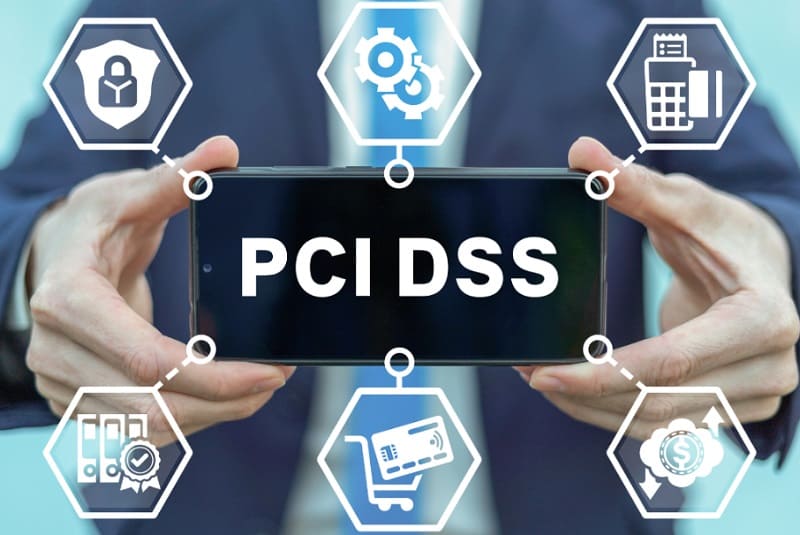
PCI DSS and Transaction Security
Strong infrastructure remains essential for ecommerce security.
The PCI Security Standards Council establishes PCI DSS requirements for organizations handling cardholder information.
PCI standards focus on:
- secure checkout environments;
- encrypted data transmission;
- restricted access controls;
- system monitoring;
- checkout-page integrity.
According to Mastercard Security Resources, PCI compliance helps businesses strengthen transaction protection and reduce exposure to card-data theft.
However, compliance alone is not enough.
Even technically compliant merchants may still face:
- account hijacking;
- social engineering attacks;
- malicious scripts;
- refund abuse;
- automated bot activity.
Security requires ongoing monitoring, operational awareness, and continuous adaptation.
AI and Deepfake Risks in 2026
Artificial intelligence is reshaping both cybersecurity and cybercrime.
Attackers increasingly use AI tools for:
- personalized phishing emails;
- automated scam campaigns;
- voice cloning;
- fake customer-service interactions;
- synthetic document creation.
Deepfake-enabled identity abuse has become a growing concern across digital industries.
At the same time, merchants increasingly rely on AI-powered behavioral analytics capable of:
- detecting abnormal user behavior;
- reducing false positives;
- identifying coordinated attacks;
- adapting to changing attack patterns.
In practice, the future of ecommerce fraud prevention will likely depend on continuous AI-versus-AI adaptation.
Building a Strong Protection Strategy
Modern protection strategies require multiple overlapping layers.
Recommended measures include:
- Real-time activity monitoring
- Risk-based authentication
- Multi-factor authentication
- AI-assisted anomaly detection
- Secure checkout infrastructure
- Staff cybersecurity awareness training
- Vendor and plugin reviews
- Incident-response procedures
- Behavioral analytics
- Cooperation with processors and platforms
Businesses should also regularly audit:
- refund workflows;
- account recovery systems;
- third-party integrations;
- plugin security;
- API exposure.
Attack methods evolve constantly, meaning security strategies must evolve as well.
Can Businesses Recover Losses?
Recovery options depend heavily on:
- timing;
- evidence quality;
- jurisdiction;
- processor cooperation;
- transaction method.
In some cases, merchants may pursue:
- processor disputes;
- chargeback challenges;
- insurance claims;
- blockchain tracing;
- law-enforcement reporting.
Organizations such as FBI IC3 and FTC Consumer Protection provide guidance for businesses affected by financial cybercrime.
However, recovery is never guaranteed, particularly when attackers operate internationally or rapidly move assets across multiple platforms.
This is why proactive ecommerce fraud prevention remains significantly more effective than post-incident response.

Why Transaction Security Is Now a Business Survival Issue
In 2026, cyber-enabled financial abuse affects far more than immediate revenue.
Major incidents can damage:
- customer confidence;
- processor relationships;
- operational stability;
- marketplace reputation;
- long-term scalability.
High dispute rates may also trigger:
- processor restrictions;
- increased fees;
- account limitations;
- termination of merchant services.
Today’s threat landscape affects businesses of every size — from small Shopify stores to global marketplace operators.
Transaction security is no longer only an IT responsibility. It has become a central part of operational resilience, brand protection, and sustainable e-commerce growth.
The companies most likely to succeed in the coming years will be those treating security infrastructure, behavioral monitoring, and customer protection as core business functions rather than optional add-ons.
FAQ
What is e-commerce fraud?
E-commerce fraud refers to illegal activity targeting online stores, customer accounts, or digital checkout systems for financial gain.
What is card-not-present abuse?
This occurs when stolen card credentials are used online without physical card verification.
How do merchants detect suspicious activity?
Businesses use behavioral analytics, device fingerprinting, risk scoring, and real-time monitoring systems.
Can AI help detect unauthorized transactions?
Yes. AI-driven systems can identify unusual patterns and suspicious behavior more efficiently than many traditional rule-based systems.
What is digital skimming?
Digital skimming involves malicious scripts stealing card information directly from online checkout pages.
Does PCI DSS eliminate all risks?
No. PCI compliance improves infrastructure security but does not stop every type of attack or abuse.
What is chargeback abuse?
Chargeback abuse occurs when customers dispute legitimate purchases and force merchants to absorb losses.
How does MFA help protect accounts?
Multi-factor authentication adds additional verification layers that make unauthorized account access more difficult.
Can merchants recover financial losses?
Sometimes. Recovery depends on transaction method, evidence, timing, and cooperation from financial institutions.
What are the biggest risks in 2026?
Major risks include AI-powered phishing, deepfake identity abuse, credential stuffing, and automated account takeover campaigns.
Sources
- Interpol Global Financial Fraud Threat Assessment
- PCI Security Standards Council
- Mastercard Security Insights
- FBI Internet Crime Complaint Center (IC3)
- FTC Consumer Protection Resources
- UNODC Financial Crime Resources
- Sumsub Research and Fraud Trends
Need Help?
If your business has experienced suspicious chargebacks, account compromise, unauthorized transactions, or abnormal customer activity, obtaining an independent incident analysis may help identify vulnerabilities and reduce future losses.
StockView specialists analyze:
- suspicious transaction flows;
- checkout vulnerabilities;
- account takeover indicators;
- crypto-related transaction risks;
- operational exposure patterns.
A professional review may help clarify how attackers exploited the system and which additional security or recovery measures may still be available.
Get professional help with your case.