GoMining Review: Real Bitcoin Mining or a High-Risk NFT Scheme?
- What GoMining Actually Sells
- The Core Issue: Limited Verifiability
- Profitability Reality: Mining Economics vs Marketing
- Why Returns Tend to Decline Over Time
- User Feedback: Functional but Not Necessarily Profitable
- Gamification: Behavioral Design, Not Just Features
- The Token Layer: Additional Exposure
- Key Risk Factors
- Is This a Ponzi Scheme?
- What GoMining Is Not
- What Raises Concern
- Structural Analysis
- Why Users Still Participate
- Final Verdict: Scam or High-Risk System?
- Conclusion
- FAQ
- Sources
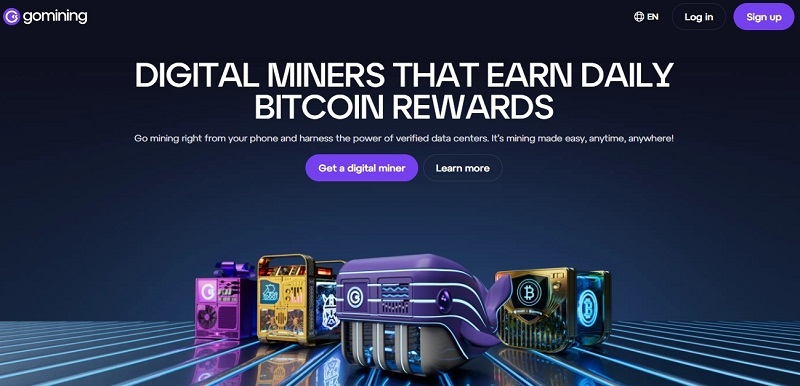
At first glance, GoMining presents itself as a simplified gateway into Bitcoin mining. The value proposition is attractive:
- no hardware setup
- no electricity management
- no technical complexity
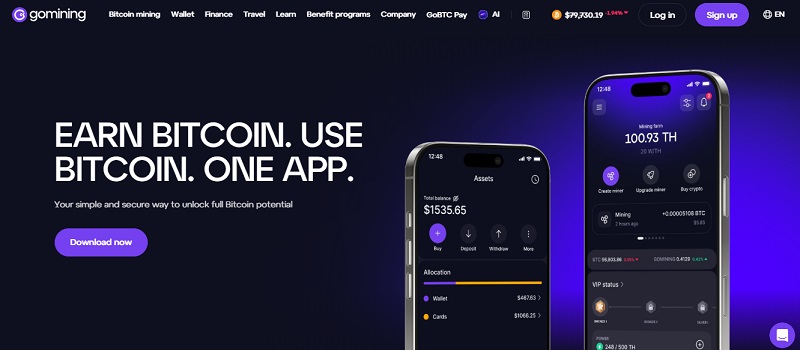
Instead, users purchase a “digital miner” and receive daily Bitcoin rewards.
However, beneath this simplified interface lies a more complex question: are users actually participating in Bitcoin mining — or interacting with a structured financial product whose outcomes depend on internal mechanics rather than transparent mining output?
What GoMining Actually Sells
Despite the branding, users are not purchasing physical mining equipment. Instead, they acquire NFT-based “digital miners”. Each NFT is described as representing a specific amount of hashpower (measured in TH/s), which is allegedly linked to real mining infrastructure operated by the company.
The operational model is as follows:
- users purchase hashpower via NFTs
- mining rewards are distributed in BTC
- payouts depend on:
- Bitcoin price
- network difficulty
- operational and maintenance costs
This model resembles cloud mining, but introduces an additional abstraction layer through NFTs.
The Core Issue: Limited Verifiability
A central concern is the ability to independently verify the underlying activity.
Users generally cannot confirm:
- the exact amount of hardware backing each NFT
- the real-time mining output associated with their allocation
- whether rewards are directly tied to mining revenue or internal allocation mechanisms
While the company claims large-scale infrastructure and data centers, there is no universally accessible, real-time audit linking individual NFT ownership to specific mining performance. This creates a reliance on platform-reported data rather than independently verifiable metrics.
Also Read: Is CriptoIntercambio a Scam? A Forensic Analysis of Complaints, Risks, and Swap Failures
Profitability Reality: Mining Economics vs Marketing
Bitcoin mining is a well-understood industry with relatively predictable constraints.
Key factors affecting profitability include:
- electricity costs
- hardware efficiency
- Bitcoin price volatility
- network difficulty adjustments
Even the platform itself acknowledges that mining profitability is sensitive to these variables and can decline over time.
Independent analyses go further, suggesting that:
- profitability may be significantly lower than expected
- in some scenarios, breaking even may take years or may not occur at all
This means returns are not only uncertain — they are structurally constrained by external market conditions.
Why Returns Tend to Decline Over Time
Users frequently report decreasing rewards, and this has a clear structural explanation.
- Increasing Network Difficulty. As more miners join the Bitcoin network, each unit of hashpower earns less BTC.
- Fixed or Rising Maintenance Fees. Operational costs (electricity, maintenance) are deducted from rewards, reducing net payouts.
- Reward Dilution. If the system expands faster than underlying mining output, individual returns decrease.
- Bitcoin Halving Cycles. Periodic halvings reduce block rewards, directly impacting mining income.
As a result, even a functioning system can produce declining returns over time.
User Feedback: Functional but Not Necessarily Profitable
User sentiment around GoMining is mixed.
Positive feedback highlights:
- ease of use
- accessibility for beginners
- visible daily BTC rewards
However, recurring concerns include:
- declining profitability
- rewards significantly reduced by fees
- need for continuous reinvestment to maintain earnings
Community discussions often describe the model as “high-risk… not free money”. The key distinction is important:
The platform may function technically, while still failing to deliver meaningful financial returns.
Gamification: Behavioral Design, Not Just Features
GoMining incorporates elements such as:
- “Miner Wars” competitions
- tiered systems and bonuses
- referral incentives
These are not neutral additions. They are designed to:
- increase user engagement
- encourage reinvestment
- extend user lifetime value
This shifts the experience from passive investment toward gamified financial participation.
The Token Layer: Additional Exposure
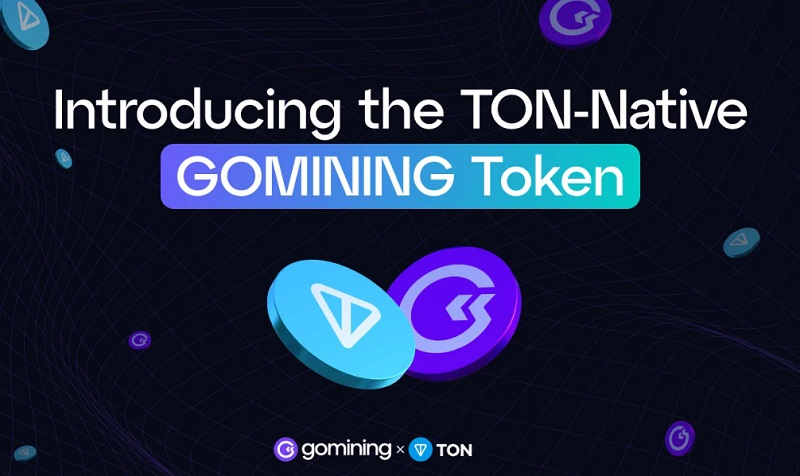
The platform includes its own token, GOMINING. Its functions include:
- fee discounts
- staking rewards
- ecosystem participation
However, this introduces additional variables:
- token price volatility
- incentive to lock funds
- dependence on ecosystem growth
Users are exposed not only to mining economics, but also to token market dynamics.
Key Risk Factors
- Transparency Limitations. There is no fully public, real-time audit linking NFT ownership to mining output.
- Indirect Ownership Model. Users do not own hardware — only a digital claim on hashpower.
- Profitability Uncertainty. Returns depend on external variables that are difficult to predict.
- Fee Structure Impact. Maintenance costs can significantly reduce or eliminate net profits.
- Behavioral Incentives. Gamification encourages additional investment beyond initial expectations.
- Centralized Control Layer. Despite blockchain elements, the platform controls reward distribution and rules.
Is This a Ponzi Scheme?
This question requires careful framing.
What GoMining Is Not
- not a fake website
- not a non-functional system
- not a classic “rug pull”
Users do receive payouts, and infrastructure appears to exist.
What Raises Concern
However, the model includes characteristics associated with higher-risk financial systems:
- limited transparency of revenue sources
- reliance on continued participation
- declining individual returns over time
These factors do not prove fraud, but they increase systemic risk.
Structural Analysis
| Factor | Assessment |
|---|---|
| Transparency | Limited |
| Profit predictability | Low |
| Verifiability | Partial |
| User control | Low |
| Risk level | Medium–High |
Why Users Still Participate
Despite risks, the platform remains attractive due to:
- low entry barrier
- passive income narrative
- removal of technical complexity
- visible daily rewards
This combination creates a strong psychological effect: users perceive progress even when long-term profitability is weak.
Final Verdict: Scam or High-Risk System?
The most accurate conclusion is more nuanced. GoMining cannot be described as a clear-cut scam, but it also does not qualify as a fully transparent, low-risk investment platform.
Instead, it appears to operate in a gray area: a functioning ecosystem backed by real infrastructure, yet combined with limited transparency and uncertain long-term profitability.
Conclusion
GoMining does not necessarily rely on deception. Instead, it operates through financial structure and user expectations.
The critical risk is not that the system is fake — but that it may keep users engaged in a model where:
- returns decline over time
- break-even becomes difficult
- reinvestment becomes necessary
And in practice, that outcome can resemble loss, even without explicit fraud.
FAQ
Do you own real mining hardware?
No — users own NFT representations tied to hashpower.
Are rewards real?
Yes, but they depend on mining economics and are reduced by fees.
Is profitability guaranteed?
No. It is highly sensitive to market conditions and often declines over time.
Is it safe?
Technically functional, but financially high-risk.
Sources
Get professional help with your case.