Why More Traders Are Leaving MetaTrader for cTrader and TradingView
- MetaTrader Still Dominates Retail Trading
- Why Some Traders Started Feeling “MetaTrader Fatigue”
- TradingView Changed Expectations Around Charting
- Why Traders Like TradingView
- Why cTrader Appeals to Active Traders
- The “Execution Transparency” Debate
- MetaTrader Still Leads in Algorithmic Trading
- Platform Strengths by Trader Type
- Prop Firms Accelerated the Shift
- Mobile and Cloud Workflows Changed Trading Habits
- Are Traders Really Leaving MetaTrader?
- Trading Software Is Becoming Consumer Technology
- Conclusion
- FAQ
- Sources
For nearly two decades, MetaTrader defined retail trading.
MT4 — and later MT5 — became the default environment for forex brokers, algorithmic traders, prop firms, and retail CFD speculation. Entire ecosystems grew around Expert Advisors, indicators, broker plugins, and automated strategies.
But in 2026, something interesting is happening across trading communities.
More traders are openly discussing “MetaTrader fatigue.”
On Reddit, Discord servers, prop-trading forums, and X, users increasingly compare MT with cTrader and TradingView — often describing newer platforms as:
- cleaner;
- faster;
- easier to use;
- more modern;
- better suited for multi-device workflows.
At the same time, MetaTrader still dominates large parts of the industry.
So is there really a mass migration happening — or are online discussions exaggerating the shift?
The answer is more nuanced than the headlines suggest.
MetaTrader Still Dominates Retail Trading
Despite growing criticism, MT platform remains the most deeply embedded retail trading infrastructure in the world.
MT4 and MT5 still power:
- thousands of forex brokers;
- prop firms;
- white-label trading operations;
- retail automation systems.
The reasons are practical:
- huge broker compatibility;
- massive EA ecosystem;
- deep liquidity integrations;
- widespread trader familiarity.
For algorithmic trading alone, MetaTrader still holds enormous influence because of its mature MQL ecosystem and extensive library of ready-made tools.
Many brokers also continue relying on classic retail trading platforms because the infrastructure is already deeply integrated into:
- risk management;
- CRM systems;
- bridge technology;
- liquidity routing.
That network effect is extremely difficult to replace.
Even traders criticizing MetaTrader often continue using it because:
- their broker supports it;
- their EAs depend on it;
- prop firms still rely heavily on MT infrastructure.
Why Some Traders Started Feeling “MetaTrader Fatigue”
The criticism surrounding MetaTrader is usually not about functionality alone. Most complaints focus on user experience.
Modern traders increasingly compare MT4 and MT5 to older enterprise software:
- multi-window layouts;
- cluttered interfaces;
- dated visual design;
- inconsistent workflows;
- desktop-centric architecture.
For traders raised on modern SaaS products, cloud synchronization, and polished mobile applications, MetaTrader can feel surprisingly old-fashioned.
This sentiment appears frequently in trading communities.
- One Reddit user described cTrader as “a cleaner interface and great order management.”
- Another trader summarized MT more bluntly: “MetaTrader looks like it came from 1999.”
These reactions reflect broader expectations around software design.
Modern retail traders increasingly expect:
- seamless multi-device syncing;
- browser-based access;
- cleaner interfaces;
- integrated analytics;
- intuitive workflows.
MetaTrader was originally built during a very different era of retail trading.
Also Read: MetaTrader Isn’t the Problem — Your Broker Is
TradingView Changed Expectations Around Charting
One of the biggest reasons for changing preferences is TradingView. The charting software fundamentally altered how many retail traders interact with charts.
Instead of heavy desktop installations and broker-specific setups, TradingView introduced:
- browser-native charting;
- cloud synchronization;
- collaborative analysis;
- social trading ideas;
- cleaner visual workflows.
For many traders, the web-based charting platform became less of a broker terminal and more of a universal market-analysis environment.
Its popularity grew especially fast among:
- price-action traders;
- swing traders;
- crypto traders;
- newer retail audiences.
Many users now perform nearly all analysis on TradingView even if execution happens elsewhere.
Why Traders Like TradingView
| Feature | Why Users Like It |
|---|---|
| Cloud charting | Access from multiple devices |
| Modern UI | Cleaner workflow and navigation |
| Pine Script | Simplified indicator scripting |
| Community charts | Shared ideas and analysis |
| Browser access | No heavy installation required |
Many traders now openly describe TradingView as the “front-end” of their workflow, while execution happens separately through brokers or prop-firm integrations.
One recurring theme in discussions is that the software “spoiled” users with cleaner charting and smoother workflows.
A Reddit user summarized it this way: “TradingView just took the unnecessary complexity out.”
Why cTrader Appeals to Active Traders
While TradingView dominates charting conversations, cTrader increasingly attracts active forex and CFD traders. Both platforms are often viewed as more modern alternatives to traditional retail trading software.
Its positioning differs from both TradingView and MetaTrader.
cTrader focuses heavily on:
- execution workflows;
- order management;
- depth-of-market tools;
- modern interface design;
- integrated trading analytics.
Many scalpers and prop-firm traders prefer cTrader because it feels more streamlined during fast execution.
Users frequently mention:
- cleaner order-entry logic;
- better visual clarity;
- smoother multi-chart management;
- integrated risk calculators.
Some traders also prefer the software’s use of C# for automation rather than MQL.
Community discussions increasingly frame cTrader as:
- more modern than MetaTrader;
- more execution-focused than TradingView.
The “Execution Transparency” Debate
Another reason some traders move toward cTrader involves execution transparency discussions.
This topic is controversial and often misunderstood.
- Some traders argue that cTrader environments “feel cleaner” because the platform historically marketed itself around ECN-style execution and transparency.
- Meanwhile, MetaTrader ecosystems became associated — fairly or unfairly — with broker-side plugins and execution customization.
- The old “Virtual Dealer” controversy still appears in trading forums years later whenever execution manipulation is discussed.
However, this topic requires nuance.
Not all brokers use manipulative plugins. And poor execution quality can exist on any platform depending on:
- broker model;
- liquidity routing;
- internal dealing practices;
- risk management setup.
In reality, brokerage quality matters far more than platform branding alone.
Still, perception influences user behavior.
And many traders increasingly associate cTrader with:
- cleaner execution environments;
- more transparent workflows;
- institutional-style interfaces.
MetaTrader Still Leads in Algorithmic Trading
Despite all criticism, MetaTrader remains extremely difficult to replace in algorithmic trading.
MT5 still dominates retail automation because of:
- massive EA libraries;
- mature scripting tools;
- extensive community support;
- large developer ecosystem.
MetaTrader remains deeply practical for traders running:
- Expert Advisors;
- automated scalping systems;
- VPS infrastructure;
- custom indicators,
The platform’s aging design matters less to users who prioritize:
- execution speed;
- automation stability;
- infrastructure compatibility.
Platform Strengths by Trader Type
| Trader Type | Often Prefers |
|---|---|
| Algo trader | MT5 |
| Scalper/day trader | cTrader |
| Visual/chart-focused trader | TradingView |
| Beginner | TradingView |
| EA-heavy trader | MT4/MT5 |
Different ecosystems increasingly serve different trading styles rather than competing as direct replacements.
Prop Firms Accelerated the Shift
Prop firms played a major role in changing platform discussions.
Many funded-trader environments increasingly support:
- cTrader;
- TradingView integrations;
- browser-native dashboards;
- web-based execution systems.
This exposed large numbers of retail traders to alternatives beyond MetaTrader for the first time.
Prop traders especially prioritize:
- execution responsiveness;
- low-friction interfaces;
- browser accessibility;
- mobile workflows.
At the same time, many prop firms still heavily depend on MT5 because of existing infrastructure and anti-cheat systems.
As a result, the market is fragmenting rather than fully abandoning MT.
Also Read: Prop Trading Firms in 2026: Real Opportunity or a Model Designed for You to Fail?
Mobile and Cloud Workflows Changed Trading Habits
Another major factor is behavioral change. Retail trading is no longer purely desktop-centric.
Modern users increasingly expect:
- cloud syncing;
- mobile parity;
- browser access;
- seamless device switching.
TradingView benefited enormously from this transition because it was designed around cloud-first workflows from the beginning.
MetaTrader, by comparison, was built during an earlier generation of trading software where:
- desktop terminals dominated;
- cloud workflows barely existed;
- mobile usage was secondary.
That architectural difference still shapes user experience today.
Are Traders Really Leaving MetaTrader?
Yes — but not entirely.
The shift is real in terms of:
- trader sentiment;
- workflow preferences;
- charting habits;
- interface expectations.
But MetaTrader still dominates globally.
What’s actually happening is more subtle: many traders are combining ecosystems rather than fully replacing them.
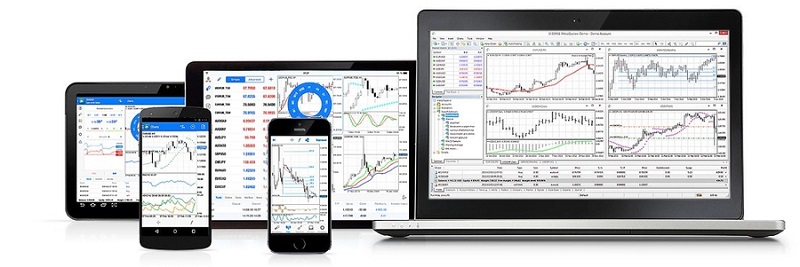
A common modern workflow looks like this:
- analysis on TradingView;
- execution through MT5 or cTrader;
- automation on MetaTrader;
- mobile monitoring elsewhere.
In other words, retail trading became increasingly fragmented.
Instead of one platform doing everything, traders now optimize different tools for different tasks.
Trading Software Is Becoming Consumer Technology
The broader trend goes beyond MetaTrader itself.
Retail trading software increasingly competes on:
- UX quality;
- workflow speed;
- cross-device continuity;
- integrated analytics;
- visual clarity.
This is pushing platforms toward:
- cloud-native infrastructure;
- browser-first experiences;
- AI-assisted charting;
- integrated journaling;
- execution analytics.
The retail audience increasingly expects trading platforms to behave more like polished consumer apps than institutional desktop terminals.
That shift is reshaping the entire industry.
Conclusion
MetaTrader is not disappearing anytime soon. Its infrastructure, automation ecosystem, and broker integrations remain deeply embedded across global retail trading. But its monopoly on trader mindshare is weakening.
The rise of cTrader and TradingView reflects a broader change in trader expectations around:
- usability;
- mobility;
- workflow simplicity;
- execution transparency;
- modern interface design.
In 2026, the conversation is no longer simply about “which platform executes trades.”
It is increasingly about which environment traders actually enjoy using every day.
FAQ
Is MetaTrader losing popularity?
MetaTrader still dominates globally, but many traders increasingly use alternatives alongside it.
Why do traders prefer TradingView?
Many users prefer its modern charting, cloud synchronization, and cleaner interface.
Is cTrader better than MT5?
It depends on the trading style. Many scalpers prefer cTrader, while algo traders still favor MT5.
Which platform is best for beginners?
TradingView is often considered easier for beginners because of its intuitive design.
Why do prop traders like cTrader?
Many prop traders value its order-management tools and streamlined execution workflows.
Can TradingView replace MetaTrader?
For charting, often yes. For automation and deep broker integration, usually not fully.
Is MT5 still good for algorithmic trading?
Yes. MT5 remains one of the strongest retail automation environments available.
Why do many traders still use MT4?
Mainly because of broker support, familiarity, and legacy EA compatibility.
Which platform has the best charting?
Many traders consider TradingView the strongest charting platform for retail analysis.
Sources
- NewYorkCityServers — TradingView vs MetaTrader Analysis
- NewYorkCityServers — cTrader vs MetaTrader for Algo Trading
- FXNX Platform Comparison 2026
Get professional help with your case.