How to check a broker’s FCA licence: a checklist
- Checklist for verifying a broker on the FCA website
- How brokers forge Financial Conduct Authority licences
- Fake fund recovery services pretending to be the FCA
- Scam schemes run by fraudsters pretending to be the FCA
- Conclusion
The Financial Conduct Authority (FCA) is the UK’s supervisory body that oversees the work of banking, investment and other financial institutions, and also grants them access to the market.
For a broker to obtain an FCA licence – and therefore the right to operate – it must register with the Authority and become authorised in the system. A licence is issued only if the broker meets all the organisation’s requirements: the list of documents runs to over a hundred items, and the checks and selection process are extremely rigorous. This makes a British financial licence one of the most prestigious in the world. It really is a guarantee of quality and reliability – but only if it is genuine.
To avoid financial risks, every trader should not rush to trust a licence certificate at first sight, but should verify the information about the company’s active licence.
Checklist for verifying a broker on the FCA website
Choosing a legitimate and reliable broker is the foundation of successful trading. Therefore, before registering and depositing funds, it is essential to verify whether the company holds a genuine licence. To do this, follow these steps:
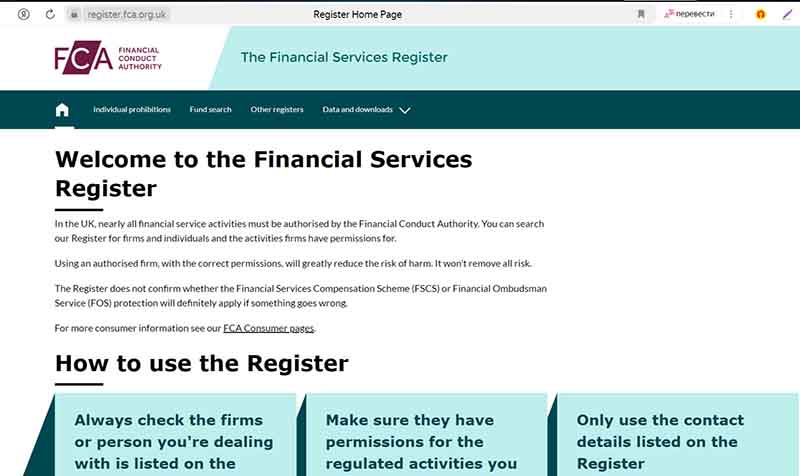
- Go to the official website of the financial regulator that the broker claims has licensed it, and find the register of licence holders. For companies from the UK, this is register.fca.org.uk/s/.
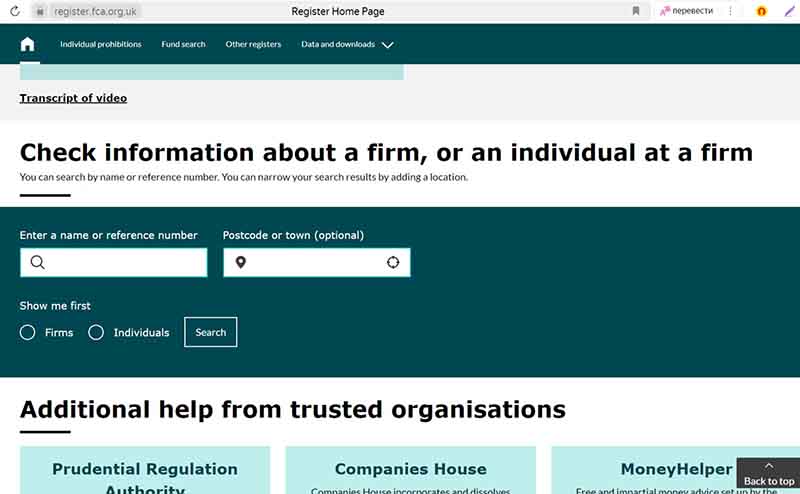
- Registers of well‑established regulators with a long history are very extensive, so it is best to use the search function on the site.
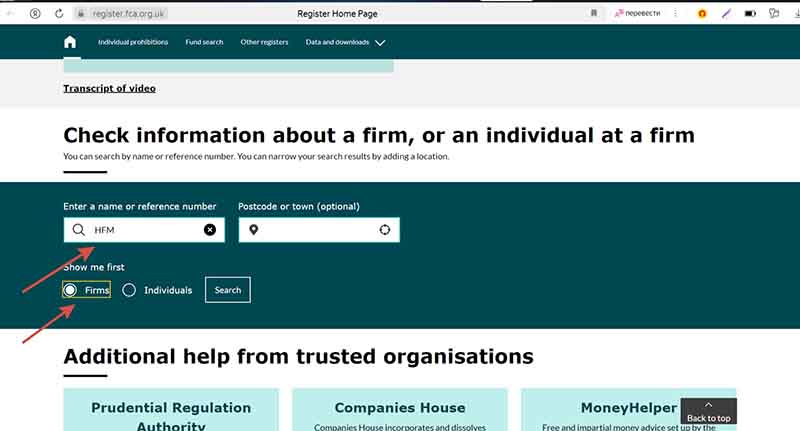
- Set your search parameters: tick the box for “Firm” or “Individual” (the latter is for checking advisers and fund managers).
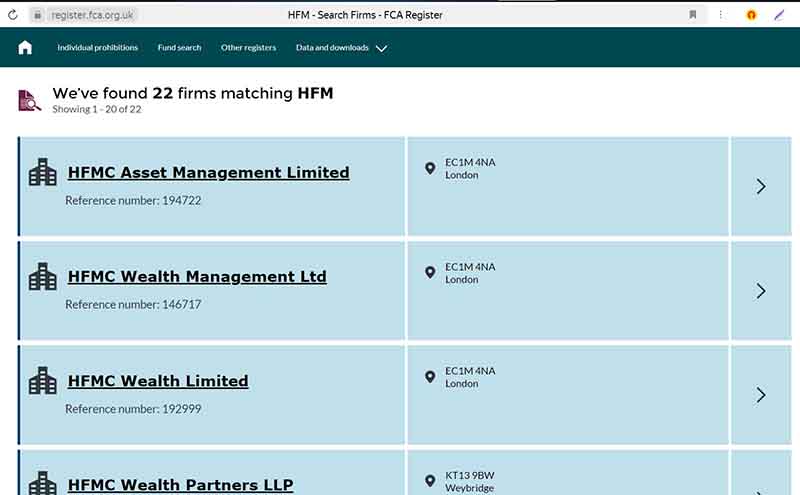
- In the first field, enter the broker’s name or its registration number. In the second field, enter the postcode (this is optional). See the screenshot below for an example.
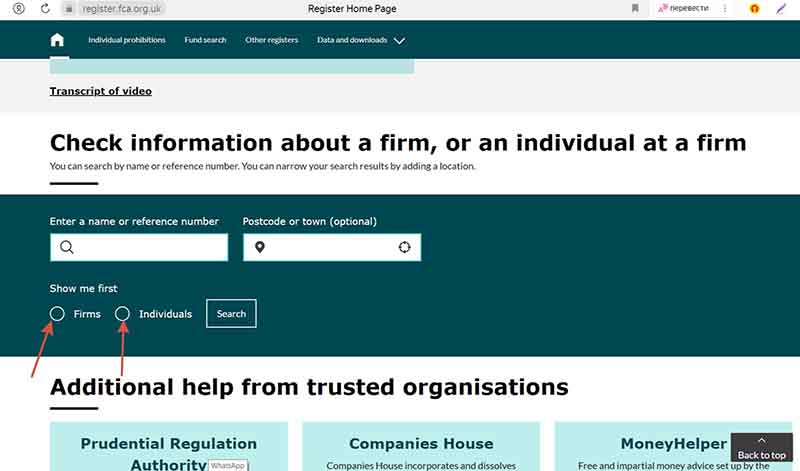
- Click the “Search” button and wait for the results.
- If the broker is genuinely registered with the Financial Conduct Authority, the system will display up‑to‑date information, as shown in the example below.
You can use the search to find details about whether the permission is active and its expiry date. Searching the register helps distinguish a trustworthy broker from a scammer. It is not advisable to open an account or deposit money with an organisation whose licence is about to expire, that has numerous reported violations, or that is subject to restrictions on its brokerage activities. Such cooperation carries high risks of losing your funds and lengthy disputes in the future.
If the company is indeed licensed by the supervisory body, the search will provide a full dossier on it.
How brokers forge Financial Conduct Authority licences
Every year, scammers improve their methods of deception to gain access to traders’ personal information and funds. Increasingly, users and clients of international companies receive phone calls and emails from fraudsters posing as FCA officials. Modern technology makes it possible to forge official FCA documents using Photoshop.
To identify the perpetrators, it is important to pay attention to the following signs:
- The phone call is made from a hidden or mobile number;
- The email comes from a non‑official address of the regulator, such as a standard Hotmail, Outlook or Gmail account;
- The message contains grammatical or spelling errors;
- The attached links to accounts differ from the official addresses on the regulator’s website.
The Financial Conduct Authority never requests confidential banking information and never asks you to transfer money.
To gain users’ trust, fraudsters may copy the English regulator’s website, creating phishing sites. These are filled with altered information that supposedly proves the broker holds an FCA licence. To avoid confusion, always compare contact details and social media links using only the regulator’s official website.
Another common trick is calls with spoofed numbers. To protect your data, do not give out personal information over the phone. Scammers often use psychological pressure, threatening fines or legal action to obtain bank account and card details.
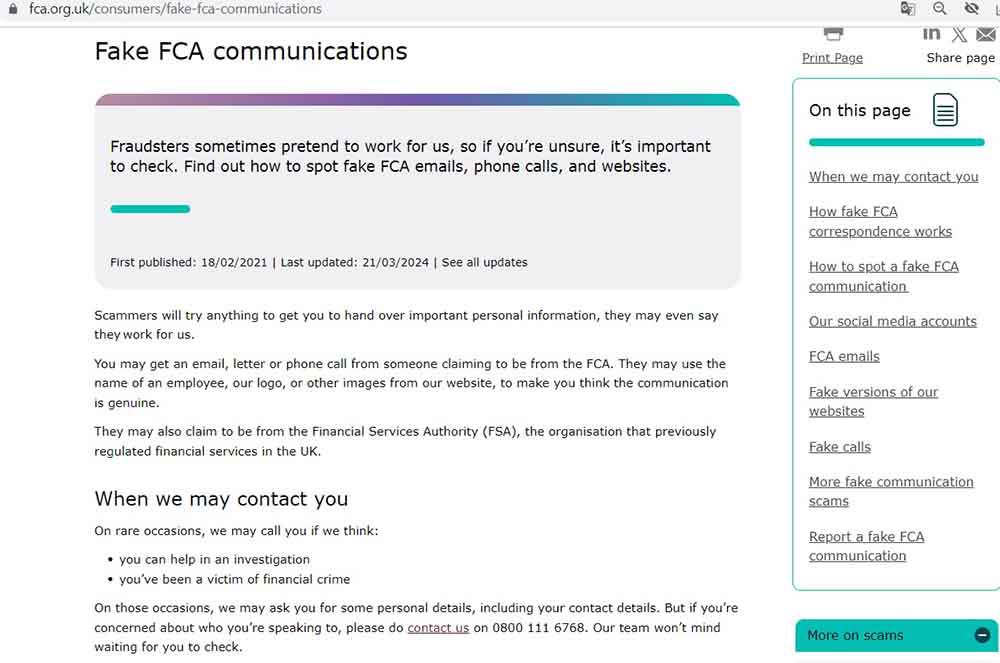
The English regulator states on its official website that it calls traders only in two situations:
- The person may be able to provide effective assistance in investigating an incident;
- The user has become a victim of a scheme involving identified fraudsters.
Fake fund recovery services pretending to be the FCA
Traders often report receiving calls from companies that promise to recover lost money with the help of the regulator. However, no financial regulator – including the Financial Conduct Authority – actually handles fund recovery.
The main role of the FCA is to regulate disputes and take action against licensed brokers if a trader’s rights have been violated. This may include imposing fines, issuing warnings of varying seriousness, and – the most severe measure for licence holders – suspending or revoking an existing FCA licence.
To avoid negative consequences and financial losses, many companies comply with the regulator’s requirements and return funds to their clients. If a trader has been affected, they can file a formal complaint against the broker and send it to the Financial Conduct Authority for further investigation.
Some individuals receive pre‑filled refund applications from unknown companies via email. In reality, such documents are legally meaningless; their real purpose is to extract the victim’s banking information in order to access their accounts. Fraudsters often invent fake names for executives and use contact details that have no connection whatsoever to the official regulator.
Scam schemes run by fraudsters pretending to be the FCA
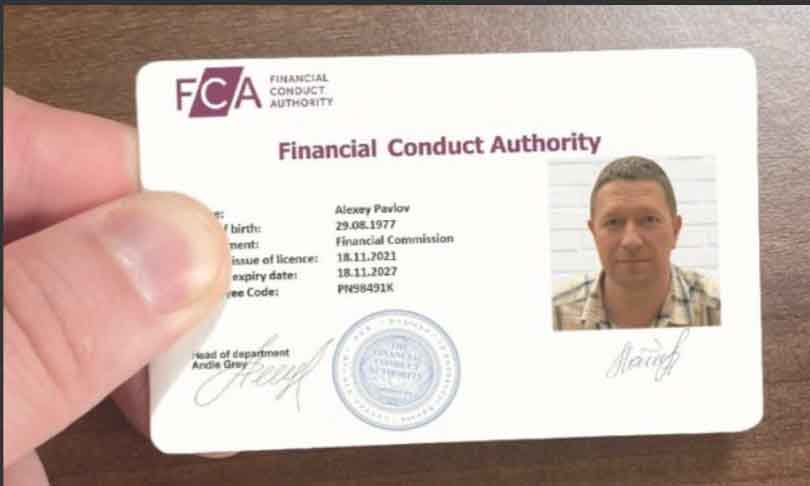
Scheme 1. Fraudsters pose as employees of the Financial Conduct Authority (FCA) or claim to be acting on its behalf. To gain a trader’s trust, they often attach photos of fake ID cards – we show an example in the image above.
The scammers’ goal: to trick you into revealing banking information so they can gain access to your account, and to extract payments for fictitious services such as lawyers, translators, notaries, taxes, etc.
Scheme 2. Fake brokers try to appear legitimate by using forged licences. For example, Ans‑Ak, MN Lot, Dio Leaf and their clones have falsely claimed to hold an FCA licence. The scam broker St24Online copied a genuine FCA licence that had actually been issued to a different legal entity.
The scammers’ goal: to convince users to deposit money with an allegedly regulated broker.
Scheme 3. Some traders receive calls from fraudsters pretending to be the FCA, offering to help “recover” funds from a broker platform. The FCA does not provide such services and is not involved in moving funds on trading platforms.
The scammers’ goal: to make you hand over your money to them.
Scheme 4. Recovery services that claim to get money back from scam brokers “with the help of the FCA” – as discussed in detail in the previous section.
The scammers’ goal: to extract payment for fake services and obtain banking information to access the victim’s account.
Scheme 5. Fraudsters occasionally create websites pretending to be run by the UK regulator, for example fca.investments. The fake company’s employees offer to withdraw cryptocurrency from the blockchain on very favourable terms.
The scammers’ goal: to collect fees for non‑existent services and to gain access to the contents of victims’ crypto wallets.
Scammers not only misuse the names of real financial regulators but also invent similar‑sounding organisations of their own.
Conclusion
The FCA is one of the world’s most reliable financial regulators. Because the Authority has earned a strong international reputation, fraudsters often exploit its name for their own schemes. To avoid becoming one of their victims, it is essential to check a broker’s licence and verify the accuracy of the information it provides.
Get professional help with your case.